top of page

EXHIBITION
Ցուցահանդես
Beatrijs Albers & Reggy Timmermans
It’s Not for Them
installation, 2026
Programmed Mémoriz HD modules, Toplionace linear actuator, adjustable-speed DC gear motor, adjustable-speed vibration motor, silicone, LED lights, wood, amplifiers, speakers, various recycled materials
Mémoriz HD modules and associated electronics: Interface-Z
The installation It's not for Them presents three enigmatic, organic-looking entities. Each organism operates through an independent mechanical and electronic system. They do not communicate with one another. Drawing on the movement logics of marine life and based on AI-generated speculations, they do not represent living creatures but sustain a minimal state of activity within an environment to which they are fundamentally unsuited.
They are placed directly on the floor of the exhibition space, close to the visitors, although the audience is not invited to interact with the work. These organisms are, in fact, devices that periodically activate, animating themselves through subtle movements that evoke a sense of life.
The installation proposes a form of coexistence without relation. Autonomous systems persist, interfere with one another, and gradually transform through their continuous negotiation of a milieu that was never designed to sustain them. It does not produce events but maintains fields of tension. It replaces the dramaturgy of interaction with operational persistence, in which systems continue to exist independently of human recognition. By prioritising material constraints and non-human processes, the work formulates an implicit critique of aesthetic anthropocentrism. The work does not address the visitor; it simply persists.
Reggy Timmermans and Beatrijs Albers live and work between Brussels, Belgium, and Luché-Pringé, France. Their artistic practice encompasses sculpture, video, installation, and digital technologies. Their work questions the subjectivity of empirical data by stripping it of its conventional meaning, thereby opening up a contingent and unlimited field of possibilities. By decentring the human position, the artists propose an ontological equality between humans and objects. Their work has recently been presented at Watou Festival-23 (Watou, Belgium); Centrale for Contemporary Art (Brussels, Belgium); ART PLATFORM-ON, Chonnam National University, (Gwangju, South Korea); and iMAL – Art Center for Digital Cultures and Technology (Brussels, Belgium); CYFEST 13 (St Petersburg, Russia). \ Instagram: @beatrijsalbers


Marcela Armas
Tsinamekuta
installation, 2016–2021
2 digital photographs, video [11:38, loop, sound]
Tsinamekuta Devolucion (return), 2021
Photo: René Torres
Tsinamekuta Ceremonia (Ceremony), 2021
Photo: Daniela Edburg
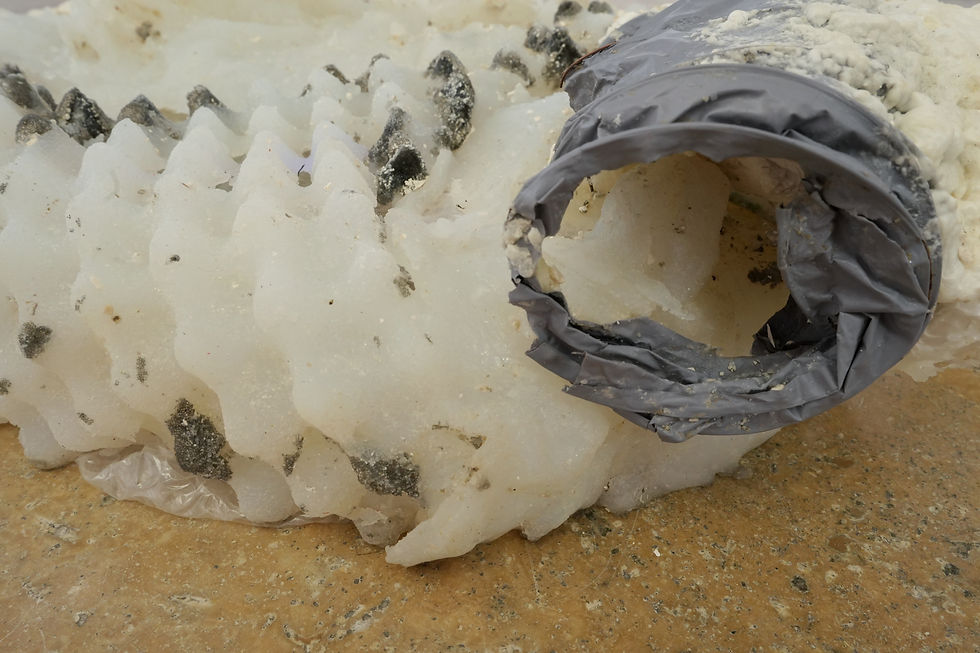
Tsinamekuta (2016–2021) is a five-year project inspired by pyrrhotite, a magnetic mineral extracted from a mountain in the Potosí plateau, a sacred Wixárika ceremonial site now occupied by a major copper mine. Through geological exploration and the construction of experimental instruments, the project challenges scientific perspectives by foregrounding affect, ritual, and alternative relationships with technology and the Earth. Central to the work is an accordion activated through the mineral's magnetic field. Developed with the permission and participation of the Wixárika community, the project culminated in a ceremonial offering, magnetizing the rock with human heart signals before returning it to the mountain.
Marcela Armas is a Mexican transdisciplinary artist and researcher whose practice explores the intersections of art, science, technology, ecology, and territory. Through installations, machines, sound devices, documentary objects, and electronic and analog media, she investigates relationships between bodies, materials, environments, knowledge, memory, autonomy, and resistance. Her research-based projects critically address extractive systems and explore environmental ethics and alternative relationships with technology and the Earth. Her work has been presented internationally at institutions including Centre Pompidou (Paris, France), MAXXI Rome (Rome, Italy), Museo Amparo (Peubla, Mexico), and the Museum of Modern Art (Paris, France).\ Instagram: @marcelarmas


Andy Barrt
Ice Man
sculpture, 2025
textile, synthetic fabric, print
Supported by CYLAND MediaArtLab and Dr. Robot Gallery
Born by the Arctic Ocean, I quickly understood that to survive among perpetual ice and long winters, nature created a unique register of beings adapted only to this place: polar bears, pale reindeer, white foxes and arctic foxes, white ptarmigans, white—white—white ermines, and many others.
A snowy owl folds its white wings before its enormous black eyes—and disappears, becoming a lump of snow on a branch. The boldest animals, in search of warmth, wandered into my city, where their white camouflage turned into a visible mark against the grey walls of buildings. White softness becomes a target, and the city at the edge of the earth reveals itself as a hostile, unnatural environment.
Very early on I began drawing black-and-white ornaments charged with the palpable fear of owls I often saw at dawn, trapped beneath the entrance canopies. Within these rhythms I inscribed the silhouettes of reindeer herders, framing them with the sharp line of the tundra’s endless horizon. The sun was always the principal conductor—the center of my compositions—because in winter it makes the snow burn crimson, and in summer it refuses to leave the horizon, circling day after day above my head… This turned me into a particular kind of person, capable of being whiter than snow and thinking like snow.—Andy Barrt


Andy Barrt
The Snow Flower of the North
sculpture, 2026
textile, synthetic fabric, print
Supported by CYLAND MediaArtLab and Dr. Robot Gallery
Snow Flower of the North is a textile sculpture inspired by the visual language, ritual forms, and environmental conditions of the Far North. Its flower-like structure draws on the simplicity and directness of northern symbolic traditions, where forms often emerge from an intimate relationship with landscape, climate, and survival. The flower is treated as both an organic form and an intelligent natural system. In biological terms, it is a site of selection, transformation, and reproduction—a living mechanism that responds to its surroundings while sustaining its own continuity. This idea is translated into soft sculptural form through textile, giving the work a tactile, bodily presence that is at once delicate, resilient, and slightly uncanny. The work combines folkloric imagery with an ecological understanding of nature as an active, adaptive force. Its apparent simplicity conceals a more complex logic, recalling strategies of camouflage and transformation found in northern environments, where life persists under extreme conditions.
Andy Barrt was born near the Arctic Circle, on a peninsula inhabited by polar bears and reindeer. Ten months of snow and ice shaped the language of his painting: his works are composed of only two colours—black and white. This visual logic arises directly from the northern landscape itself: any object set against the vast white expanse of snow appears as a dark mark. The effect is heightened by the northern Sun, which makes the snow blaze with white fire, while everything that is not snow condenses into dense black forms—profiles of reindeer herders and the ornamental figures of polar owls. The background of Barrt’s paintings is always an immaculate snowy plain. For his performances, Barrt creates sculptural costumes reminiscent of the heavy garments worn by northern hunters and fishermen. When his paintings are installed in gallery and museum spaces, they unfold as ornamental mandalas whose centres reveal narratives of mutual support, friendship, and the inherent ambiguity of life in the Far North.
Էնդի Բարթը ծնվել է Արկտիկական շրջանի մոտ՝ մի թերակղզում, որտեղ բնակվում են սպիտակ արջերն ու եղջերուները։ Տասը ամիս տևող ձյունն ու սառույցը ձևավորել են նրա գեղանկարչական լեզուն. նրա աշխատանքները բաղկացած են ընդամենը երկու գույնից՝ սևից և սպիտակից։
Այս տեսողական տրամաբանությունն անմիջականորեն բխում է հյուսիսային լանդշաֆտից. ձյան հսկայական սպիտակ տարածության ֆոնին ցանկացած առարկա երևում է որպես մութ նշան։ Այս ազդեցությունն ավելի է ուժեղանում հյուսիսային արևի շնորհիվ, որը ստիպում է ձյանը բոցավառվել սպիտակ կրակի պես, մինչդեռ այն ամենը, ինչ ձյուն չէ, խտանում է հագեցած սև ձևերի՝ եղջերվաբույծների ուրվագծերի և բևեռային բուերի զարդանախշային կերպարների մեջ։
Բարթի նկարների ֆոնը միշտ անբիծ, ձյունածածկ հարթավայր է։ Իր պերֆորմանսների համար Բարթը ստեղծում է քանդակային կոստյումներ, որոնք հիշեցնում են հյուսիսային որսորդների և ձկնորսների կրած ծանր հագուստները։
Երբ Բարթի նկարները ցուցադրվում են պատկերասրահներում և թանգարաններում, դրանք բացվում են որպես զարդանախշային մանդալաներ, որոնց կենտրոնները բացահայտում են փոխադարձ աջակցության, ընկերության և Հեռավոր Հյուսիսում կյանքի ներհատուկ երկիմաստության պատմություններ։

Lisa Mara Batacchi
Sand Storms in Medio Mundi
immersive textile installation comprising 3 suspended handwoven tapestries, 2021–ongoing
handweaving; lacquered silk core yarns, silk yarns, ramie, raffia, natural dyes and wooden suspension rods; headphones
Meditating on Earth, 2021–2022 The World Is So Far Reversed, 2021–2022 The Spirit Will Return to Us, 2023–2024
Sand Storms in Medio Mundi is a series of handwoven tapestries inspired by landscapes and spiritual traditions along the Silk Roads. The sandstorm becomes both a natural phenomenon and a metaphor for our turbulent era, marked by war, migration and environmental crisis. Throughout history, sandstorms have buried cities, monasteries and civilizations, revealing human fragility before the power of nature. Echoing Khalil Gibran’s “storm of the spirit,” they evoke renewal through transformation.
Through a slow, meditative weaving process, thousands of threads become grains of sand, forming shifting surfaces where symbols and sacred geometries emerge, dissolve and reappear. The medallion shape is released from its context within the carpet and transformed into an autonomous portal. Resembling a cloud of wind-blown sand, it gathers symbolic forms that have travelled across cultures for millennia, tracing them back to a common origin.
Inspired by Henry Corbin’s concept of the Medio Mundi, the imaginal realm between the visible and invisible, the installation explores imagination as a creative and cognitive faculty through which hidden dimensions of reality may be perceived. Weaving becomes a contemplative act of revealing. Sand Storms in Medio Mundi invites viewers to cross these thresholds, where the journey through symbols leads back to a shared source and a possibility of regeneration.
Lisa Mara Batacchi is an Italian visual artist whose multidisciplinary practice explores textile research, handweaving, ancestral knowledge, and symbolic languages. Developed through fieldwork across Asia and the Middle East, her work connects spirituality, cultural memory and contemporary experience. Her work has been presented internationally at Kunsthalle Lottozero; Un(common) Threads, Alserkal Avenue, Dubai Art Week 2023; 10th Mediations Biennale, Istanbul; Dubai Design Week 2022; Silk, Giudecca Art District, during the 59th Venice Biennale; Manifesta 12; 2nd Something Else – Off Cairo Biennale; Remembering the Future, Arts & Globalization Pavilion, during the 57th Venice Biennale; 4th Land Art Mongolia Biennale; and Clark House Initiative, Mumbai. \ Instagram: @lisabatacchi


Liudmila Belova
Inner Landscapes (visualization of the natural neural network of the brain)
installation, 2020–2026
foamed polyethylene tubes; strobe string lights; audio [15:11, loop, sound]
sound: Igor Patsukailo
The installation visualizes the complex neural networks of the nervous system as they appear under a microscope. Their tangled structures recall the underground roots of trees and plants, while also evoking images of the universe captured by the Hubble Space Telescope. Moving between the microscopic and the cosmic, the work draws attention to the visual parallels between biological systems and larger natural structures.
At the center of the installation is the relationship between the physical processes of the brain and the formation of emotion, perception, and consciousness. Electrical impulses and neurotransmitters shape experiences ranging from love and euphoria to sadness and depression, while billions of neurons, dendrites, axons, and synaptic connections form the intricate networks through which these states emerge. The work considers this hidden “inner landscape” and the ways in which changes within it can alter our connection to the external world. Through this exploration, the installation reflects on the brain as both a biological system and a constantly changing field of experience. It considers how shifts in neural activity can transform perception and thought, reshaping the way we understand and experience reality.
Liudmila Belova is an artist and curator based in St. Petersburg and Montenegro. She works with video, sound, painting, and photography, investigating issues of memory, space and time and studying the impact of new technologies on the human being in art practices by making the viewer a participant of the art process. Participant of more than 50 local and international group exhibitions and festivals including the Moscow Biennale of Contemporary Art (2005, 2011, Russia) and the parallel program of the Manifesta 10 Biennale (St. Petersburg, Russia, 2014). Since 2011, she has been a regular participant in exhibitions parallel to the Venice Biennale. Winner of the prize “50 Bestern” ZKM (2000, Karlsruhe, Germany) and of the Sergey Kuryokhin Award (2017, Russia). Her works are held in the collections of the Russian Museum, the Anna Akhmatova Museum, the Kolodzei Art Foundation (New York, USA), and in numerous private collections.


Aleksandr Bochkov & Matvei Peshkov
12 Body Problem
kinetic installation, 2026
3D printing; custom software in C++; Arduino; Raspberry Pi; Six rotating mechanisms; extruded aluminium profiles, NEMA 17 stepper motors, GT2 drive belts, SKF bearings, wiring, 3V LEDs and limit switches
Supported by CYLAND MediaArtLab
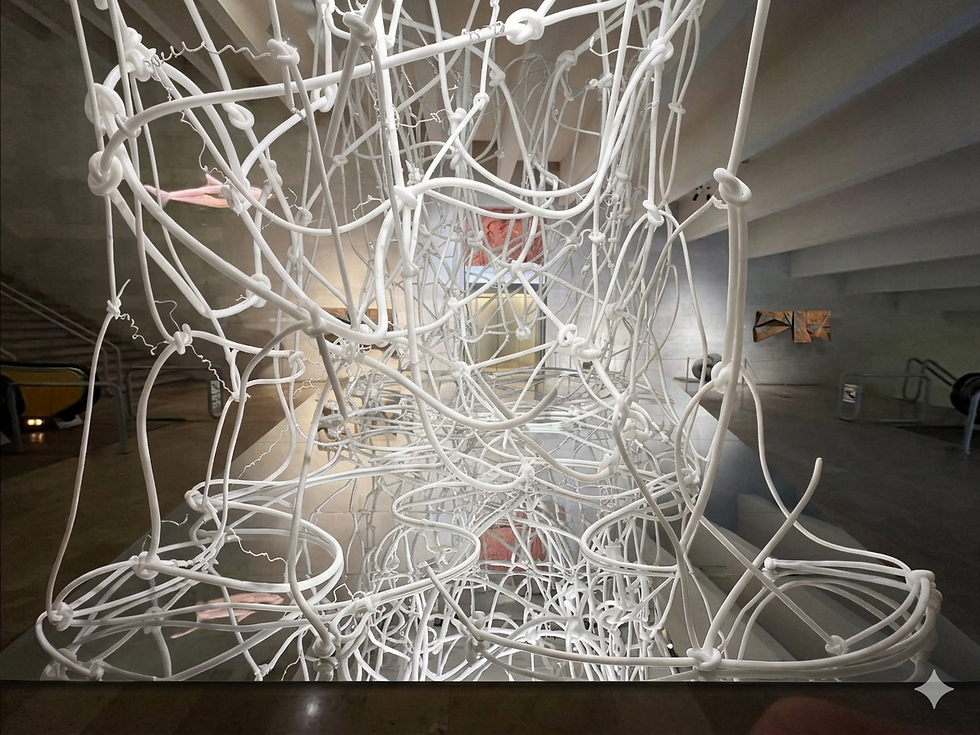
12 Body Problem is a work about the depiction of time. It combines the ancient technology of the sundial, which projects the movement of the sun onto a flat surface, allowing one to track the motion of a celestial body and precisely display time in a daily cycle, with the more advanced technology of watch hands rotating around a dial, and the even later method of digitally counting time intervals, displayed in a readable format on a seven-segment display. It is a compression of timepiece technologies into a single mechanism, reflecting both the natural origins of timekeeping and its artificial development. We would have added a tourbillon if we could. —Matvei Peshkov and Aleksandr Bochkov
Matvei Peshkov is a visual effects artist specializing in computer graphics, primarily for feature film and series. His A/V performances have been presented at the State Philharmonia of Armenia (2024, Yerevan, Armenia), Centro de Cultura Digital (2025, Mexico City), Aether Gallery (2025, San Luis Potosi, Mexico), and the Urvakan festival (2025, Yerevan, Armenia).
Aleksandr Bochkov is a media artist, engineer, and performer. He believes each element has a function.

Élie Bolard
VoidLoop()
series of kinetic sculpture (3 elements from 10, variable dimension), 2025
3D printing; CNC milling. C++; Arduino based electronic control; car wash brushes, motors, motor drivers and electronic components
Void loop() composed of six second-hand car wash brushes, disrupts the familiarity of their “natural” movements by removing the mechanical infrastructure that once defined their purpose. Freed from their human imposed constraints, the brushes explore a kind of absurd autonomy. Through clumsy repetition and distorted gestures echoing their former labor routines, they reintroduce themselves as animated, rebellious, and strangely self-aware.
Élie Bolard is a French artist who lives and works in Brussels. In his practice, he is closely interested in new technologies, both on a practical and theoretical level. He creates robotic sculptures and installations that question the use of robotization in our daily lives and in our production systems. His technical approach leads him to question dominant technologies and the monopolies of contemporary technologies. This research dimension runs through his entire practice and is also manifested in the transmission and exchange of knowledge during the workshops he leads in art centers and art schools.


Silvia Burini, Giuseppe Barbieri, Maria Redaelli
ZORVED
video [5:51, loop, sound], 2026
video editor: Anton Khlabov
The video establishes a dialogue between the works of the Organic School from MOMus Thessaloniki and the central themes of the exhibition, alongside the physical pieces on display. It aims to highlight the ‘deep roots’ of an artistic approach that has seen countless iterations over the following decades, yet remains—in its core dynamics—a vital point of reference and inspiration for contemporary artistic practices.
![Silvia Burini, Giuseppe Barbieri, Maria Redaelli, ZORVED, video [5:51, loop, sound], 2026](https://static.wixstatic.com/media/59c8b9_e19f0a1c0e2e4034bfaa64445462ec68~mv2.jpg/v1/fill/w_980,h_785,al_c,q_85,usm_0.66_1.00_0.01,enc_auto/59c8b9_e19f0a1c0e2e4034bfaa64445462ec68~mv2.jpg)
CYLAND Audio Archive (CAA)
selection of records from CAA
2013 — ongoing
20 records, turntable, headphones
Supported by CYLAND MediaArtLab
The CYLAND Audio Archive (CAA) is a division of CYLAND MediaArtLab, created to investigate archiving and exhibiting methodologies of sound art. This archive is a continuous process of working on a structure of various subgenres of sound art, making compilations, and cataloging the growing archive. To date, there are 61 releases, including works by more than 80 international artists. All the records are available for listening on cyland.bandcamp.com. Each release presented is a stand-alone piece accompanied by an artist statement.
Source material for artists varies from existing records—personal or found—field records, machine signals, or sounds extracted from revitalised devices, which were initially completely strange to sound creation in the first place and turned into sound machines. All of them are reflected and conceptualised by artists, collected together into a contradictory and rich picture of sound to memorise and fix the experience of being present in the world. Where sound—recognised or completely strange—will escape being fully possessed but remains an environment shared by people who heard it together. That is how memories form, building blocks for infinite variations of archives. —Sergei Komarov and Lidiia Griaznova

Alexandra Dementieva
Anima Mechanica – Inflatable Sculptures
from series Totems
sculptures, 2026
Supported by CYLAND MediaArtLab
Totem sculptures are part of a larger body of research exploring the metamorphosis of time.
The project draws on the ancient concept of totems—objects representing spiritual beings, ancestors, or shared cultural lineages. Traditionally, totems serve as emblems of identity and continuity, transmitting stories and values across generations. In this work, the totemic essence is reinterpreted in a minimalist, contemporary form. Each towering structure commands its surroundings, inviting contemplation. It stands as a modern totem—stripped of figurative detail yet imbued with symbolic presence. Time weaves subtly through the sculpture’s design. The polished metallic surface conveys a sense of timelessness, while the vertical form aspires toward the infinite. This tension—between past and future, solidity and transience—embodies the ongoing transformation that defines human experience.
The mechanical aesthetic of the sculpture also evokes the form of a meat grinder, an everyday object symbolizing transformation through fragmentation and recombination. This visual reference reinforces the work’s central theme: the cyclical process of deconstruction and renewal inherent in both time and matter. The installation consists of three inflatable totems forming an interactive environment. Each totem is constructed from durable inflatable material connected to an air pump controlled by an Arduino microcontroller.
Alexandra Dementieva’s main interests focus on social psychology and perception and their application in multimedia interactive installations. Her artistic research process happens in the here and now, within the increasingly technologized present. It is deeply rooted in its cultural context. Photography and other digital media always record a trace, which indicates the former presence of something. Attesting to a certain event the trace at the same time enshrines the technology in use, thus acting as a witness to contemporaneous culture. In a similar manner, she tends to reflect on behavioral patterns and cultural mechanisms that are characteristic of contemporary society. Her works can be found in museum collections and have been exhibited internationally. She is a founder and director of LASER Talks Brussels and teaches at the Royal Academy of Fine Arts Brussels.

Alexandra Dementieva
Cycloramadrome
interactive video installation, 2014
3-channel video projection, 8-channel sound; cylinder, video camera, Mac mini and speakers; TouchDesigner
engineers: Aleksandr Bochkov and Matvei Peshkov
programming: Bart Vandeput (1st edition); Yacine Sebti (2nd edition)
construction: Peter Maschke
sound: Guy de Bievre
performers: Heike Langsdorf, Maria Decorte, Alexander Baervoets, Reggy Timmermans, Julia Nitsberg, Helena Dietrich, Michael Buckley, Sue McCanley, Gregory Edelein, Bram Baloo, Celine Laloire, Ann Goovaerts, Loes Jacobs, Shelbatra Jashari, Vera Smirnova, Kurt Ryslavy, Boris Lehman, Cecile Guigny, Lisa Davies, Simon de Wrangel
co-production: The Vlaamse Overheid, la Fédération Wallonie-Bruxelles, VGC, Netwerk, iMAL, Nadine vzw, Adem vzw, Apass
Supported by CYLAND MediaArtLab
Cycloramadrome is an immersive project that invites spectators to interact with the work within an all-encompassing audiovisual environment. Drawing on 360-degree projection technology developed in the 1950s, the artist transforms the surrounding space into an active medium capable of affecting the audience both mentally and physically. The movements of the projected characters are conceived to provoke corresponding movements in the viewers, turning spectatorship into an embodied experience. Through this technology, the artist explores the complexity of collective behavioral patterns and the public’s “iconophilia”—an obsessive attachment to images.
Alexandra Dementieva’s main interests focus on social psychology and perception and their application in multimedia interactive installations. Her artistic research process happens in the here and now, within the increasingly technologized present. It is deeply rooted in its cultural context. Photography and other digital media always record a trace, which indicates the former presence of something. Attesting to a certain event the trace at the same time enshrines the technology in use, thus acting as a witness to contemporaneous culture. In a similar manner, she tends to reflect on behavioral patterns and cultural mechanisms that are characteristic of contemporary society. Her works can be found in museum collections and have been exhibited internationally. She is a founder and director of LASER Talks Brussels and teaches at the Royal Academy of Fine Arts Brussels.


Anna Frants
Polar Bear Fodder
A/V installation, 2009
Arduino, Max/MSP; canned food, RFID tags and reader, tube tv-set
engineers: Alexey Grachev, Sergey Komarov
Supported by CYLAND MediaArtLab
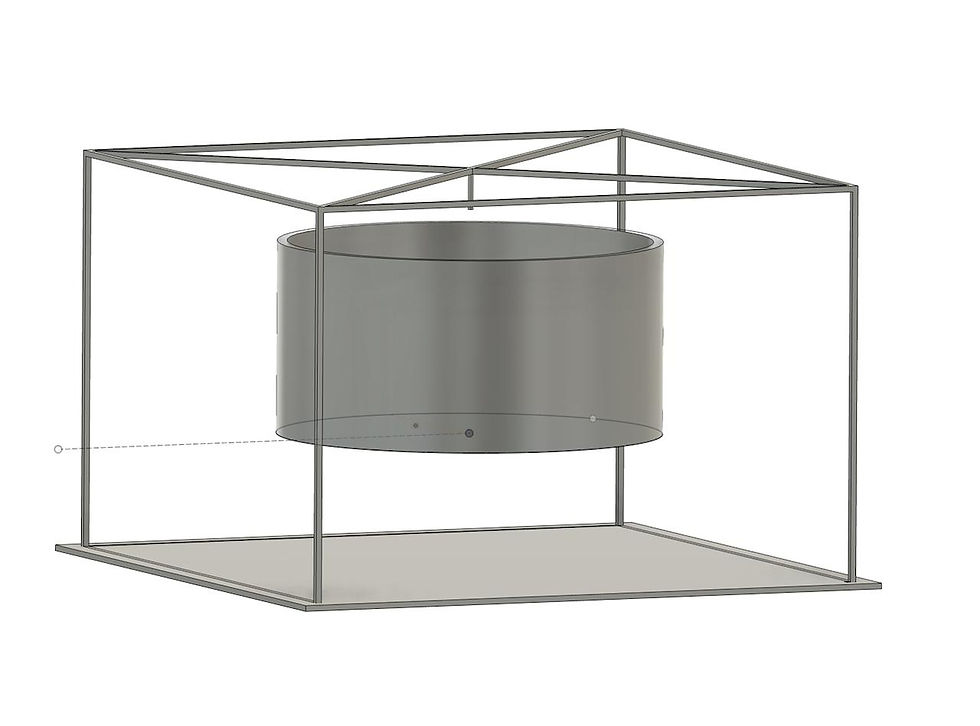
This audio-video installation combines the sights and sounds of the “Wild North” with the newest technologies. It consists of five old tin cans and a large screen. The viewer handles the cans, each of which triggers a video on the screen, filmed in the Arctic and accompanied by songs of the indigenous peoples—droning, yet very rhythmical. Judging by the context of the videos, the artist seeks to remain a neutral observer. Thus, the viewer is given a degree of control and some food (or fodder) for thought: about the future of the Arctic and the relationship between artist and viewer in contemporary art.
In 2009 Anna Frants took part in a 20-person expeditionary residency program that sailed into the mysterious Arctic Circle. The mission of this 14-day journey was to bring together artists from different disciplines, scientists, architects, and educators to collectively explore a remote and fascinating environment aboard a specially outfitted sailing vessel. The expedition became an incubator for thought, artistic experimentation and invention, directly related to this unique environment. Polar Bear Fodder grew out of Anna Frants’s experience of this journey.
Anna Frants is an artist, curator in the field of media art. She graduated from the Vera Mukhina Higher School of Art and Design (Leningrad, USSR) and Pratt Institute (New York, USA). Founder of the nonprofit cultural foundation CYLAND Foundation Inc. Cofounder of CYLAND MediaArtLab and CYFEST. Frants’ interactive installations have been showcased at Museum of Art and Design (New York, USA), Video Guerrilha Festival (Brazil), Manifesta 10 Biennale (2014, St. Petersburg, Russia), Hermitage Museum (St. Petersburg, Russia), Chelsea Art Museum (New York, USA), Russian Museum (St. Petersburg, Russia), Kunstquartier Bethanien (Berlin, Germany), Hatcham Church Gallery, Goldsmiths, University of London (UK), Dartington Estate (UK), Ca’ Foscari Zattere Cultural Flow Zone (Venice, Italy), MAXXI Museum (Rome, Italy), National Arts Club (New York, USA) and at other major venues all over the world. The artist’s works are held in the collections of the Russian Museum (St. Petersburg, Russia), Museum of Art and Design (New York, USA), Sergey Kuryokhin Center for Modern Art (St. Petersburg, Russia) and Kolodzei Art Foundation (New York, USA) as well as in numerous private collections. She lives and works in Miami, USA.


Anna Frants
Axis of Absence
installation, 2026
Arduino C++; metal, plastic, PCB, LED, wires; 3D printing, LED, unknown found parts
Engineers: Dmitry Shirokov, Phillip Avetisov
Supported by CYLAND MediaArtLab
An axis is what allows rotation.
It is invisible, structural, indispensable.
Without it, nothing turns—yet it is rarely seen.
An absence is also structural.
It is what remains when someone has left—or when time has moved beyond us.
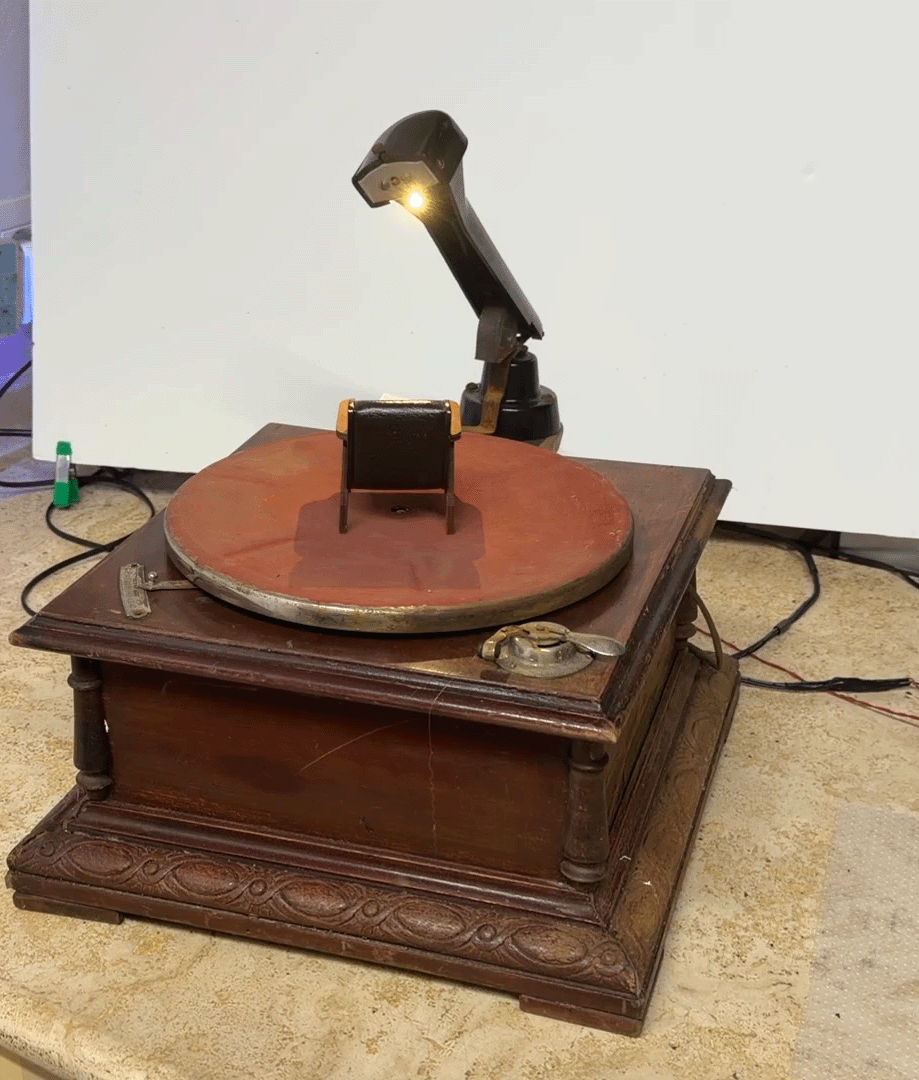
In the installation, the turning table becomes a metaphorical planet: time revolves, cycles repeat, years accumulate. Yet the armchair does not revolve with history—it waits. The doll’s book rests on the chair as a displaced narrative: childhood paused, memory archived, story unfinished.
Absence is not an event. It is a condition.

Anna Frants
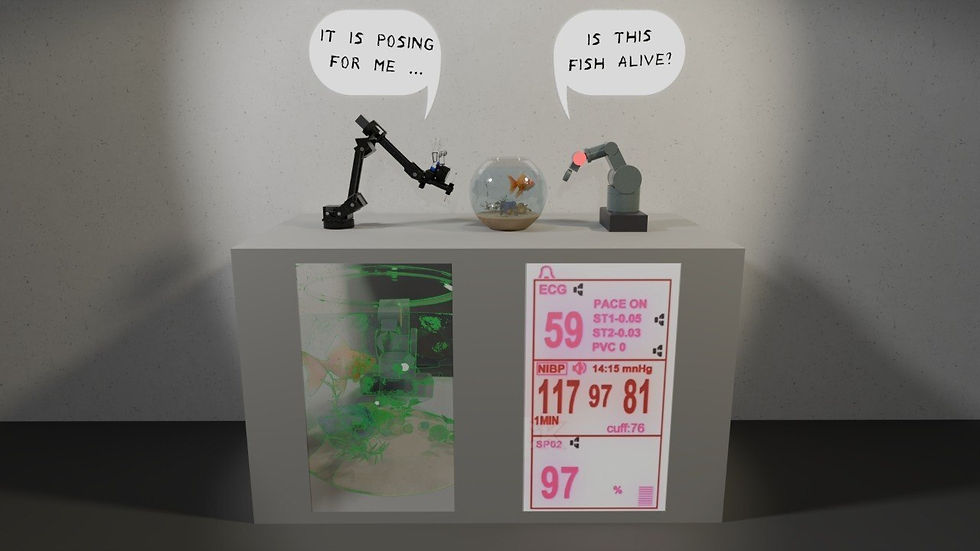
Artificial Naturalists: “After Matisse”
from series Obsessive Observation
installation, 2026
concept: Anna Frants, Andranik Meliksetyan
consulting aquarist: Vahe Mouradyan
C++, Python, Arduino, JavaScript, CSS, HTML, Bash, Ollama, Qwen 2.5 (3B), PETG, ABS 3D printing, metal, wood, LED displays, stepper motors, servo motors, web cameras, IBM-compatible PC, Raspberry Pi board, Arduino boards, wires, glass
сoncept: Anna Frants, Andranik Meliksetyan
engineers & production: Andranik Meliksetyan, Grigor Shirinyan, Philipp Avetisov, Maxim Lukin, Eugene Ovsyannikov, Dmitry Shirokov, Ekaterina Drakunova
Supported by CYLAND MediaArtLab
“I believe in being what one is”.
— Isaac Asimov, Segregationist, 1967, remark of the robot-surgeon
The Romans said: Media et remedia—“ways and means”. But what are instruments and means if they are not in the hands of the humans that carry in themselves a good will and doubts?
We live among countless machines, like among myriads of reflections of our own ideas and their ongoing incarnation. And if the thought is the evidence of our life, then how does this thought affirm this very life?
This project is a result of the large-scale collaborative effort of two teams: that of engineers and developers and that of artists who joined their optics and practices around the general vision of Anna Frants and Andranik Meliksetyan. Within the framework of the series Obsessive Observation, this joint work unfolds not just as a sum of technical solutions, but as an integrated living environment. It has place for everything that so clearly attests to life itself: its absolute value, its whimsical order of things and its infinite persistence, with which this very life involves into itself everything that it has engendered.
Designer robots Anatoly and Miro live their life not just the whim of their creators. At the intersection of efforts of the two teams, they acquire features of living creatures, and, accordingly, the machines themselves come to life. They admire, doubt, wonder, get upset, create, take care and accept care. They are the continuation of a good will of their own living makers. So, are they living among us or are we living among them? —Philipp Avetisov


Haroutiun Galentz
My Yard
oil on canvas, 1960
Collection of the National Gallery of Armenia
Haroutiun Galentz (Kyurin, Ottoman Empire, 1910 (?) – Yerevan, Armenian SSR, 1967). Born Harutyun Harmandayan, Galentz lost his parents during the Armenian Genocide and spent seven years in an American orphanage in Aleppo. After leaving the orphanage, he worked as a lithographer’s apprentice and received his first artistic instruction from Onnik Avetisian. In 1927 he moved to Tripoli, Lebanon, where he joined his brothers’ photographic studio and painted backdrops. After meeting the French painter Georges-Claude Michelet, Galentz moved to Beirut in 1930, where he taught painting and drawing and soon established his own studio. During the 1930s he became an active participant in Beirut’s emerging art scene, exhibiting his work and contributing to local artists’ associations. In 1939 he created a seven-metre relief for the Lebanese Pavilion at the New York World’s Fair. In 1943 he married his former student, the painter Armine Paronyan, and in 1946 they repatriated with their son to Soviet Armenia. In 1947 Galentz participated in the first exhibition of works by repatriated artists at the Artists’ House in Yerevan. He joined the Artists’ Union of Armenia but, following an exhibition in 1948, was accused of “formalism” and excluded from the Union; his membership was restored in 1951. During the restrictive postwar years, his Yerevan studio gradually became a gathering place for artists, writers and scientists. From the late 1950s, the support of physicist Artem Alikhanian and writers including Ilya Ehrenburg and Alexander Gitovich introduced his work to wider intellectual circles in Moscow and Leningrad, where it was shown in unofficial exhibitions. A planned exhibition at Yerevan State University was prohibited in 1961. His only official solo exhibition in Armenia during his lifetime was held at the Artists’ Union in Yerevan in 1962. His portraits, landscapes and still lifes, constructed through saturated color and expressive simplification, became an important expression of postwar Armenian modernism. Galentz was named an Honored Artist of the Armenian SSR in 1965 and received the Armenian SSR State Prize posthumously in 1967.

Lidiia Griaznova & Sergei Komarov
Long Delayed Echo Files
set of 5 VHS tapes, video player, headphones, shortwave radio
sound installation, 2026
technical consultants: Andrei Strokov, Vardan Makaryan
Supported by CYLAND MediaArtLab
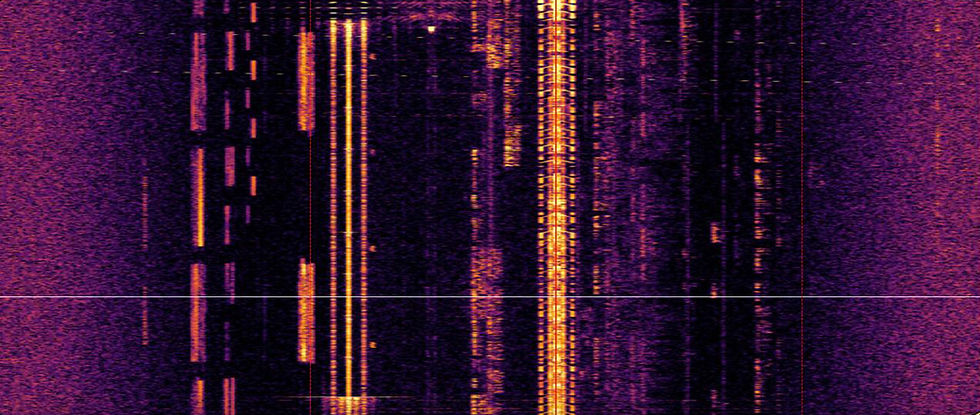
An exploration of the archive of an unknown radio amateur, the work invites visitors to listen to a collection of radio broadcasts recorded onto VHS tapes. The medium itself points to a now-obsolete recording technology: VCRs were indeed used by radio amateurs for wideband recording of the radio spectrum. Rather than capturing a single selected station, this method recorded a section of the radio-frequency spectrum, which could later be revisited to examine and identify the signals contained within it. The tapes are undated, but such methods of recording radio transmissions are known to have been used at least during the 1980s and 1990s by amateur radio enthusiasts and DXers—people engaged in receiving and identifying distant radio and television signals. With the development of computer technology, these methods were gradually replaced by more convenient digital forms of spectrum recording and software-defined radio.
We hear disembodied—or perhaps bodiless—sounds, patterns, technological and isolated signals, echoes, and noise, behind which there may be a message sent by machines to machines.
In these recordings, we do not hear the familiar wandering from one frequency to another. Rather, we are dealing with a sampling of the electromagnetic field—a space in which multiple events unfold simultaneously. Here, the human dimension of technology reasserts itself: our capacity to imagine and analyse the nonhuman remains bounded by what can be perceived and described at all. The world’s excess is framed by the width of a selected band of the spectrum, from which a single fragment is preserved for subsequent analysis.
Based on the surviving notes, the recordings were used to draw conclusions about what had been heard—about something that exists, yet remains invisible and cannot be heard directly by the human ear. What we encounter is a collection of such fragments, accompanied by brief, quasi-scientific observations on what was perceived. The depth of the author’s knowledge, as well as their epistemology and methodology, can only be reconstructed. Yet any such reconstruction is inevitably shaped by a present-day perspective: that of a person looking at an obsolete technology through the lens of a contemporary one. It is a message from the past—if the arrow of time indeed moves in only one direction.
What remains is a historical artifact that, within the installation, retains its original medium—the VHS tape—which we invite visitors to listen to rather than watch.
We have given the project the working title Long Delayed Echo Files—the unexplained, seconds-long delays of radio signals associated with long-delayed echoes are, through the anthropic principle, projected onto years—or perhaps even onto cosmological timescales. It is our nod, as amateurs ourselves, to all forms of amateur engagement with science and technology: practices driven by curiosity and by the desire to understand technologies that do not exactly conceal themselves, yet do not readily explain themselves either. It is also a nod to the delayed, perhaps unintended listener who encounters the work of a researcher unknown to us many years after it was created. The archive is old; its “signal” has only just reached us. The message was sent long ago, and only now has it found a listener.
Elena Gubanova & Ivan Govorkov
Victory over the Sun
media installation, 2025–2026 author's copy (third of the three)
Supported by CYLAND MediaArtLab
A futurist opera Victory over the Sun, staged in 1913 and co-authored by Aleksei Kruchonykh (libretto) and Mikhail Matyushin (music), was conceived to emphasize the parallels between literary text, musical score, and visual art. It became an exemplary collaborative work between poets and artists. The opera tells the story of a group of budetlyane (from the Russian word “budet”, meaning “will be”) who set out to conquer the sun. Commonly, it is interpreted as a vision of the triumph of future technologies over the old natural world. Yet, in this artwork, the very idea of “victory” is questioned. Humanity depends on sunlight—essential to the ecosystem it inhabits. Even a slight alteration in sunlight immediately reveals our vulnerability, as well as the fragility of our aspirations and visions for the future.
The installation operates on solar energy. A system of solar panels accumulates energy and sets the installation’s components—futurist-like kinetic “mobiles”—in motion through motors. These motors are powered by solar panels that follow the sun’s trajectory to maximize energy collection. The direction of the components’ movement is determined by the sun’s path and changes throughout the day. The installation remains active as long as the batteries are charged.
The installation also includes a sound component. A set of speakers plays a contemporary version of Victory over the Sun, staged on May 3, 2007, at Vassar College in Poughkeepsie, New York. The noted St. Petersburg composer Georgy Firtich created a new score for the opera (only fragments of Matyushin’s original music have survived) and came to Vassar to participate in the performance alongside a company of student singers and musicians. The production was conceived not as a historical reconstruction but as a reinvention from a contemporary perspective—an attempt to convey the explosively innovative energy of the early twentieth-century avant-garde.
Elena Gubanova is a visual artist and curator who works in the fields of painting, sculpture, installation, and video art. As a curator, she is engaged in CYLAND MediaArtLab projects. Since 2013, her works have been exhibited at major Russian and international venues, including the Hermitage Museum (St. Petersburg, Russia), Russian Museum (St. Petersburg, Russia), Tretyakov Gallery (Moscow, Russia), University Ca’ Foscari (Venice, Italy), Goldsmiths, University of London (UK), Chelsea Art Museum (New York, USA), Kunstquartier Bethanien (Berlin, Germany) and National Arts Club (New York, USA). Participant of the Manifesta 10 parallel program (2014, St. Petersburg, Russia) and several exhibitions parallel to the Venice Biennale (since 2011, Venice, Italy); frequent participant and curator of CYFEST. Awarded with the Sergey Kuryokhin Award (Russia) for "Best Work of Visual Art" (2012, jointly with Ivan Govorkov) and "Best Festival in the field of Contemporary Art" (2018). Since 1990, she has been working in collaboration with Ivan Govorkov. She lives and works in St.Petersburg, Russia.
Ivan Govorkov is an artist engaged in philosophy, psychology, painting, drawing, sculpture, and installations; he works at the junction of traditional art and cutting-edge technologies. Professor of drawing at the Saint Petersburg Repin Academy of Arts. His works have been exhibited at major Russian and international venues, including the Hermitage Museum (St. Petersburg, Russia), Russian Museum (St. Petersburg, Russia), Tretyakov Gallery (Moscow, Russia), University Ca’ Foscari (Venice, Italy), Goldsmiths, University of London (UK), Chelsea Art Museum (New York, USA), Kunstquartier Bethanien (Berlin, Germany) and National Arts Club (New York, USA). Participant of the Manifesta 10 parallel program (2014, St. Petersburg, Russia) and several exhibitions parallel to the Venice Biennale (since 2011, Venice, Italy); frequent participant of CYFEST. Awarded with the Sergey Kuryokhin Award (Russia) for "Best Work of Visual Art" (2012, jointly with Elena Gubanova). Since 1990, he has been working in collaboration with Elena Gubanova. He lives and works in St. Petersburg, Russia.

Hakob Hakobyan
An Armenian Motif
oil on canvas, 1968
Collection of the National Gallery of Armenia
Hakob Hakobyan (Alexandria, Kingdom of Egypt, 1923 – Yerevan, Armenia, 2013). Born into a family of Armenian refugees from Ayntab, Hakobyan studied at the Melkonian Educational Institute in Cyprus from 1934 to 1941, where he received instruction from Onnik Avetisian. After returning to Egypt, he worked as a textile designer and studied at the Cairo Academy of Fine Arts. In 1944 he participated in the Young Artists of Egypt exhibition. From 1952 to 1954 he continued his training in Paris, first in André Lhote’s studio and then at the Académie de la Grande Chaumière. After returning to Egypt, he participated in the Alexandria Biennales of 1959 and 1961, subsequently donating eight works to the National Gallery of Armenia. In 1962 Hakobyan repatriated with his family to Soviet Armenia. He initially settled in Leninakan, where he worked for five years as a colorist at a textile factory. His solo exhibitions in Yerevan, Leninakan and Kirovakan in 1963 brought him broad recognition. After moving to Yerevan in 1967, he increasingly turned from the figures and still lifes of his Egyptian period to the austere Armenian landscape, which became the central subject of his mature work. In 1974 he exhibited jointly with Minas Avetisyan in Vienna. In 1977 he received the Armenian SSR State Prize and was named People’s Artist of the Armenian SSR; he later received the USSR State Prize. From the 1980s onward, Hakobyan also developed a sculptural practice, creating anthropomorphic and symbolic forms from metal tools and found objects. Major exhibitions of his work were held at the Cafesjian Center for the Arts in 2011 and, posthumously, in 2013. In 2023 the National Gallery of Armenia marked the artist’s centenary with a major retrospective.

Sung Nam Han
JUAM 2024 – U / D / L / R –
4 channel video installation [07:43, HD, color, sound], 2025
Triggered by the COVID–19 pandemic, Sung Nam Han conceived the idea of an art museum accessible only underwater, leading to the establishment of the Japan Undersea Art Museum in 2022. As the world's first underwater museum designed specifically for contemporary art exhibitions, it offers a fresh perspective on contemporary society by tracing human activities within the marine environment. Furthermore, through the act of viewing art underwater, the project explores the expansion of the viewing experience, human bodily functions, imagination, and creativity, while opening up new possibilities for underwater activities. Her work JUAM 2024 –U / D / L / R– invites viewers to complement the video content by imagining the spaces between the monitors, creating an immersive structure that simultaneously demands an objective perspective.
Sung Nam Han is a video artist, director, and curator based in Japan. She creates single-channel and blue-screen keying video installations, AR art, and installations themed around "blue." Guided by her original concept of "Superlinear," she directs cross-disciplinary art performances integrating moving images, theater, and dance. Alongside presenting work internationally, she serves as the representative of Interdisciplinary Art Festival Tokyo, Art in Country of Tokyo, and Interdisciplinary Art Project Kobe, and is the founding director of Japan Undersea Art Museum. She has also served as a juror and programmer for international film festivals in Korea and France. \ Instagram: @sungnamhan_jonart.net_
![Sung Nam Han, JUAM 2024 – U / D / L / R –, video installation [07:43, HD, color, sound], 2025](https://static.wixstatic.com/media/59c8b9_cf4c2544d5c24b259133cca4c7a1ed74~mv2.jpg/v1/fill/w_980,h_714,al_c,q_85,usm_0.66_1.00_0.01,enc_auto/59c8b9_cf4c2544d5c24b259133cca4c7a1ed74~mv2.jpg)
![Sung Nam Han, JUAM 2024 – U / D / L / R –, video installation [07:43, HD, color, sound], 2025](https://static.wixstatic.com/media/59c8b9_402d16fff8f84453ba7d65edd238f7d6~mv2.jpg/v1/fill/w_980,h_583,al_c,q_85,usm_0.66_1.00_0.01,enc_auto/59c8b9_402d16fff8f84453ba7d65edd238f7d6~mv2.jpg)
![Sung Nam Han, JUAM 2024 – U / D / L / R –, video installation [07:43, HD, color, sound], 2025](https://static.wixstatic.com/media/59c8b9_01f4d42453024a8486b5ad010876f496~mv2.jpg/v1/fill/w_980,h_653,al_c,q_85,usm_0.66_1.00_0.01,enc_auto/59c8b9_01f4d42453024a8486b5ad010876f496~mv2.jpg)
Zhuang Han
The Lab of Eden (Phase VII)
multimedia installation, 2026
sculptural installation, plywood, 3D-printed resin modules, counterfeit LEGO bricks and baseplates; oil paint on wood panel; single-channel directional sound [04:15 loop], Holosonics Audio Spotlight AS-24i directional loudspeaker
sound: Han Zhuang & RIENFAN
The Lab of Eden (since 2023) is a long-term project built through a fictional "gene-matching" system. Based on my childhood memories and family experience, I construct an imagined genealogy and design twisted LEGO modules as the basic units of a genetic network. In Phase VII, the laboratory worktable is raised into a monumental cube, bringing the genetic specimens to eye level and changing the viewer's relationship to them—a fictional system for imagining inherited memory and a conversation with ancestors.
Beside the cube stands an oil painting on a wood panel with a gold-painted background, framed in counterfeit LEGO bricks—a sacred LEGO icon linking this genetic system to religion, creation, heredity, and ancestry. — Zhuang Han
Zhuang Han is a multidisciplinary artist based in Paris. His practice spans across game-based multimedia installations: sculpture, sound, performance, and speculative systems. He draws inspiration from personal experiences shaped by childhood and family dynamics to create rich, open metaphorical worlds. Through the reworking, imitation, distortion, and substitution of LEGO bricks as a childhood object, he imagines a fictional lineage in which biology and mysticism intertwine. Therein, he employs inverted logic to examine kinship structures, multiple identities, and the speculative origins of human lineage.


Aernoudt Jacobs
Humming the Ubique
site-specific installation, 2025–2026
modular mosaic of luminescent speaker foils, voltage-reactive pigments, electromagnetic, cosmic, environmental sensors, cable or 4G data transmission, real-time audio streams generated by a locally hosted AI system, Max/MSP, AI voice generation and sound processing
concept & realisation: Aernoudt Jacobs
production: r25b4, STUK, KU Leuven (W&T, BAC ART LAB)
supported by the Flemish Community
production LUMSON partner project: iMAL, IMO-IMOMEC, FARI & De Hoge Rielen
EM Sensors & software: Techdesign
scenographic & technical assistance: Maryia Komarova
electronics & 3D design, technical realization: Jeroen Vandesande
printing & technical assistance: David Jeuniaux (IOxOI)
material research: IMO-IMOMEC – UHasselt
AI: Lluc Bono Rossello (FARI — VUB — ULB)
AI-technology: RAVE (Antoine Caillon, Philippe Esling)
Humming the Ubique unfolds as a living interface between hidden signals, light and voice, translating imperceptible radiation, electromagnetic fields, cosmic fluctuations and environmental vibrations into luminous colour fields and artificial voices. A mosaic of thin foils responds to captured energetic signals, while AI-generated vocal tones make these hidden phenomena temporarily perceptible. The work reflects on perception, invisible infrastructures, the environmental footprint of digital systems, and how AI can serve as a tool for mediating between the imperceptible and the imaginable.
Aernoudt Jacobs is a Belgian artist working primarily with the medium of sound. His work is both phenomenological and empirical. It has its origins in acoustic and technological research and investigates how sounds can trigger sonic processes that affect the observer's scope of perception. His work focuses on a central question: how can the complexity, richness, and stratification of our everyday environment become perceptible through sound, material, and technology? Notable exhibitions include Bergen Art Museum (Bergen, Norway), MACBA (Barcelona, Spain), ISEA, Singuhr Hoergalerie (Berlin, Germany), Netwerk (Aalst, Belgium), NIMK (Amsterdam, the Netherlands), STUK (Leuven, Belgium), Vooruit (Ghent, Belgium), Kaaitheater (Brussels, Belgium), deSingel (Antwerp, Belgium), Le Bon Accueil (Rennes, France), Lydgalleriet (Bergen, Norway), Tschumi Pavilion (Groningen, the Netherlands), Palais de Tokyo (Paris, France), the Hermitage Museum (St. Petersburg, Russia), Kristiansand Kunsthall (Kristiansand, Norway), Bozar (Brussels, Belgium), Museo Reina Sofía (Madrid, Spain), and Marta Herford (Herford, Germany).\ Instagram: @aernoudtjacobs


Sergey Kishchenko
Papyri from Pontelongo
media installation, 2023
diptych, mixed media, sound [05:41, loop]
producer: Andrea Sambin
underwater field recordings: klankbeeld / Freesound.org
I arrived in Pontelongo by chance, shortly after my immigration to Italy in the autumn of 2022. At the time I was staying with friends in Piove di Sacco, not far from this small town. Walking along the single street that runs beside the canal near the church, I noticed an old house. On the ground floor were former shop spaces, clearly closed for many years.
The shop windows had been covered from the inside with sheets of white paper. They had hung there for decades. Over time, the surrounding environment slowly left its mark: water, humidity, sunlight, and shifts in temperature transformed the paper into something entirely unexpected. On its surface, traces of time began to emerge—forms resembling Rorschach blots, landscape maps, or satellite images of the Venetian Lagoon. They were neither drawings nor photographs, but impressions shaped by time itself.
At that moment, I understood I was looking at works of art. I decided to rescue them from the abandoned building, but the process proved far from simple. With the help of Italian friends who lived nearby, I began to trace the history of the place. We discovered that the woman who had owned the house had died about thirty years earlier, and that the building had passed to her relatives in Padua. We eventually found them, but opening the shop was not straightforward—the relationships within the family were complicated.
Eventually, the doors opened and we were able to enter. But that was when the real difficulties began. The paper, which had hung in the sun for decades, had become as fragile as a butterfly’s wing. It literally disintegrated in our hands. I had to invent my own method to transfer this crumbling material onto a supporting surface. This is how the series Papyri from Pontelongo came into being.
On one level, the series Papyri from Pontelongo consists of found objects and artistic gesture. On another, it reflects a deeply personal experience connected to the reality of migration: finding oneself in a foreign country, surrounded by an unfamiliar language, and suddenly discovering something that begins to speak to you in a language you understand—a “document of time” that no one intended to create. The sheets that hung for decades behind the windows of a closed shop on the single street along the canal are not drawings or abstractions in the usual sense. They are traces left by air, humidity, sunlight, and temperature—traces of water that transformed ordinary paper into images resembling river deltas or the nervous tissue of the lagoon. It is as if the place itself had tried to write its own biography on this fragile surface. A key aspect of these works is that the sheets were not simply found—they were recovered. The story of gaining access to the house, the complicated relationships among the heirs, and the moment of finally entering the space all form a kind of dramaturgy. Alongside this runs another, more subtle narrative: the authority of the material itself. The fragile paper, which had become like a butterfly’s wing, dictated not a method or a style but an ethic of handling. In the process, I had to invent a technique that would allow this state of transformation to be transferred onto a support—preserving the moment in which nature and time themselves generate texts and forms. Here the organic element is not nature represented, but nature as a process, acting as both author and co-author. — Sergey Kishchenko
Sergey Kishchenko is an interdisciplinary artist based in Venice whose work spans performance, video, installation, and research-based practice. His projects — including Duck Test, Observation Journal, Hortus Conclusus, and Temple of Venus — investigate migration as a movement of memory, myths, and biological forms across time and borders. Central to his work are hybrid figures, archives, and ecological metaphors that reveal identity as a fluid and evolving process. By bringing together cultural history, natural systems, and performative narratives, Kishchenko constructs environments where historical memory and contemporary experience intersect, suggesting migration as a universal condition of culture and human existence.

Alexei Kostroma
NANO 163
object, 2017
invisible UV color on eggshells on canvas
Eggshell—image of the genome, coding, and storage of information. Eggshell objects by Alexei Kostroma reveal the theme of micro- and macro-worlds governed by the invisible mathematical harmony of numbers. The artist uses natural white eggshells to create geometric structures. Applied in invisible ink to the inner surface of each shell are numbers from 1 to 9, the sum of which represents an information code. Rows of eggshells form an image of the atomic microcosm; circles form an image of the macrocosm. The study of the world of atoms has been actively developed in the age of nanotechnology; hence the series is entitled NANO. The number in the title of each object refers to its composition—for example, NANO 163 was created from 163 digitized eggshells. These invisible numbers are visible only under UV light.
Alexei Kostroma is an artist, theorist, researcher living and working in Berlin, Germany. Since the early 1990s he has formed his artistic worldview, the Organic Way, where the central concept is a study of interrelations between natural and social laws. “The Organic Way is a way of knowing the unity of meanings” (definition by artist, 2016). Working throughout his art practice with eggshells, white feathers, figures (numbers), and lemon yellow pigment, Alexei Kostroma identifies these four media in his work as his “artistic signs” or “brands”. Concentrating all the diversity of his long-term creative work, the artist arrived at the point, his concept of a central phenomenon that determines the end and beginning of all events and all phenomena.


William Latham
with participation of Stephen Tod, Dylan Banarse, and Frederic Leymarie
Half Way to Butterflies
with participation of Stephen Todd, Dylan Banarse, and Frederic Leymarie
12 digitally generated prints, 2026
12 Mutation Generated AI Frames in a Ligne Claire Style Created Using Custom made Mutator, Pixel Score and FormGrow, CSynth Software and Gemini
Mutator/FormGrow code: Stephen Todd, Software London Geometry
Google DeepMind (AI code): Dylan Banarse, Software Google DeepMind
Academic Lead: Academic Chair Prof Frederic Leymarie, Goldsmiths University of London
This collaboration has led to a new type of AI-guided evolution, for which Banarse has coined the term "Foundational Evolution". At its heart is Gemini, a foundation model trained on vast amounts of text and images. This allows Gemini to interpret abstract visuals in a human-like way, performing the equivalent of Rorschach’s inkblot test by finding meaning in complex forms. In this work, the genetic mechanisms and unique 3D "form-growing" grammar developed by Latham and Todd over the past thirty-five years are married with Gemini. Emulating evolutionary principles, the system starts from a simple geometric form. The grammar and its parameters are then mutated by their custom software, Mutator, to generate multiple variants. These many variants are then handed over to Gemini to be judged—a process traditionally done manually by the artist. Based on its understanding of the forms and driven by Google DeepMind's "evolutionary prompts," Gemini identifies “winners” and weeds out “losers” in a Darwinian-style selection, pitting organic forms against each other in what Banarse calls "binary tournaments." It uses a "success-scoring system" and explains each of its selection decisions to retain or discard images. The result is a system that generates complex natural forms that resemble viruses, antlers, diatoms, horseshoe crabs, dragonflies and much more.
William Latham (Goldsmiths University of London) is a pioneering UK digital artist well known for his evolutionary art created at IBM in the late eighties. After twelve years as a Creative Director in Rave Music and Computer Games, he became a Professor at Goldsmiths. Currently, William and his collaborator Stephen Todd are working with Google DeepMind to use AI to drive and steer the evolution of their organic art. This work was shown for the first time in the Evolution and Foundational AI exhibition in London in late 2025. \ evolutionandfoundation.com \ Instagram: @williamlathamart
Stephen Todd (Software London Geometry) is William's long time collaborator since they worked together 1987–93 at the IBM UK Scientific Centre in Winchester. Stephen worked as a Senior Scientist at IBM Hursley for over 20 years. He then became a Visiting Professor at Goldsmiths University of London for 3 years where he also worked on scientific visualisation work linked to the Mutator Project. He is currently working with London Geometry on software development.
Dylan Banarse (Software Google DeepMind) is a Senior Software Engineer at Google DeepMind working at the intersection of AI, artificial-life and computational creativity. After his PhD on biologically-inspired neural networks he moved into industry to lead development on multiple BAFTA-nominated projects, from the Creatures series of artificial-life simulations to four series of the mixed-reality BBC TV show BAMZOOKi. He worked with William Latham on the Evolution and Foundation project.
Prof. Frederic Fol Leymarie is a prominent computer scientist, engineer, and academic who serves as a Full Professor of Computing at Goldsmiths, University of London. He is widely recognized for his interdisciplinary work bridging the gap between artificial intelligence (AI), computer vision, and the visual arts.

Anne-Sarah Le Meur
L’œil en coin / A Sidelong Glance
9 lenticular prints, 2019–2026
custom software, C, C++, digital lenticular printing
photography: Studio Vincent Carlier
courtesy of Galerie Charlot
Extending her work on perception and light in digital 3D image, Anne-Sarah Le Meur’s recent lenticular prints are striking in their relationship to time and space. Moving in front of them, viewers discover shifts, appearances and disappearances of images. Elements, colors, and glows transform, interlock, or duplicate. Gathered on a sometimes streaked rectangular surface, a few basic shapes (a circle, a stripe) play with a strange and recurring black area. The result is complex and fascinating, fleeting and ambivalent, mixing geometrical and lyric pictorial references from Malevich to Rothko, hypnagogic visions (behind closed eyes) or post-mortem and archaïc memory. Connecting past and present, stillness and movement, these compositions thus capture and simultaneously empower our gaze.
Anne-Sarah Le Meur lives and works in Paris, France. Since 1990, defying 3D conventions and drawing inspiration from painting and experimental cinema, visual artist Anne-Sarah Le Meur has mainly created 3D images, which she twists and distorts in unusual ways. In 2000, she turned her attention to virtual light and color sensations. Her real-time 3D computer program (with no rendering delays) enables her to produce installations, generative pieces, performances and prints. At the same time, she teaches visual arts at University Paris 1.


Diego Liedo
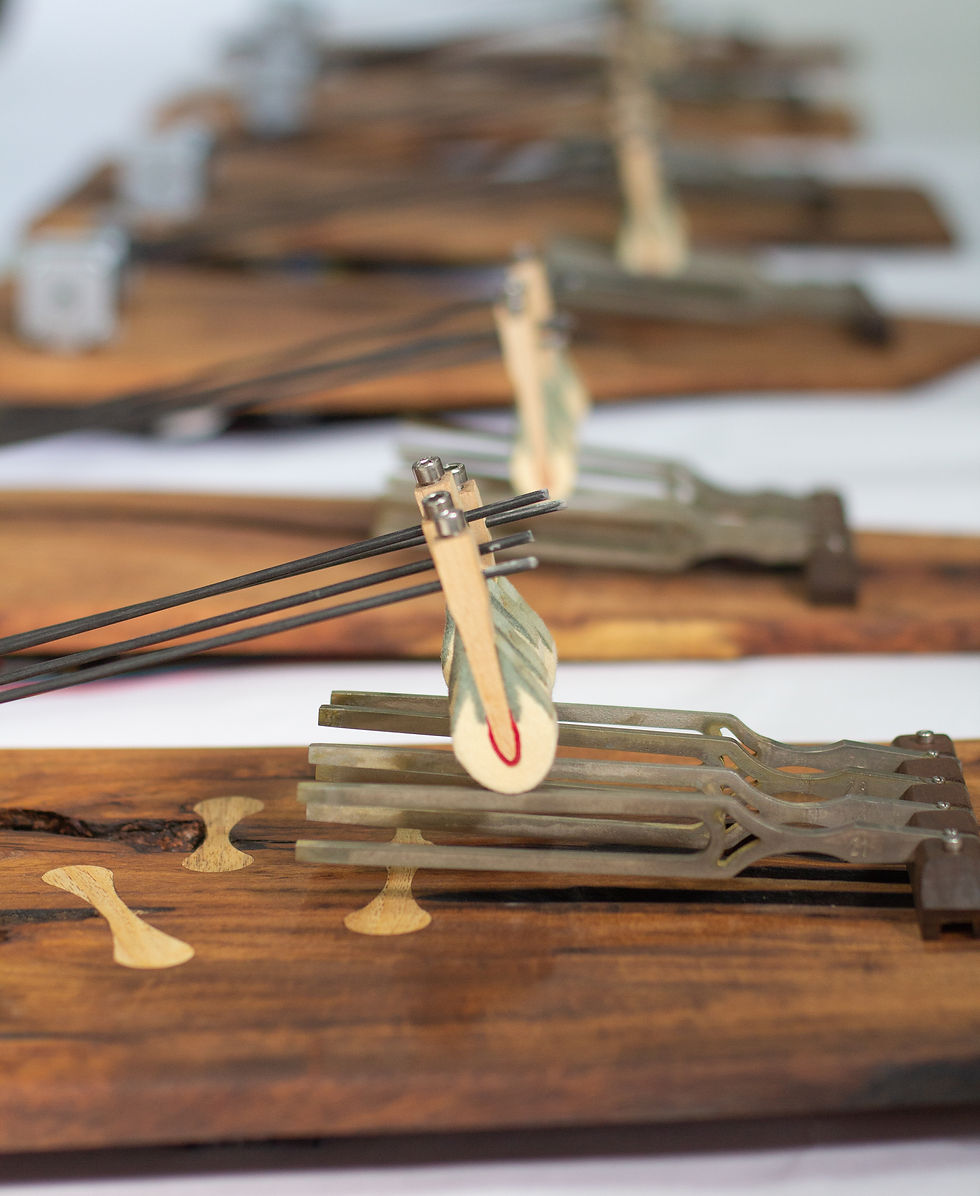
Heliophones – Diapasones
sculptures, 2024–2025
laser cutting; CNC milling; wood joinery; electrochemical process; custom software in C++/Arduino; reclaimed wood, steel tuning forks, piano hammers, carbon fibre rods, stepper motor and electronics; ESP32 microcontroller, TMC2226 stepper motor driver, VL53l06 distance sensor
Diapasones is an interactive sound sculpture from the Heliophones series that explores how sunlight can leave a permanent trace in matter. Each sculpture preserves one month of solar activity through the irreversible transformation of tuning forks, creating a unique microtonal instrument. Rather than translating solar data into sound in real time, the work allows sunlight to physically reshape the instrument itself, making each sculpture both a musical object and a material record of a specific period in the Earth’s relationship with the Sun.
Diego Liedo is a Mexican artist and intermedia producer whose practice explores sound, electronics, mechanics, and the construction of experimental instruments. Trained in philosophy, he later expanded his work into creative technology, programming, fabrication, and sound art. His projects often combine handmade mechanisms, custom electronic systems, sensors, synthesis, and performance, treating technology as both material and language. He develops much of his work at Taller 30 in San Miguel de Allende, where artistic research and technical experimentation intersect. His practice focuses on creating devices, installations, and performances that reveal physical, acoustic, and electromagnetic phenomena through direct experience.


Natalia Lyakh
WaterProof
photo-video installation, 2026
3 plexiglass objects, digital photography, silicone adhesive sculpting; 1 plexiglass object with 5-inch IPS LCD display, built in speaker, video [1:20, MP4, loop]
Water is among the oldest symbols in mythology, philosophy, and psychology alike. In the thought of Carl Jung, it becomes a metaphor for the unconscious—individual and collective—fluid, deep, purifying, and treacherous at once.
In WaterProof objects, water is held within miniature screens as a physical metaphor for subjectivity itself. Each viewer perceives the world through a personal lens shaped by their own unconscious. At certain angles, the real image vanishes, displaced by a reflective shadow. As Jung observed: “Until you make the unconscious conscious, it will direct your life, and you will call it fate.”
The video-object engages with the collective unconscious. Dark depths evoke the unknown; drifting ice suggests the slow crystallisation of archetypes; sudden flashes of light emerge as brief incursions of the personal within a collective current. A moving reinterpretation of Olga Rozanova's Green Stripe (1917) passes through the frame as a stream of impersonal psychic energy—without origin or end—while vibrating lines trace the momentary surfacing of individuality above the collective flow.
The installation invites an encounter with the hidden dimensions of the unconscious: our shadows, which may either overwhelm or illuminate us. Whether we drown in these depths or learn to swim and dive through them depends on the quality of our individual awareness—on the willingness to see.
Nataliya Lyakh is a Paris-based multimedia artist working across photography, video, photo-objects and installation. She holds a PhD in neuro-linguistics, with research focused on brain asymmetry and speech processing. Since 2000, she has devoted her practice to photography, video art, short films, and video installations, exhibiting internationally in Paris, Stockholm, Istanbul, Milan, Rome, New York, and London. Her works are held in private and public collections, including the Russian Museum. Informed by her scientific background, Lyakh explores hidden dimensions within ordinary objects and situations, using plexiglas, aluminium, photography, and video to transform perception and reveal unexpected visual and aesthetic possibilities.


Lev Manovich
Natura
digital images created with generative AI, large format printing, 2023–2026
Spinoza distinguished natura naturans, nature as creating force, from natura naturata, nature as created things. Which category fits generative AI? Perhaps both, since its models are built from things already made. But I am more interested in the first. Like a forest, it is a self-organizing system: it does not store pictures but grows them, each image emerging from a latent space the way a branch emerges from a trunk.
In Natura, this generative process is given an appropriate subject. Interiors and forests intertwine. A massive limb crosses a room like a beam. Bookshelves—my recurring motif, the classic architecture of accumulated human knowledge—stand inside a tangle of branches, their contents indistinguishable from nests and roots. Human figures appear among the shelves and branches not as owners of these spaces but as one more species inhabiting them.
The images are rendered in the visual language of fine pen and graphite drawing, the medium through which Europeans first studied and catalogued nature, from Renaissance botanical illustration to nineteenth-century scientific engraving. But here this language of observation is redirected: the AI is not recording nature, it is enacting it. What we see is not landscape as naturata—nature depicted—but a trace of naturans: a machine that, like nature itself, endlessly generates form. — Lev Manovich
Lev Manovich is an artist, author, and one of the world’s most influential digital culture theorists. After studying visual art, architecture, and filmmaking, Manovich began using computers to create digital art in 1984. His work has been exhibited in 14 solo and 120 international group exhibitions at many prestigious institutions, such as the Institute of Contemporary Arts (ICA) (London, UK), Centre Pompidou (Paris, France), and the Shanghai Biennale (Shanghai, China). His innovative art projects include “little movies” (the first film project for the World Wide Web, 1994), Soft Cinema (narrative films edited by algorithms in real-time, 2002) and Phototrails (visualizations of 2.3 million Instagram photos shared in 13 global cities, 2013).
Manovich played a key role in creating four new research fields: new media studies (1991–), software studies (2001–), cultural analytics (2007–) and AI aesthetics (2018–). He is the Presidential Professor of Computer Science at City University of New York’s Graduate Center and the Director of the Cultural Analytics Lab.


Tuula Närhinen
Alien Invaders
installation, 2021
5 photographs; 9 nest sculptures of variable dimensions (plastic filaments of colour-coded shock-tube detonator wires with other marine plastic detritus, eggshells, stones)
The project was triggered by an observation: some geese on the Harakka island had started using plastic filaments in the construction of their nests. Birds adapt to urban marine environments and tend to appropriate anthropogenic materials for their own purposes. The work sets out to revisit the story of avian evolution by elaborating on the imaginary potential of new hybrid bird species, genetically programmed to thrive on plastic detritus.
The installation consists of nine nest-sculptures put together of plastic waste drifted ashore with photographs of the nests placed in the natural habitat of the island. The main ingredients of the nests are the partly bleached filaments of colour-coded shock-tube detonator wires applied in initiating underbelly explosions. When the city of Helsinki expands, excavated rock material gets dumped into the sea together with bits and pieces of plastic wires used in blasting the bedrock.
Tuula Närhinen is an artist and researcher in visual arts living and working in Helsinki, Finland. Tuula Närhinen holds an MFA from the Finnish Academy of Fine Arts and an MSc in Architecture from the Helsinki University of Technology. In 2016 she gained a Doctorate in Fine Arts from the Helsinki University of the Arts. Re-adapting methods and instruments derived from natural sciences, Närhinen facilitates visual renderings of natural phenomena. Alongside tracings and recordings, her installations showcase the processes of inscription and the DIY instruments implicated. Her works are represented in the collections of the Kiasma Museum of Contemporary Art and the Helsinki Art Museum.


Anna Otsolainen
Drying
Translucent
Drying
from series Secret Garden
drawing, 2025
Translucent
from series Secret Garden
drawing, 2025
watercolor paper, ink
Secret Garden is a place to appreciate plant aesthetics, as a combination of various plants from different seasons alongside separate botanical portraits.
Plants have always been important to humans—for survival, for expression, and for their ability to bring beauty and a sense of calm.
Rather than treating plants as a decorative background or as specimens in a still life, this series invites the viewer to encounter them as living individuals in their fading and drying form. By shifting focus to these often-overlooked forms, the works invite the viewer to slow down, step away from the rush of everyday thoughts, and spend a moment of pause.
The drawings are inspired by the aesthetic principles of ikebana, which value simplicity, respect for nature, and the creation of harmonious compositions that follow the natural growth, movement, and form of plants.
Anna Otsolainen is an Estonian artist and art teacher. She graduated from the Sculpture Department of the Art Academy of Latvia in 2019 and is currently pursuing an MA in Drawing at the same institution. In her artistic practise, she focuses on illustration and drawing, inspired by nature, especially plants. Drawing often works with ceramics and macro photography. Anna has participated in several national and international sculpture symposiums and in recent years also in several group and solo exhibitions in Estonia.\ Instagram: @annaotsolainen


Jaanika Peerna
Cold Love Yerevan
from the project Glacier Elegy
installation, 2026
pigment and ice on hand-cut film, magnets, wall
This wall-based sculpture consists of multitude of identically shaped but unique pieces on film. Each hand cut with uniform cuts and each with paint eroded by ice and water across the surface. The work takes on different forms each time it is installed by the artist, with the pieces recycled and reused, then assembled and falling in different ways. For the artist, this mimics the fluidity of water and the way that the same mass of water can appear in different places across the world and in different forms. Huge mass of water is also held in glaciers. Glaciers were formed layer by layer over long periods of time and hold memory of the atmosphere at the time of freezing. Peerna’s installations are labor intensive and are created one line, one drip and cut at the time. By doing it the artist is tuning into the life of a glacier and the flow of the water in an embodied way.
The title Cold Love refers to the kind of love Peerna calls the world to feel towards glaciers: love them warmly but keep the love cold not to make the beloved disappear.
Jaanika Peerna is an Estonian-born artist based in New York and Lisbon. Her work encompasses drawing, installation, and performance, often dealing with the theme of transitions in light, air, water and other natural phenomena. For her performances she often involves the audience in participatory reflection on the current climate meltdown. Her art practice stems from the corporeal experience of our existence and reaches towards enhanced awareness of the fragility, interconnectedness and wonder of all life.
She has exhibited her work and performed in the entire New York metropolitan area as well as internationally. Her work is in numerous private collections in the USA and Europe and is part of the Fonds National d’Art Contemporain (Paris, France) and the Glyn Vivian Museum (Swansea, UK). Her work is represented by JHB Gallery, Artrovert and IdeelART. The latest solo exhibitions took place in Soul at Korea Foundation (2025) and in Tallinn at ARS (2026).


Mariateresa Sartori
Wind SW 2 km/h
video installation [15:53, loop, no sound], 2023
The camera recorded the anemometer set in motion by the wind. The anemometer is an instrument commonly used in meteorology to measure wind speed. I modified the anemometer by cutting the data transmission cables and applying linseed oil-soaked threads to each cup. Positioned at the centre of a sheet of paper and exposed to natural wind for five minutes, the device produces a circular trace. The resulting pattern varies depending on the wind velocity, duration, shifts in direction, interruptions or complete absence of propulsive thrust. What interests me is the tendency towards a mechanical objectivity, which is never completely achieved since the anemometer thus reworked is imbued with subjectivity. I am interested in the field of tension between the subjective and the objective. The transformation from technological instrument to mechanical/empirical apparatus counteracts the achievement of objectivity, which remains, however, an ideal to strive for, a tension towards. Furthermore, the video is not perfectly in focus to emphasise that no matter how hard we try to understand and grasp reality, it retains a certain degree of opacity. — Mariateresa Sartori
Mariateresa Sartori is a visual and sound artist. Her research revolves around three thematic fulcrums: the empirical scientific method; behavioral dynamics, often in relation to neurosciences; music and sound in relation to language. She frequently collaborates with experts from the various disciplines she explores: geologists, physicists, linguists, musicologists, musicians, actors, botanists. She has exhibited in numerous museums and galleries in Italy and abroad, including the Therese Giehse Halle at the Münchner Kammerspiele (Munich, Germany), Stanislavsky Electrotheatre (Moscow, Russia), Chopin Museum (Warsaw, Poland), Ikon Gallery (Birmingham, UK), Fondazione Querini Stampalia (Venice, Italy), NGBK (Berlin, Germany), Hangar Bicocca (Milan, Italy), Museo Macro (Rome, Italy), Museum Joanneum, (Graz, Austria), Palazzo delle Esposizioni (Rome, Italy), Mucsarnok Kunsthaus (Budapest, Hungary), and the 45th Venice Biennale.
![Mariateresa Sartori, Wind SW 2 km/h, video installation [15:53, loop, no sound], 2023](https://static.wixstatic.com/media/59c8b9_d37de7c5ad914cd59e6c50382d5ddcbc~mv2.jpg/v1/fill/w_980,h_653,al_c,q_85,usm_0.66_1.00_0.01,enc_auto/59c8b9_d37de7c5ad914cd59e6c50382d5ddcbc~mv2.jpg)
Dmitriy Shishov
Manifestation
object, 2026
Geiger counter, solenoid, stone, metal, wires and counter
adviser: Alexey Grachev
Some manifestations of natural forces are felt by humans constantly, while others remain beyond the reach of our senses. A Geiger counter detects high-energy cosmic particles that are inaccessible to human perception. The indicator registers the number of particles captured by the device—traces that may originate in distant galaxies during processes such as star formation, a direct expression of the Universe at work.
Each click is a manifestation of global processes.
Dmitriy Shishov is an electronics engineer, nature explorer, and weather observation enthusiast based in St. Petersburg, Russia. Born in Vyborg (USSR), he graduated from the St. Petersburg Electrotechnical University “LETI” (Russia). He develops electronic devices for both industry and art. Electronics engineer at CYLAND MediaArtLab. His work has been presented at festivals including Chaos Constructions (2019, St. Petersburg, Russia), Archstoyanie (2024, Nikola Lenivets, Russia), CYFEST 16 (2024, Yerevan, Armenia; 2025, Mexico City, Mexico), CYFEST 17 (2026, Venice, Italy).


Suren Tadevosyan
Connection Series
photography, 2024–ongoing
digital printing on vinyl; coloured viewing filters
It is a printed photography manipulating with the idea of three main colors: Red, Green, Blue. The visual perception of the piece changes when you look at it through different plastic frames. The synthesis of photo and vision occurs at the intersection of optical illusion. Details delve into the interplay of light and color, forming an ever-evolving image that reflects the continuum of past, present, and infinity. Action effects highlight touch and human connection.
Suren Tadevosyan is an award-winning cinematographer, art director, and visual artist based in Armenia. His work spans feature films, music videos, animation, and commercials. He has received Best Cinematography awards at several international film festivals, as well as the European Cinematography and Anahit Awards. He studied cinematography at the Armenian State Pedagogical University and completed camera operation courses with Michael Krichman (Moscow, Russia). Tadevosyan is Art Director of the Yerevan International Short Film Festival and a member of several professional film organizations in Armenia, including the Armenian National Film Academy and Armenian Cinematographers Guild.

Koen Theys
The Vanitas Record
video installation [33:37, loop], 2005
Full HD projector; stereo system and loudspeakers
realisation & production: Koen Theys
director of photography: Danny Elsen
assistant camera: Jan Dellaert
second camera: Koen Theys
assistant: Dimitri Riemis
machinery: Alex De Heus
gaffer: Wim Temmermans
electro: Gideon Van Essen
sound: Koen Theys
editing: Koen Theys
scenography: Bert Leysen, Dries Dejonghe
props and objects: Jeroen Boels, Erik Dehaes, Dirk Eelen
voices: Arnold Naessens, Roland Patteeuw, Manfred Sellinck, Koen Theys, Annemie Tweepenninckx
co-production: Vlaams Audiovisueel Fonds – Kunsthalle Lophem
For the video The Vanitas Record, Koen Theys first constructed a monumental three-dimensional still life that reinterpreted the traditional vanitas genre. Spanning 20 × 12 × 4 meters, the installation incorporated classical symbols of mortality and the transience of human ambition: a huge amount of skulls, books, candles, and clocks. Among these objects, Theys introduced a living element—22,000 live snails—which added a dynamic, organic decay to the tableau.
The video begins with a deliberate, contemplative camera movement, capturing the intricate details of the installation, underscoring the delicately rendered interplay of mortality and ephemerality. As the camera glides across the assemblage, a series of voice-overs surfaces, featuring fragments from Theys’s own media appearances, where he reflects with self-awareness on the absurdity and spectacle of his “record-breaking” creation. This sardonic layer of commentary imbues the work with a subtle irony, framing the installation as a meta-critique on the very concept of vanity and ambition embodied by the vanitas genre itself. In a final twist, the film shifts to the opening ceremony of the exhibition. Instead of showcasing the audience or the speakers, Theys directs his lens toward the press throng, an abundance of cameras capturing and consuming the spectacle.
Koen Theys is one of the pioneers of videoart in Belgium. Already during his studies (at the age of twenty) videowork of him was bought by the MoMA in New York. Ever since, his work has been shown all over the world, from Europe and Russia to the USA and Asia.
However his video- and photographic work remains the centre of his œuvre, he can be considered as a typical post-medium artist, as he makes sculptures, installations and performances as well. A constant in his work is the critical deconstruction of icons in modern culture. Through minimal interventions—such as displacement and duplication—he transforms these icons until they start to act against themselves, as it were. \ Instagram: @koen.theys
![Koen Theys, The Vanitas Record, video installation [33:37, loop], 2005](https://static.wixstatic.com/media/59c8b9_ad1ee09841ad4cc6b676b9f80726b499~mv2.jpg/v1/fill/w_980,h_551,al_c,q_85,usm_0.66_1.00_0.01,enc_auto/59c8b9_ad1ee09841ad4cc6b676b9f80726b499~mv2.jpg)
![Koen Theys, The Vanitas Record, video installation [33:37, loop], 2005](https://static.wixstatic.com/media/59c8b9_4d50ca5811df4148bc64791c3b2f35a1~mv2.jpg/v1/fill/w_980,h_551,al_c,q_85,usm_0.66_1.00_0.01,enc_auto/59c8b9_4d50ca5811df4148bc64791c3b2f35a1~mv2.jpg)
![Koen Theys, The Vanitas Record, video installation [33:37, loop], 2005](https://static.wixstatic.com/media/59c8b9_0bd990fc56104848a3654842ccbced3d~mv2.jpg/v1/fill/w_980,h_551,al_c,q_85,usm_0.66_1.00_0.01,enc_auto/59c8b9_0bd990fc56104848a3654842ccbced3d~mv2.jpg)
![Koen Theys, The Vanitas Record, video installation [33:37, loop], 2005](https://static.wixstatic.com/media/59c8b9_b69f94af5d274464852311b448d9f43e~mv2.jpg/v1/fill/w_980,h_551,al_c,q_85,usm_0.66_1.00_0.01,enc_auto/59c8b9_b69f94af5d274464852311b448d9f43e~mv2.jpg)
Eric Vernhes
Ektachrome
video installation, 2019
generative processing of amateur Super 8 images; Max/MSP; single channel Full HD video [11:50, sound, loop]; electroacoustic composition, stereo sound; projection; speakers
A few years ago, I bought a stock of printed Super 8 films at a flea market. They were the travel souvenirs of a single family from 1970 to 1980. There’s a paradox of family film: these memories are both extremely intimate and perfectly common. So they're very boring to watch, unless they're about your own family. After tedious viewing, I felt I had a mission to do something with all these memories. I thought perhaps the passion of the amateur filmmaker lay in capturing light and transforming it into emotion.
So I followed in his footsteps, capturing and transforming this light as matter: light matter from Tunisia, fossil light from Morocco or Brittany... While the computer scrolls through the films, EKTACHROME's software chromatically decomposes the image and reorganizes the grains of silver oxide in synchronization with electroacoustic music. The result is a hypnotic visual journey that attempts to reconstruct the process of creating emotion and memory.
Eric Vernhes’ artistic practice is based on the creation of “temporal objects”. This concept, derived from phenomenology, qualifies devices endowed with an intrinsic movement that espouses that of the spectator’s consciousness. Eric Vernhes employs this idea in his work to create a magical moment — the moment when the spectator’s imagination, set in motion by the work, comes embodied within it. Art often proposes questions. The work of Eric Vernhes proposes rather an ambition: to attain an ever higher level of awareness of ourselves, our bodies, the world and time in order to perpetuate, despite all challenges, the experience of our humanity. Represented in Paris by Galerie Charlot, his work is part of several private foundations (Artphilein Foundation, Lugano; Stuart Frankel, Chicago; New Art Foundation, Barcelona, etc.).


Mathieu Zurstrassen
92Lb4
kinetic sculpture, 2025
DC motor, brass, aluminum, feathers, glass, wood
Mathieu Zurstrassen loves machines, which leads him to craft with a luxury of invention, machines that may sometimes seem utterly useless. With a combination of anthropomorphic adornments and complex mechanical devices he gives birth to astonishing hybrid creations. Is all this only a fairly learned, brilliant, but gratuitous game? Not quite. By distancing himself from our everyday reality, saturated with devices, and by diverting them from their usual functions, he reveals a mutant universe. Art is always a game with matter and time, and Zurstrassen plays with our perceptions, the ephemeral and the duration.
Mathieu Zurstrassen is a trained architect who from 2013 embraces the path of visual arts. In designing objects, he moves away from the projection of the drawing and focuses on the experimentation of construction. He gives added value to his work, symbolic and philosophical, on the quality of the invisible and the relationships thus created between the sender and receiver. He uses the codes of craftsmanship to solve aesthetical issues often at the borders of the unspeakable. Highly technical, Mathieu Zurstrassen combines the ambiguity of materials, a poetic thought made of humor and delicacy. He has exhibited in various events, galleries and festivals such as the KIKK Festival (Namur, Belgium), Ars Electronica (Linz, Austria), and the Venice Biennale.


Բեատրիս Ալբերս և Ռեգի Տիմերմանս
Դա նրանց համար չէ
ինստալյացիա, 2026
Ծրագրավորված Mémoriz HD մոդուլներ, Toplionace գծային շարժաբեր, կարգավորվող արագությամբ հաստատուն հոսանքի (DC) շարժիչ-ռեդուկտոր, կարգավորվող արագությամբ վիբրացիոն շարժիչ, սիլիկոն, LED լուսադիոդներ, փայտ, ուժեղարարներ, բարձրախոսներ, տարբեր վերամշակված նյութեր
Mémoriz HD մոդուլներ և հարակից էլեկտրոնիկա՝ Interface-Z
«Դա նրանց համար չէ» ինստալյացիան ներկայացնում է երեք առեղծվածային, օրգանական տեսք ունեցող էակ։ Յուրաքանչյուր օրգանիզմ գործում է անկախ մեխանիկական և էլեկտրոնային համակարգի միջոցով։ Նրանք չեն շփվում միմյանց հետ: Հիմնվելով ծովային կենդանի օրգանիզմների շարժման տրամաբանության և արհեստական բանականության (AI) միջոցով ստեղծված ենթադրությունների վրա՝ նրանք չեն մարմնավորում կենդանի արարածներ, այլ պահպանում են ակտիվության նվազագույն վիճակ միջավայրում, որին բնավ հարմարեցված չեն:
Դրանք տեղադրված են ուղղակիորեն ցուցասրահի հատակին՝ այցելուներին շատ մոտ, թեև հանդիսատեսին չի առաջարկվում շփվել ստեղծագործության հետ: Այս օրգանիզմներն իրականում սարքեր են, որոնք պարբերաբար ակտիվանում են՝ կյանքի տպավորություն ստեղծող նուրբ շարժումներով հաղորդելով իրենց շարժունություն։
Ինստալյացիան առաջարկում է առանց փոխկապակցվածության գոյակցության ձև: Անկախ համակարգերը գոյություն են պահպանում, փոխներգործում միմյանց վրա և աստիճանաբար վերափոխվում՝ շարունակաբար հարմարվելով միջավայրին, որը երբեք նախատեսված չի եղել դրանք կյանքի կոչելու համար: Այն չի ստեղծում իրադարձություններ, այլ պահպանում է լարվածության դաշտեր: Փոխազդեցության դրամատուրգիան այն փոխարինում է գործառնական հաստատակամությամբ, որտեղ համակարգերը շարունակում են գոյություն ունենալ անկախ մարդկային ճանաչումից։ Առաջնահերթություն տալով նյութական սահմանափակումներին և ոչ մարդկային գործընթացներին՝ աշխատանքն առաջ է քաշում գեղագիտական անթրոպոցենտրիզմի անուղղակի քննադատությունը։ Աշխատանքը չի դիմում այցելուին, այն պարզապես գոյություն ունի:
Ռեգի Տիմերմանսն ու Բեատրիս Ալբերսն ապրում և ստեղծագործում են Բրյուսելի (Բելգիա) և Լյուշե Պրինժեի (Ֆրանսիա) միջև։ Նրանց արվեստը ներառում է քանդակը, վիդեոն, ինստալյացիան և թվային տեխնոլոգիաները: Նրանց աշխատանքները հարցականի տակ են դնում էմպիրիկ տվյալների սուբյեկտիվությունը՝ զրկելով դրանք սովորական իմաստից և այդպիսով բացելով հնարավորությունների անսահման ու հավանականական մի դաշտ։ Մարդկային դիրքը կենտրոնից հեռացնելով՝ արվեստագետներն առաջարկում են մարդկանց և առարկաների օնտոլոգիական հավասարություն: Նրանց աշխատանքները վերջերս ներկայացվել են Վատուի փառատոն-23-ում (Վատու, Բելգիա), Ժամանակակից արվեստի կենտրոնում (Բրյուսել, Բելգիա), ART PLATFORM-ON-ում, Չոննամի ազգային համալսարանում (Գվանջու, Հարավային Կորեա), iMAL թվային մշակույթի և տեխնոլոգիաների արվեստի կենտրոնում (Բրյուսել, Բելգիա) և CYFEST 13-ում (Սանկտ Պետերբուրգ, Ռուսաստան): \ Instagram: @beatrijsalbers @reggytimmermans
Մարսելա Արմաս
Ցինամեկուտա
ինստալյացիա, 2016–2021 թթ.
2 թվային լուսանկար, վիդեո [11:38, անընդմեջ կրկնվող, ձայնով]
«Ցինամեկուտա Դեվոլուսիոն» («Վերադարձ»), 2021
Լուսանկարը՝ Ռենե Տորես
«Ցինամեկուտա Սերեմոնիա» («Արարողություն»), 2021
Լուսանկարը՝ Դանիելա Էդբուրգ
«Ցինամեկուտան» (2016–2021) հնգամյա նախագիծ է՝ ոգեշնչված մագնիսական հանքանյութ պիրոտինով, որն արդյունահանվում է Պոտոսի սարահարթիմի լեռից: Այդ վայրը Վիքսարիկա (Wixárika) համայնքի սուրբ ծիսական տարածքն է, որն այսօր վերածվել է խոշոր պղնձահանքի։ Երկրաբանական հետազոտությունների և փորձարարական գործիքների ստեղծման միջոցով նախագիծը վերաիմաստավորում է գիտական մոտեցումները՝ առանցքային տեղ տալով զգացմունքին, ծեսին, ինչպես նաև տեխնոլոգիայի և Երկրի հետ հաղորդակցման այլընտրանքային ձևերին։ Ստեղծագործության առանցքում ակորդեոն է, որը հնչում է հանքանյութի մագնիսական դաշտի ազդեցությամբ։ Ստեղծվելով Վիքսարիկա համայնքի համաձայնությամբ ու մասնակցությամբ՝ նախագիծն ամբողջացել է ծիսական ընծայմամբ. նախքան ժայռը լեռանը վերադարձնելը՝ այն մագնիսացվել է մարդկային սրտի ռիթմի ազդանշաններով։
Մարսելա Արմասը մեքսիկացի միջդիսցիպլինար արվեստագետ և հետազոտող է, որի ստեղծագործական պրակտիկան ուսումնասիրում է արվեստի, գիտության, տեխնոլոգիայի, էկոլոգիայի և տարածքի փոխհատման եզրերը։ Կիրառելով ինստալյացիաներ, մեքենաներ, ձայնային սարքեր, վավերագրական առարկաներ, ինչպես նաև էլեկտրոնային ու անալոգային միջոցներ՝ նա քննում է մարմնի, նյութի, շրջակա միջավայրի, գիտելիքի, հիշողության, ինքնավարության և դիմադրության փոխհարաբերությունները։ Նրա հետազոտական նախագծերը քննադատական հայացքով են անդրադառնում հանքարդյունահանող համակարգերին՝ վեր հանելով բնապահպանական էթիկան և տեխնոլոգիայի ու Երկրի հետ փոխգործակցության այլընտրանքային ուղիները։ Նրա աշխատանքները ցուցադրվել են միջազգային հեղինակավոր հաստատություններում, այդ թվում՝ Պոմպիդու կենտրոնում (Փարիզ, Ֆրանսիա), Հռոմի MAXXI թանգարանում (Հռոմ, Իտալիա), Ամպարո թանգարանում (Պուեբլա, Մեքսիկա) և Փարիզի ժամանակակից արվեստի թանգարանում (Փարիզ, Ֆրանսիա)։
Ինստագրամ՝ @marcelarmas
Էնդի Բարթ
Սառցե մարդը
քանդակ, 2025
Տեքստիլ, սինթետիկ գործվածք, տպագրություն
CYLAND MediaArtLab-ի և Dr. Robot Gallery-ի աջակցությամբ
Ծնվելով Հյուսիսային սառուցյալ օվկիանոսի ափին՝ ես շատ վաղ հասկացա, որ հավերժական սառույցների ու երկար ձմեռների պայմաններում գոյատևելու համար բնությունը ստեղծել է այս վայրին հարմարված էակների մի յուրահատուկ աշխարհ՝ սպիտակ արջեր, բաց գույնի եղջերուներ, սպիտակ ու բևեռային աղվեսներ, ձյունաճերմակ կաքավներ, ճերմակ, ճերմակ, ճերմակ կզաքիսներ և շատ ուրիշներ։
Ձյունաճերմակ բուն իր սպիտակ թևերը ծալում է իր հսկայական սև աչքերի առաջ և անհետանում՝ դառնալով ծառի ճյուղին նստած ձյան մի կույտ։ Ամենահամարձակ կենդանիները, ջերմություն փնտրելով, հասել են իմ քաղաք, որտեղ նրանց սպիտակ քողարկումը շենքերի մոխրագույն պատերի ֆոնին վերածվել է տեսանելի նշանի։ Սպիտակ փափկությունը դառնում է թիրախ, և աշխարհի ծայրին գտնվող քաղաքը բացահայտվում է որպես թշնամական, անբնական միջավայր։
Շատ վաղ տարիքից սկսեցի նկարել սև ու սպիտակ զարդանախշեր, որոնց մեջ զգացվում էր բուերի շոշափելի վախը. նրանց հաճախ էի տեսնում լուսաբացին՝ մուտքերի ծածկերի տակ թակարդված։ Այդ ռիթմերի մեջ ես ներառում էի եղջերվաբույծների ուրվագծերը՝ դրանք շրջանակելով տունդրայի անվերջ հորիզոնի կտրուկ գծով։
Արևը միշտ եղել է գլխավոր դիրիժորը՝ իմ կոմպոզիցիաների կենտրոնը, որովհետև ձմռանը այն ստիպում է ձյանը բոսորագույն բոցով վառվել, իսկ ամռանը հրաժարվում է հեռանալ հորիզոնից՝ օր օրի պտտվելով գլխիս վերևում… Սա ինձ դարձրեց յուրահատուկ տեսակի մարդ՝ ընդունակ լինել ավելի սպիտակ, քան ձյունը և մտածել ձյան պես։ Էնդի Բարթ
Էնդի Բարթը ծնվել է Արկտիկական շրջանի մոտ՝ մի թերակղզում, որտեղ բնակվում են սպիտակ արջերն ու եղջերուները։ Տասը ամիս տևող ձյունն ու սառույցը ձևավորել են նրա գեղանկարչական լեզուն. նրա աշխատանքները բաղկացած են ընդամենը երկու գույնից՝ սևից և սպիտակից։
Այս տեսողական տրամաբանությունն անմիջականորեն բխում է հյուսիսային լանդշաֆտից. ձյան հսկայական սպիտակ տարածության ֆոնին ցանկացած առարկա երևում է որպես մութ նշան։ Այս ազդեցությունն ավելի է ուժեղանում հյուսիսային արևի շնորհիվ, որը ստիպում է ձյանը բոցավառվել սպիտակ կրակի պես, մինչդեռ այն ամենը, ինչ ձյուն չէ, խտանում է հագեցած սև ձևերի՝ եղջերվաբույծների ուրվագծերի և բևեռային բուերի զարդանախշային կերպարների մեջ։
Բարթի նկարների ֆոնը միշտ անբիծ, ձյունածածկ հարթավայր է։ Իր պերֆորմանսների համար Բարթը ստեղծում է քանդակային կոստյումներ, որոնք հիշեցնում են հյուսիսային որսորդների և ձկնորսների կրած ծանր հագուստները։
Երբ Բարթի նկարները ցուցադրվում են պատկերասրահներում և թանգարաններում, դրանք բացվում են որպես զարդանախշային մանդալաներ, որոնց կենտրոնները բացահայտում են փոխադարձ աջակցության, ընկերության և Հեռավոր Հյուսիսում կյանքի ներհատուկ երկիմաստության պատմություններ։
Էնդի Բարթ
Հյուսիսի ձյան ծաղիկը
քանդակ, 2026
Տեքստիլ, սինթետիկ գործվածք, տպագրություն
CYLAND MediaArtLab-ի և Dr. Robot Gallery-ի աջակցությամբ
«Հյուսիսի ձյան ծաղիկը» տեքստիլ քանդակ է՝ ոգեշնչված Հեռավոր Հյուսիսի տեսողական լեզվով, ծիսական ձևերով և բնապահպանական պայմաններով։ Նրա ծաղկանման կառուցվածքը հիմնված է հյուսիսային խորհրդանշական ավանդույթների պարզության և անմիջականության վրա, որտեղ ձևերը հաճախ ծնվում են լանդշաֆտի, կլիմայի և գոյատևման հետ ունեցած սերտ կապից։ Ծաղիկն այստեղ դիտարկվում է և՛ որպես օրգանական ձև, և՛ որպես բնության մեջ գործող խելացի համակարգ։ Կենսաբանական իմաստով այն ընտրության, փոխակերպման և վերարտադրության տարածք է՝ կենդանի մեխանիզմ, որը արձագանքում է իր շրջապատին՝ միաժամանակ պահպանելով սեփական շարունակականությունը։ Այս գաղափարը տեքստիլի միջոցով վերածվել է փափուկ քանդակային ձևի՝ աշխատանքին հաղորդելով շոշափելի, մարմնական ներկայություն, որը միաժամանակ նուրբ է, դիմացկուն և փոքր-ինչ տարօրինակ։ Ստեղծագործությունը համադրում է բանահյուսական պատկերները բնության՝ որպես ակտիվ և հարմարվող ուժի էկոլոգիական ընկալման հետ։ Թվացյալ պարզության ներքո թաքնված է ավելի բարդ տրամաբանություն, որը հիշեցնում է հյուսիսային միջավայրերում հանդիպող քողարկման և փոխակերպման ռազմավարությունները, որտեղ կյանքը շարունակում է գոյություն ունենալ ծայրահեղ պայմաններում։
Լիզա Մարա Բատակի
Ավազամրրիկներ աշխարհի կենտրոնում
իմերսիվ տեքստիլ ինստալյացիա՝ բաղկացած երեք կախովի ձեռագործ գոբելենից, 2021-ից մինչ օրս
Ձեռագործ հյուսք; լաքապատ մետաքսե միջուկով թելեր, մետաքսե թելեր, ռամի, ռաֆիա, բնական ներկանյութեր և կախման փայտե ձողեր; ականջակալներ
Մտորումներ Երկրի մասին, 2021–2022 Աշխարհն այնքան է գլխիվայր շրջված, 2021–2022 Ոգին կվերադառնա մեզ, 2023–2024
Երաժշտություն՝ Շտեֆան Միկուս, «Պարող ամպեր», 2017
«Ավազամրրիկներ աշխարհի կենտրոնում»-ը ձեռագործ գոբելենների շարք է՝ ոգեշնչված Մետաքսի ճանապարհների երկայնքով ձգվող լանդշաֆտներով և հոգևոր ավանդույթներով։ Ավազամրրիկը այստեղ հանդես է գալիս միաժամանակ որպես բնական երևույթ և որպես փոխաբերություն մեր փոթորկուն դարաշրջանի համար, որը նշանավորված է պատերազմներով, միգրացիայով և բնապահպանական ճգնաժամով։ Պատմության ընթացքում ավազային փոթորիկները թաղել են քաղաքներ, վանքեր և ամբողջ քաղաքակրթություններ՝ բացահայտելով մարդու խոցելիությունը բնության ուժի առջև։ Խալիլ Ջիբրան «ոգու փոթորկի» գաղափարին արձագանքելով՝ հետագծելով դրանց ուղին դեպի ընդհանուր ակունք։
Դանդաղ և մեդիտատիվ հյուսման գործընթացում հազարավոր թելեր կարծես վերածվում են ավազահատիկների՝ ստեղծելով փոփոխվող մակերեսներ, որոնց վրա խորհրդանիշներն ու սրբազան երկրաչափական ձևերը հայտնվում, տարրալուծվում և կրկին ի հայտ են գալիս։ Մեդալիոնի ձևն առանձնանում է գորգի համատեքստից և վերածվում ինքնուրույն պորտալի։ Քամուց քշվող ավազի ամպ հիշեցնող այդ պորտալն իր մեջ է հավաքում խորհրդանշական ձևեր, որոնք հազարամյակների ընթացքում անցել են տարբեր մշակույթների միջով՝ հետ տանելով դրանք դեպի ընդհանուր ակունք։
Ոգեշնչված Անրի Կորբենի Medio Mundi-ի հայեցակարգով՝ այն պատկերացական տիրույթով, որը գտնվում է տեսանելիի և անտեսանելիի միջև, ինստալյացիան ուսումնասիրում է երևակայությունը՝ որպես ստեղծագործական և ճանաչողական կարողություն, որի միջոցով հնարավոր է ընկալել իրականության թաքնված չափումները։ Հյուսելը դառնում է բացահայտման խոհական գործողություն։ «Ավազամրրիկներ աշխարհի կենտրոնում»-ը դիտողին հրավիրում է անցնելու այս շեմերը, որտեղ խորհրդանիշների միջով ընթացող ճանապարհորդությունը տանում է դեպի ընդհանուր ակունք և վերածննդի հնարավորություն։
Լիզա Մարա Բատակի իտալացի վիզուալ արվեստագետ է, որի բազմամասնագիտական պրակտիկան ներառում է տեքստիլ հետազոտություն, ձեռագործ հյուսք, նախնիների գիտելիք և խորհրդանշական լեզուներ։ Ասիայում և Մերձավոր Արևելքում իրականացված դաշտային աշխատանքների հիման վրա ձևավորված նրա արվեստը կապում է հոգևորությունը, մշակութային հիշողությունը և ժամանակակից փորձառությունը։ Նրա աշխատանքները ներկայացվել են միջազգային տարբեր հարթակներում, այդ թվում՝ Kunsthalle Lottozero-ում, Un(common) Threads ցուցադրության շրջանակում՝ Alserkal Avenue-ում, Dubai Art Week 2023-ին, Ստամբուլի 10-րդ Mediations Biennale-ում, Dubai Design Week 2022-ին, Silk ցուցադրությունում՝ Giudecca Art District-ում, Վենետիկի 59-րդ բիենալեի շրջանակում, Manifesta 12-ում, Something Else – 2nd Off Cairo Biennale-ում, Remembering the Future ցուցադրությունում՝ Arts & Globalization Pavilion-ում, Վենետիկի 57-րդ բիենալեի շրջանակում, Մոնղոլիայի 4-րդ Land Art Mongolia Biennale-ում և Մումբայի Clark House Initiative-ում։
Instagram՝ @lisabatacchi
Լյուդմիլա Բելովա
Ներքին բնապատկերներ (ուղեղի բնական նեյրոնային ցանցի վիզուալիզացիա)
Ինստալյացիա, 2020–2026
Փրփրացված պոլիէթիլենից խողովակներ, ստրոբոսկոպիկ լույսերի շղթաներ, աուդիո [15:11, անընդմեջ կրկնվող, ձայնով]
Ձայնային ձևավորում՝ Իգոր Պացուկայլո
Ինստալյացիան ցուցադրում է նյարդային համակարգի բարդ նեյրոնային ցանցերն այնպես, ինչպես դրանք բացահայտվում են մանրադիտակի տակ։ Դրանց ոլորուն ու խճճված կառուցվածքները հիշեցնում են ծառերի և բույսերի ստորգետնյա արմատները՝ առաջացնելով ասոցիացիաներ «Հաբլ» տիեզերական աստղադիտակի որսացած տիեզերական պատկերների հետ: Տատանվելով մանրադիտակայինի և տիեզերականի միջև՝ աշխատանքը սևեռում է դիտողի ուշադրությունը կենսաբանական համակարգերի, դրանց և բնության առավել ընդգրկուն կառուցվածքների միջև առկա տեսողական զուգահեռների վրա։
Աշխատանքի առանցքում ուղեղի ֆիզիկական գործընթացների և հույզերի, ընկալման ու գիտակցության ձևավորման միջև փոխհարաբերությունն է: Էլեկտրական իմպուլսներն ու նեյրոմեդիատորները ձևավորում են ապրումների լայն սպեկտր՝ սիրուց ու էյֆորիայից մինչև տխրություն և դեպրեսիա, մինչդեռ միլիարդավոր նեյրոնները, դենդրիտները, աքսոններն ու սինապսային կապերը կազմում են այն բարդ ցանցերը, որոնց միջով ծնվում են այդ վիճակները: Ինստալյացիան ուսումնասիրում է այս թաքնված «ներքին բնապատկերը» և ցույց տալիս, թե ներքին տեղաշարժերն ինչպես կարող են ձևափոխել արտաքին աշխարհի հետ մեր առնչությունը: Այս հետազոտության միջոցով աշխատանքը ներկայացնում է ուղեղը թե՛ որպես կենսաբանական համակարգ, թե՛ որպես ապրումների անընդհատ փոփոխվող տիրույթ: Այն քննում է, թե նեյրոնային ակտիվության տեղաշարժերն ինչպես կարող են կերպարանափոխել ընկալումն ու մտածողությունը՝ վերաձևակերպելով իրականությունն ըմբռնելու և զգալու մեր փորձառությունը:
Լյուդմիլա Բելովան Սանկտ Պետերբուրգում և Չեռնոգորիայում գործող արվեստագետ և կուրատոր է: Նա ստեղծագործում է վիդեոյի, ձայնի, գեղանկարչության և լուսանկարչության համադրությամբ։ Իր աշխատանքներում նա անդրադառնում է հիշողության, տարածության ու ժամանակի թեմաներին, ինչպես նաև ուսումնասիրում նոր տեխնոլոգիաների ազդեցությունը մարդու վրա՝ դիտողին ներգրավելով ստեղծագործական բուն գործընթացի մեջ։ Լյուդմիլան մասնակցել է ավելի քան 50 տեղական և միջազգային խմբային ցուցահանդեսների ու փառատոների, այդ թվում՝ Մոսկվայի ժամանակակից արվեստի բիենալեին (2005, 2011, Ռուսաստան) և «Մանիֆեստա 10» բիենալեի զուգահեռ ծրագրին (Սանկտ Պետերբուրգ, Ռուսաստան, 2014): 2011 թվականից ի վեր նա Վենետիկի բիենալեին զուգահեռ անցկացվող ցուցահանդեսների մշտական մասնակից է: ZKM-ի «50 Bestern» մրցանակի (2000, Կարլսրուե, Գերմանիա) և Սերգեյ Կուրյոխինի անվան մրցանակի դափնեկիր է (2017, Ռուսաստան): Նրա աշխատանքները պահվում են Ռուսական թանգարանի, Աննա Ախմատովայի թանգարանի, Kolodzei Art Foundation-ի (Նյու Յորք, ԱՄՆ), ինչպես նաև բազմաթիվ մասնավոր հավաքածուներում:
Ալեքսանդր Բոչկով և Մատվեյ Պեշկով
12 մարմնի խնդիր (12 Body Problem)
կինետիկ ինստալյացիա, 2026
3D տպագրություն, հեղինակային ծրագրային ապահովում C++ լեզվով, Arduino, Raspberry Pi, վեց պտտվող մեխանիզմ, էքստրուզիայի եղանակով պատրաստված ալյումինե պրոֆիլներ, NEMA 17 քայլային շարժիչներ, GT2 հաղորդիչ գոտիներ, SKF առանցքակալներ, լարեր, 3V լուսադիոդներ (LED) և սահմանափակիչ անջատիչներ
CYLAND MediaArtLab-ի աջակցությամբ
«12 մարմնի խնդիրը» ժամանակի պատկերմանն ու վերարտադրմանը նվիրված աշխատանք է։ Այն համադրում է ժամացույցի ստեղծման հնագույն տեխնոլոգիան՝ արևային ժամացույցը, որն արևի շարժումը պրոյեկտում է է հարթ մակերեսի վրա՝ թույլ տալով հետևել երկնային մարմնի ընթացքին և օրական ցիկլով ճշգրիտ ցույց տալ ժամանակը, ժամացույցի սլաքների պտույտի ավելի առաջադեմ տեխնոլոգիայի և ժամանակային միջակայքերը թվային եղանակով հաշվելու ու յոթնհատվածանի (seven-segment) էկրանին ընթեռնելի ձևաչափով արտածելու՝ հետագայում ստեղծված մեթոդի հետ: Սա ժամանակաչափական տեխնոլոգիաների սեղմումն ու միաձուլումն է մեկ միասնական մեխանիզմի մեջ, ինչն արտացոլում է ժամանակի հաշվառման թե՛ բնական ակունքները, թե՛ դրա արհեստական զարգացումը։ Եթե հնարավորություն ունենայինք, տուրբիոն էլ կավելացնեինք։ Ալեքսանդր Բոչկով և Մատվեյ Պեշկով
Մատվեյ Պեշկովը վիզուալ էֆեկտների արտիստ է, որը մասնագիտացել է համակարգչային գրաֆիկայի ոլորտում՝ հիմնականում գեղարվեստական ֆիլմերի և սերիալների համար։ Նրա ձայնային և տեսաձայնային (A/V) փերֆորմանսները ներկայացվել են Հայաստանի պետական ֆիլհարմոնիայում (2024, Երևան, Հայաստան), Թվային մշակույթի կենտրոնում (2025, Մեխիկո), «Aether» պատկերասահմանում (2025, Սան Լուիս Պոտոսի, Մեքսիկա) և «Ուրվական» փառատոնում (2025, Երևան, Հայաստան)։
Ալեքսանդր Բոչկովը մեդիա արտիստ, ինժեներ և պերֆորմեր է։ Նա հավատում է, որ յուրաքանչյուր տարր ունի իր հստակ գործառույթը։
Էլի Բոլար
VoidLoop()
կինետիկ քանդակների շարք (10 տարրից 3-ը, փոփոխական չափսեր), 2025 թ.
3D տպագրություն․ CNC ֆրեզավորում։ C++․ Arduino-ի հիմքով էլեկտրոնային կառավարում․ ավտոլվացման խոզանակներ, շարժիչներ, շարժիչների կառավարման մոդուլներ և էլեկտրոնային բաղադրիչներ
Ավտոլվացման վեց օգտագործված խոզանակներից կազմված «VoidLoop()» աշխատանքը խաթարում է դրանց «բնական» շարժումների ծանոթ ընթացքը․ հեղինակը հեռացրել է այն մեխանիկական համակարգը, որն ի սկզբանե սահմանում էր դրանց բուն գործառույթը։ Ազատվելով մարդու պարտադրած սահմանափակումներից՝ խոզանակները ձեռք են բերում յուրօրինակ աբսուրդային ինքնավարություն։ Ծանոթ աշխատանքային ռեժիմը կրկնօրինակող անվարժ ու ձևափոխված շարժումների շնորհիվ՝ խոզանակները տպավորություն են ստեղծում, թե շնչավորվել են, ըմբոստացել և ձեռք բերել տարօրինակ ինքնագիտակցություն։
Էլի Բոլարը ֆրանսիացի արվեստագետ է, ով ապրում և ստեղծագործում է Բրյուսելում։ Իր գեղարվեստական պրակտիկայում նա խորապես հետաքրքրված է նոր տեխնոլոգիաներով՝ թե՛ գործնական, թե՛ տեսական մակարդակներում։ Նա ստեղծում է ռոբոտացված քանդակներ և ինստալյացիաներ, որոնք հարցականի տակ են դնում ռոբոտացման կիրառումը մեր առօրյայում և արտադրական համակարգերում։ Նրա տեխնիկական մոտեցումը մղում է քննադատաբար դիտարկելու գերիշխող տեխնոլոգիաներն ու ժամանակակից տեխնոլոգիական մոնոպոլիաները։ Այս հետազոտական բաղադրիչը ներկա է նրա բոլոր աշխատանքներում և արտահայտվում է նաև արվեստի կենտրոններում ու դպրոցներում նրա կազմակերպած աշխատարանների միջոցով, որոնց առանցքը գիտելիքի ու փորձի փոխանակումն է։
Սիլվիա Բուրինի, Ջուզեպպե Բարբիերի, Մարիա Ռեդաելլի
ZORVED
վիդեո [5:51 ր, անվերջ կրկնությամբ, ձայնով], 2026 թ.
Վիդեոմոնտաժող՝ Անտոն Խլաբով
Տեսանյութը երկխոսություն է ծավալում Սալոնիկի MOMus թանգարանի Օրգանական դպրոցի աշխատանքների, ցուցահանդեսի առանցքային թեմաների և ցուցադրված բուն ցուցանմուշների միջև։ Այն նպատակ ունի ընդգծելու գեղարվեստական այն մոտեցման «խոր արմատները», որը, թեև հաջորդող տասնամյակներում բազմիցս ձևափոխվել ու վերաիմաստավորվել է, իր էությամբ շարունակում է մնալ կարևոր հենակետ ու ներշնչանքի աղբյուր ժամանակակից արվեստային պրակտիկաների համար։
CYLAND Audio Archive (CAA)
ձայնագրությունների ընտրանի CAA-ից
2013 թ․ — մինչ օրս
20 ձայնապնակ, ձայնապնակի նվագարկիչ, ականջակալներ
CYLAND MediaArtLab-ի աջակցությամբ
«CYLAND Audio Archive»-ը (CAA) «CYLAND MediaArtLab»-ի ստորաբաժանումներից է, որը ստեղծվել է ձայնային արվեստի արխիվացման և ցուցադրման մեթոդաբանություններն ուսումնասիրելու նպատակով։ Այս արխիվի ձևավորումն անընդհատ գործընթաց է․ այն ներառում է ձայնային արվեստի տարբեր ենթաժանրերի համակարգումը, ժողովածուների կազմումն ու ընդլայնվող ֆոնդի կատալոգավորումը։ Առ այսօր թողարկվել է 61 ալբոմ, որոնք ընդգրկում են ավելի քան 80 միջազգային արվեստագետների աշխատանքներ։ Բոլոր ձայնագրությունները հասանելի են ունկնդրման համար cyland. bandcamp.com կայքում։ Ներկայացված յուրաքանչյուր թողարկում ինքնուրույն գործ է՝ ուղեկցվող հեղինակային մեկնաբանությամբ։
Արվեստագետներն օգտագործում են ամենատարբեր նյութեր․ անձնական կամ պատահական գտնված ձայնագրություններ, դաշտային ձայնագրություններ, մեքենայական ազդանշաններ կամ ձայներ՝ ստացված երկրորդ կյանք առած տեխնիկայից։ Ի սկզբանե ձայնային արվեստից հեռու այդ մեխանիզմները հեղինակների ձեռքում վերածվել են ձայնաստեղծ յուրօրինակ գործիքների։ Այս ամենը, վերաիմաստավորվելով և հայեցակարգվելով հեղինակների կողմից, ի մի է բերվում ձայնային հարուստ ու հակասական մի պատկերի մեջ՝ ֆիքսելու և անմահացնելու աշխարհում ներկա լինելու փորձառությունը։ Այստեղ ձայնը՝ ծանոթ թե լիովին օտարոտի, խուսափում է ամբողջությամբ «յուրացվելուց», բայց դառնում է ընդհանուր միջավայր այն մարդկանց համար, ովքեր այն լսել են միասին։ Ահա թե ինչպես են ձևավորվում հիշողությունները՝ դառնալով արխիվացման անվերջ տարբերակների հիմնաքարերը»։ - Սերգեյ Կոմարով և Լիդիա Գրյազնովա
Ալեքսանդրա Դեմենտևա
Anima Mechanica – Փչովի քանդակներ
(«Տոտեմներ» շարքից)
քանդակներ, 2026 թ․
CYLAND MediaArtLab-ի աջակցությամբ
Տոտեմային այս քանդակները ժամանակի կերպարանափոխություններն ուսումնասիրող ավելի ընդգրկուն հետազոտության մաս են։ Նախագիծը հենվում է տոտեմների հնագույն հայեցակարգի վրա․ առարկաներ, որոնք մարմնավորում են հոգևոր էակների, նախնիների կամ ընդհանուր մշակութային ակունքները։ Ավանդաբար տոտեմները ծառայում են որպես ինքնության և շարունակականության խորհրդանիշներ՝ սերնդեսերունդ փոխանցելով պատմություններ ու արժեքներ։ Այս աշխատանքում տոտեմի էությունը վերաիմաստավորված է մինիմալիստական, ժամանակակից ձևով։ Յուրաքանչյուր վերասլաց կառույց իշխում է իրեն շրջապատող տարածությանը՝ դիտողին մղելով խորհրդածության։ Այն ներկայանում է որպես ժամանակակից տոտեմ․ զուրկ պատկերային մանրամասներից, բայց հագեցած խորհրդանշական ներկայությամբ։
Ժամանակի թելն աննկատորեն հյուսված է քանդակի կառուցվածքում․ փայլեցված մետաղական մակերեսը հաղորդում է անժամանակության զգացողություն, մինչդեռ ուղղաձիգ ձևը ձգտում է դեպի անհունը։ Անցյալի ու ապագայի, հաստատունի ու անցողիկի միջև այս լարվածությունը մարմնավորում է այն անընդհատ կերպարանափոխությունը, որով սահմանվում է մարդկային փորձառությունը։
Քանդակի մեխանիկական էսթետիկան հիշեցնում է նաև մսաղացի ձևը․ կենցաղային մի առարկա, որը խորհրդանշում է ձևափոխությունը՝ մասնատման և վերահամադրման միջոցով։ Այս տեսողական ակնարկն ամրապնդում է աշխատանքի առանցքային թեման՝ ապակառուցման և վերածննդի շրջափուլային գործընթացը, որը բնորոշ է թե՛ ժամանակին, թե՛ նյութին։ Ինստալյացիան բաղկացած է փչովի երեք տոտեմներից, որոնք ձևավորում են ինտերակտիվ միջավայր։ Յուրաքանչյուր տոտեմ պատրաստված է դիմացկուն փչովի նյութից և միացված է օդային պոմպին, որը ղեկավարվում է Arduino միկրոկոնտրոլերով։
Ալեքսանդրա Դեմենտևայի հետաքրքրությունների առանցքում սոցիալական հոգեբանությունն ու ընկալման մեխանիզմներն են, ինչպես նաև դրանց կիրառումը մուլտիմեդիոն ինտերակտիվ ինստալյացիաներում։ Նրա ստեղծագործական հետազոտության առանցքը «այստեղն ու հիման» է՝ տեխնոլոգիապես արագ հագեցող մեր օրերն ու դրանց մշակութային համատեքստը։ Լուսանկարչությունն ու թվային մեդիաները միշտ վավերագրում են անցյալի հետքը․ ֆիքսելով որոշակի իրադարձություն՝ այդ հետքը միաժամանակ արձանագրում է կիրառված տեխնոլոգիան՝ դառնալով տվյալ դարաշրջանի մշակութային վկայությունը։ Նույն տրամաբանությամբ էլ նա քննում է ժամանակակից հասարակության վարքագծային մոդելներն ու մշակութային մեխանիզմները։ Նրա աշխատանքները ընդգրկված են թանգարանային հավաքածուներում և բազմիցս ցուցադրվել են միջազգային հարթակներում։ Նա «LASER Talks Brussels»-ի հիմնադիրն ու տնօրենն է, դասավանդում է Բրյուսելի Գեղարվեստի թագավորական ակադեմիայում։
Ալեքսանդրա Դեմենտևա
Cycloramadrome
ինտերակտիվ վիդեոինստալյացիա, 2014 թ․
3-ալիքային տեսապրոյեկցիա, 8-ալիքային ձայն․ գլան, տեսախցիկ, Mac mini և բարձրախոսներ․ TouchDesigner
Ինժեներներ՝ Ալեքսանդր Բոչկով և Մատվեյ Պեշկով
Ծրագրավորում՝ Բարտ Վանդեպուտ (1-ին թողարկում), Յասին Սեբտի (2-րդ թողարկում)
Կոնստրուկցիա՝ Փիթեր Մաշկե
Ձայնային ձևավորում՝ Գի դը Բիևր
Կատարողներ՝ Հայկե Լանգսդորֆ, Մարիա Դեկորտ, Ալեքսանդր Բերվուտս, Ռեգի Թիմերմանս, Յուլիա Նիցբերգ, Հելենա Դիտրիխ, Մայքլ Բաքլի, Սյու Մակքենլի, Գրեգորի Էդելեյն, Բրամ Բալու, Սելին Լալուար, Էն Գովարտս, Լուս Յակոբս, Շելբատրա Յաշարի, Վերա Սմիրնովա, Կուրտ Ռայսլավի, Բորիս Լեհման, Սեսիլ Գինյի, Լիզա Դևիս, Սիմոն դը Վրանգել
Համատեղ արտադրություն՝ The Vlaamse Overheid, la Fédération Wallonie-Bruxelles, VGC, Netwerk, iMAL, Nadine vzw, Adem vzw, Apass
CYLAND MediaArtLab-ի աջակցությամբ
«Cycloramadrome»-ը դիտողին ներգրավող նախագիծ է, որն առաջարկում է հայտնվել համապարփակ տեսաձայնային միջավայրում և դառնալ աշխատանքի անմիջական մասնակիցը։ Հիմնվելով 1950-ականներին մշակված 360-աստիճան պրոյեկցիոն տեխնոլոգիայի վրա՝ արվեստագետը շրջապատող տարածությունը վերածում է ազդեցիկ միջավայրի, որը ներգործում է հանդիսատեսի վրա թե՛ մտավոր, թե՛ ֆիզիկական մակարդակում։ Պրոյեկտվող կերպարների շարժումները նախատեսված են դիտողների մոտ համապատասխան շարժումներ առաջացնելու համար սովորական դիտումը վերածելով մարմնական փորձառության։ Այս տեխնոլոգիական լուծումով արվեստագետն ուսումնասիրում է կոլեկտիվ վարքագծի բարդությունն ու հասարակության «իկոնոֆիլիան»՝ պատկերներով հրապուրվածությունն ու դրանցով մոլված լինելու երևույթը։
Ալեքսանդրա Դեմենտևայի հետաքրքրությունների առանցքում սոցիալական հոգեբանությունն ու ընկալման մեխանիզմներն են, ինչպես նաև դրանց կիրառումը մուլտիմեդիոն ինտերակտիվ ինստալյացիաներում։ Նրա ստեղծագործական հետազոտության առանցքը «այստեղն ու հիման» է՝ տեխնոլոգիապես արագ հագեցող մեր օրերն ու դրանց մշակութային համատեքստը։ Լուսանկարչությունն ու թվային մեդիաները միշտ վավերագրում են անցյալի հետքը․ ֆիքսելով որոշակի իրադարձություն՝ այդ հետքը միաժամանակ արձանագրում է կիրառված տեխնոլոգիան՝ դառնալով տվյալ դարաշրջանի մշակութային վկայությունը։ Նույն տրամաբանությամբ էլ նա քննում է ժամանակակից հասարակության վարքագծային մոդելներն ու մշակութային մեխանիզմները։ Նրա աշխատանքները ընդգրկված են թանգարանային հավաքածուներում և բազմիցս ցուցադրվել են միջազգային հարթակներում։ Նա «LASER Talks Brussels»-ի հիմնադիրն ու տնօրենն է, դասավանդում է Բրյուսելի Գեղարվեստի թագավորական ակադեմիայում։
Աննա Ֆրանց
Սպիտակ արջի կեր
Աուդիո-վիզուալ ինստալյացիա, 2009 թ.
Arduino, Max/MSP․ պահածոներ, RFID պիտակներ և ընթերցիչ, էլեկտրոնաճառագայթային խողովակով հեռուստացույց
Ինժեներներ՝ Ալեքսեյ Գրաչյով, Սերգեյ Կոմարով
CYLAND MediaArtLab-ի աջակցությամբ
Աուդիո-վիզուալ այս ինստալյացիան միահյուսում է «Վայրի Հյուսիսի» տեսարաններն ու հնչյունները նորագույն տեխնոլոգիաների հետ։ Այն բաղկացած է հինգ հին թիթեղյա տուփից և մեծ էկրանից։ Այցելուն շարժում է տուփերը, որոնցից յուրաքանչյուրը գործարկում է էկրանին ցուցադրվող տեսանյութերից մեկը․ դրանք նկարահանվել են Արկտիկայում և ուղեկցվում են տեղաբնիկ ժողովուրդների երգերով՝ միալար, բայց չափազանց ռիթմիկ հնչողությամբ։ Տեսանյութերի համատեքստից դատելով՝ արվեստագետը ձգտում է պահպանել չեզոք դիտորդի դերը։ Այսպիսով, դիտողին տրվում է ընթացքը որոշ չափով կառավարելու հնարավորություն և մտորելու առիթ (կամ «մտքի կեր»)՝ Արկտիկայի ապագայի, ինչպես նաև ժամանակակից արվեստում արվեստագետի ու դիտողի փոխհարաբերությունների մասին։
2009 թվականին Աննա Ֆրանցը մասնակցեց 20 հոգանոց արշավախմբային ռեզիդենտական ծրագրին, որը նավարկեց դեպի առեղծվածային Արկտիկական շրջագիծ։ 14-օրյա այս ճանապարհորդության նպատակն էր հատուկ կահավորված առագաստանավի վրա համախմբել տարբեր ոլորտների արվեստագետների, գիտնականների, ճարտարապետների և մանկավարժների՝ միասին ուսումնասիրելու այս հեռավոր ու հմայիչ միջավայրը։ Արշավախումբը դարձավ գաղափարների, արվեստագիտական փորձարկումների և նորարարությունների յուրօրինակ կենտրոն (ինկուբատոր), որոնք անմիջականորեն առնչվում էին այս եզակի միջավայրին։ «Սպիտակ արջի կեր» ինստալյացիան ծնվեց հենց այս ճանապարհորդությունից ստացած Աննա Ֆրանցի տպավորությունների ու փորձառության հիման վրա։
Աննա Ֆրանցն արվեստագետ է, մեդիա-արվեստի ոլորտի կուրատոր։ Ավարտել է Վերա Մուխինայի անվան գեղարվեստաարդյունաբերական բարձրագույն ուսումնարանը (Լենինգրադ, ԽՍՀՄ) և Պրատ ինստիտուտը (Նյու Յորք, ԱՄՆ)։ CYLAND Foundation Inc. ոչ առևտրային մշակութային հիմնադրամի հիմնադիրն է, CYLAND MediaArtLab-ի և CYFEST-ի համահիմնադիրը։ Ֆրանցի ինտերակտիվ ինստալյացիաները ցուցադրվել են Արվեստի և դիզայնի թանգարանում (Նյու Յորք, ԱՄՆ), Video Guerrilha փառատոնում (Բրազիլիա), «Մանիֆեստա 10» բիենալեում (2014, Սանկտ Պետերբուրգ, Ռուսաստան), Էրմիտաժում (Սանկտ Պետերբուրգ, Ռուսաստան), Չելսիի արվեստի թանգարանում (Նյու Յորք, ԱՄՆ), Ռուսական թանգարանում (Սանկտ Պետերբուրգ, Ռուսաստան), Kunstquartier Bethanien մշակութային կենտրոնում (Բեռլին, Գերմանիա), Լոնդոնի համալսարանի Գոլդսմիթս քոլեջի Hatcham Church Gallery-ում (Մեծ Բրիտանիա), Դարթինգթոնի կալվածքում (Մեծ Բրիտանիա), Կա' Ֆոսկարի Զատերե մշակութային կենտրոնում (Վենետիկ, Իտալիա), MAXXI թանգարանում (Հռոմ, Իտալիա), Արվեստի ազգային ակումբում (Նյու Յորք, ԱՄՆ) և աշխարհի այլ խոշոր հարթակներում։ Արվեստագետի աշխատանքները գտնվում են Ռուսական թանգարանի (Սանկտ Պետերբուրգ, Ռուսաստան), Արվեստի և դիզայնի թանգարանի (Նյու Յորք, ԱՄՆ), Սերգեյ Կուրյոխինի անվան ժամանակակից արվեստի կենտրոնի (Սանկտ Պետերբուրգ, Ռուսաստան) և «Կոլոձեյ» արվեստի հիմնադրամի (Նյու Յորք, ԱՄՆ) հավաքածուներում, ինչպես նաև բազմաթիվ մասնավոր հավաքածուներում։ Ապրում և ստեղծագործում է Մայամիում (ԱՄՆ)։
Աննա Ֆրանց
Բացակայության առանցք
ինստալյացիա, 2026 թ.
Arduino C++․ մետաղ, պլաստիկ, տպասալ (PCB), լուսադիոդներ (LED), հաղորդալարեր․ 3D տպագրություն, լուսադիոդներ (LED), անհայտ գտնված մասեր
Ինժեներներ՝ Դմիտրի Շիրոկով, Ֆիլիպ Ավետիսով
CYLAND MediaArtLab-ի աջակցությամբ
Առանցքն այն է, ինչը թույլ է տալիս պտույտը։ Այն անտեսանելի է, կառուցվածքային, անփոխարինելի։ Առանց դրա ոչինչ չի պտտվում, այնինչ ինքը հազվադեպ է տեսանելի լինում։
Բացակայությունը նույնպես կառուցվածքային է։ Դա այն է, ինչ մնում է, երբ ինչ-որ մեկը հեռանում է, կամ երբ ժամանակն անցնում է՝ մեզ թողնելով հետևում։
Ինստալյացիայում պտտվող հարթակը վերածվում է փոխաբերական մոլորակի․ ժամանակը պտտվում է, շրջափուլերը կրկնվում, տարիները՝ կուտակվում։ Սակայն բազկաթոռը չի պտտվում պատմության ընթացքի հետ․ այն սպասում է։ Բազկաթոռին դրված տիկնիկի գիրքը տեղահանված մի պատում է․ կանգ առած մանկություն, արխիվացված հիշողություն, անավարտ պատմություն։ Բացակայությունն իրադարձություն չէ։ Այն վիճակ է։
Աննա Ֆրանցն արվեստագետ է, մեդիա-արվեստի ոլորտի կուրատոր։ Ավարտել է Վերա Մուխինայի անվան գեղարվեստաարդյունաբերական բարձրագույն ուսումնարանը (Լենինգրադ, ԽՍՀՄ) և Պրատ ինստիտուտը (Նյու Յորք, ԱՄՆ)։ CYLAND Foundation Inc. ոչ առևտրային մշակութային հիմնադրամի հիմնադիրն է, CYLAND MediaArtLab-ի և CYFEST-ի համահիմնադիրը։ Ֆրանցի ինտերակտիվ ինստալյացիաները ցուցադրվել են Արվեստի և դիզայնի թանգարանում (Նյու Յորք, ԱՄՆ), Video Guerrilha փառատոնում (Բրազիլիա), «Մանիֆեստա 10» բիենալեում (2014, Սանկտ Պետերբուրգ, Ռուսաստան), Էրմիտաժում (Սանկտ Պետերբուրգ, Ռուսաստան), Չելսիի արվեստի թանգարանում (Նյու Յորք, ԱՄՆ), Ռուսական թանգարանում (Սանկտ Պետերբուրգ, Ռուսաստան), Kunstquartier Bethanien մշակութային կենտրոնում (Բեռլին, Գերմանիա), Լոնդոնի համալսարանի Գոլդսմիթս քոլեջի Hatcham Church Gallery-ում (Մեծ Բրիտանիա), Դարթինգթոնի կալվածքում (Մեծ Բրիտանիա), Կա' Ֆոսկարի Զատերե մշակութային կենտրոնում (Վենետիկ, Իտալիա), MAXXI թանգարանում (Հռոմ, Իտալիա), Արվեստի ազգային ակումբում (Նյու Յորք, ԱՄՆ) և աշխարհի այլ խոշոր հարթակներում։ Արվեստագետի աշխատանքները գտնվում են Ռուսական թանգարանի (Սանկտ Պետերբուրգ, Ռուսաստան), Արվեստի և դիզայնի թանգարանի (Նյու Յորք, ԱՄՆ), Սերգեյ Կուրյոխինի անվան ժամանակակից արվեստի կենտրոնի (Սանկտ Պետերբուրգ, Ռուսաստան) և «Կոլոձեյ» արվեստի հիմնադրամի (Նյու Յորք, ԱՄՆ) հավաքածուներում, ինչպես նաև բազմաթիվ մասնավոր հավաքածուներում։ Ապրում և ստեղծագործում է Մայամիում (ԱՄՆ)։
Աննա Ֆրանց
Արհեստական բնագետներ․ Ըստ Մատիսի
Սևեռուն դիտարկում շարքից
ինստալյացիա, 2026 թ.
Գաղափարը՝ Աննա Ֆրանց, Անդրանիկ Մելիքսեթյան
Ինժեներական և արտադրական թիմ՝ Անդրանիկ Մելիքսեթյան, Գրիգոր Շիրինյան, Ֆիլիպ Ավետիսով, Մաքսիմ Լուկին, Եվգենի Օվսյաննիկով, Դմիտրի Շիրոկով, Եկատերինա Դրակունովա
Ակվարիումի մասնագետ-խորհրդատու՝ Վահե Մուրադյան
Նյութեր և տեխնիկական միջոցներ՝ C++, Python, Arduino, JavaScript, CSS, HTML, Bash, Ollama, Qwen 2.5 (3B), PETG, ABS 3D տպագրություն, մետաղ, փայտ, LED էկրաններ, քայլային շարժիչներ, սերվոշարժիչներ, վեբ-տեսախցիկներ, IBM-համատեղելի համակարգիչ, Raspberry Pi պլատա, Arduino պլատաներ, հաղորդալարեր, ապակի
CYLAND MediaArtLab-ի աջակցությամբ
«Ես հավատում եմ սեփական էությանը հավատարիմ մնալուն»։ — Այզեք Ազիմով, «Սեգրեգացիոնիստը», 1967 թ․, ռոբոտ-վիրաբույժի խոսքը
Հռոմեացիներն ասում էին. Media et remedia — «ուղիներ և միջոցներ»։ Բայց ի՞նչ արժեն գործիքներն ու միջոցները, եթե դրանք չեն գտնվում բարի կամքով ու կասկածներով լեցուն մարդկանց ձեռքերում։
Մենք ապրում ենք անհամար մեքենաների միջավայրում՝ ասես մեր իսկ գաղափարների ու դրանց շարունակական մարմնավորման բյուրավոր արտացոլումների մեջ։ Եվ եթե միտքը մեր կյանքի վկայությունն է, ապա ինչպե՞ս է այդ նույն միտքը հաստատում հենց այդ կյանքը։
Այս նախագիծը երկու թիմերի՝ ինժեներների ու ծրագրավորողների, և արվեստագետների լայնամասշտաբ համագործակցության արդյունքն է, որոնք միավորել են իրենց հայացքներն ու փորձառությունը Աննա Ֆրանցի և Անդրանիկ Մելիքսեթյանի ընդհանուր տեսլականի շուրջ։ «Սևեռուն դիտարկում» շարքի շրջանակում այս համատեղ աշխատանքը բացահայտվում է ոչ թե լոկ որպես տեխնիկական լուծումների գումար, այլ որպես ամբողջական, կենդանի միջավայր։ Այստեղ տեղ կա այն ամենի համար, ինչն այդքան ակնհայտորեն վկայում է հենց կյանքի մասին․ դրա բացարձակ արժեքի, իրերի քմահաճ դասավորության և այն անվերջ տոկունության, որով նույն այդ կյանքն իր մեջ է առնում այն ամենը, ինչ ինքն է ծնել։
Դիզայներ-ռոբոտներ Անատոլին և Միրոն ապրում են իրենց կյանքով՝ ոչ թե լոկ իրենց ստեղծողների քմահաճույքով։ Երկու թիմերի ջանքերի հատման կետում նրանք ձեռք են բերում կենդանի էակների գծեր, և, ըստ այդմ, մեքենաներն ինքնին կենդանանում են։ Նրանք հիանում են, կասկածում, զարմանում, տխրում, ստեղծագործում, հոգ տանում և հոգատարություն ընդունում։ Նրանք իրենց կենդանի արարիչների բարի կամքի շարունակությունն են։ Ուրեմն՝ նրա՞նք են ապրում մեր մեջ, թե՞ մենք ենք ապրում նրանց մեջ։ — Ֆիլիպ Ավետիսով
Աննա Ֆրանցն արվեստագետ է, մեդիա-արվեստի ոլորտի կուրատոր։ Ավարտել է Վերա Մուխինայի անվան գեղարվեստաարդյունաբերական բարձրագույն ուսումնարանը (Լենինգրադ, ԽՍՀՄ) և Պրատ ինստիտուտը (Նյու Յորք, ԱՄՆ)։ CYLAND Foundation Inc. ոչ առևտրային մշակութային հիմնադրամի հիմնադիրն է, CYLAND MediaArtLab-ի և CYFEST-ի համահիմնադիրը։ Ֆրանցի ինտերակտիվ ինստալյացիաները ցուցադրվել են Արվեստի և դիզայնի թանգարանում (Նյու Յորք, ԱՄՆ), Video Guerrilha փառատոնում (Բրազիլիա), «Մանիֆեստա 10» բիենալեում (2014, Սանկտ Պետերբուրգ, Ռուսաստան), Էրմիտաժում (Սանկտ Պետերբուրգ, Ռուսաստան), Չելսիի արվեստի թանգարանում (Նյու Յորք, ԱՄՆ), Ռուսական թանգարանում (Սանկտ Պետերբուրգ, Ռուսաստան), Kunstquartier Bethanien մշակութային կենտրոնում (Բեռլին, Գերմանիա), Լոնդոնի համալսարանի Գոլդսմիթս քոլեջի Hatcham Church Gallery-ում (Մեծ Բրիտանիա), Դարթինգթոնի կալվածքում (Մեծ Բրիտանիա), Կա' Ֆոսկարի Զատերե մշակութային կենտրոնում (Վենետիկ, Իտալիա), MAXXI թանգարանում (Հռոմ, Իտալիա), Արվեստի ազգային ակումբում (Նյու Յորք, ԱՄՆ) և աշխարհի այլ խոշոր հարթակներում։ Արվեստագետի աշխատանքները գտնվում են Ռուսական թանգարանի (Սանկտ Պետերբուրգ, Ռուսաստան), Արվեստի և դիզայնի թանգարանի (Նյու Յորք, ԱՄՆ), Սերգեյ Կուրյոխինի անվան ժամանակակից արվեստի կենտրոնի (Սանկտ Պետերբուրգ, Ռուսաստան) և «Կոլոձեյ» արվեստի հիմնադրամի (Նյու Յորք, ԱՄՆ) հավաքածուներում, ինչպես նաև բազմաթիվ մասնավոր հավաքածուներում։ Ապրում և ստեղծագործում է Մայամիում (ԱՄՆ)։
Հարություն Կալենց
Իմ բակը
կտավ, յուղաներկ, 1960 թ․
Հայաստանի ազգային պատկերասրահի հավաքածու
Հարություն Կալենց (Կյուրին, Օսմանյան կայսրություն, 1910 (?) – Երևան, Հայկական ԽՍՀ, 1967)։ Հարություն Հարմանդայան անունով ծնված Կալենցը Հայոց ցեղասպանության տարիներին կորցրել է ծնողներին և յոթ տարի անցկացրել Հալեպի ամերիկյան որբանոցում։ Որբանոցից հեռանալուց հետո աշխատել է որպես վիմագրիչի աշակերտ և գեղարվեստական առաջին դասերը ստացել Օննիկ Ավետիսյանից։ 1927 թվականին տեղափոխվել է Լիբանանի Տրիպոլի քաղաք, որտեղ աշխատել է եղբայրների լուսանկարչական արվեստանոցում՝ նկարելով լուսանկարչական ետնապատկերներ։ Ֆրանսիացի նկարիչ Ժորժ-Կլոդ Միշլեի հետ ծանոթանալուց հետո Կալենցը 1930 թվականին տեղափոխվել է Բեյրութ, որտեղ դասավանդել է գեղանկարչություն ու գծանկար և շուտով հիմնել սեփական արվեստանոցը։ 1930-ականներին դարձել է Բեյրութի ձևավորվող գեղարվեստական կյանքի ակտիվ մասնակիցը՝ մասնակցելով ցուցահանդեսների և տեղական արվեստային միությունների գործունեությանը։ 1939 թվականին Նյու Յորքի համաշխարհային ցուցահանդեսի Լիբանանի տաղավարի համար ստեղծել է յոթ մետրանոց բարձրաքանդակ։ 1943 թվականին ամուսնացել է իր նախկին սան, նկարչուհի Արմինե Պարոնյանի հետ, իսկ 1946 թվականին նրանք որդու հետ հայրենադարձվել են Խորհրդային Հայաստան։ 1947 թվականին Կալենցը Երևանի Նկարչի տանը մասնակցել է հայրենադարձ արվեստագետների աշխատանքների առաջին ցուցահանդեսին։ Նա անդամակցել է Հայաստանի նկարիչների միությանը, սակայն 1948 թվականի ցուցահանդեսից հետո մեղադրվել է «ֆորմալիզմի» մեջ և հեռացվել միությունից․ նրա անդամությունը վերականգնվել է 1951 թվականին։ Հետպատերազմյան սահմանափակումների տարիներին Կալենցի երևանյան արվեստանոցն աստիճանաբար դարձել է արվեստագետների, գրողների ու գիտնականների հանդիպավայր։ 1950-ականների վերջերից ֆիզիկոս Արտեմ Ալիխանյանի, ինչպես նաև Իլյա Էրենբուրգի, Ալեքսանդր Գիտովիչի և այլ գրողների աջակցությամբ նրա արվեստը ճանաչում է գտել Մոսկվայի և Լենինգրադի մտավորականության լայն շրջանակներում՝ ներկայացվելով ոչ պաշտոնական ցուցադրություններով։ 1961 թվականին Երևանի պետական համալսարանում նախատեսված նրա ցուցահանդեսն արգելվել է։ Կալենցի՝ կյանքի օրոք Հայաստանում կայացած միակ պաշտոնական անհատական ցուցահանդեսը բացվել է 1962 թվականին Երևանի Նկարիչների միությունում։ Հագեցած գունային կառուցվածքով և արտահայտչական պարզեցումներով առանձնացող նրա դիմանկարները, բնանկարներն ու նատյուրմորտները դարձել են հետպատերազմյան հայկական մոդեռնիզմի կարևոր դրսևորումներից։ 1965 թվականին Կալենցին շնորհվել է Հայկական ԽՍՀ վաստակավոր նկարչի կոչում, իսկ 1967 թվականին նա հետմահու արժանացել է Հայկական ԽՍՀ պետական մրցանակին։
Հարություն Կալենցը (ծնունդով՝ Հարմանդայան, Կյուրին, Օսմանյան կայսրություն, 1910 (?) - Երևան, ՀԽՍՀ, 1967 թ․) Հայոց ցեղասպանության տարիներին կորցրել է ծնողներին և յոթ տարի անցկացրել Հալեպի ամերիկյան որբանոցում։ Որբանոցից հեռանալուց հետո աշխատել է որպես վիմագրիչի աշակերտ՝ նկարչական առաջին հմտությունները ստանալով Օնիկ Ավետիսյանից։ 1927 թվականին տեղափոխվել է Լիբանանի Տրիպոլի քաղաք, որտեղ աշխատել է եղբայրների լուսանկարչատանը՝ նկարելով լուսանկարչական ետնապատկերներ։
Ֆրանսիացի նկարիչ Ժորժ-Կլոդ Միշլեի հետ ծանոթությունից հետո՝ 1930 թվականին, Կալենցը տեղափոխվել է Բեյրութ․ այնտեղ դասավանդել է գծանկար ու գեղանկարչություն, իսկ շուտով հիմնել սեփական արվեստանոցը։ 1930-ականներին նա ակտիվորեն ներգրավվել է Բեյրութի ձևավորվող գեղարվեստական կյանքում՝ մասնակցելով ցուցահանդեսների և տեղական նկարչական միավորումների աշխատանքներին։ 1939 թվականին Նյու Յորքի համաշխարհային ցուցահանդեսի Լիբանանի տաղավարի համար նա ստեղծել է յոթմետրանոց բարձրաքանդակ։
1943 թվականին ամուսնացել է իր աշակերտուհու՝ նկարչուհի Արմինե Պարոնյանի հետ, իսկ 1946-ին որդու հետ ներգաղթել Խորհրդային Հայաստան։ 1947 թվականին Կալենցը մասնակցել է Երևանի Նկարչի տանը կազմակերպված հայրենադարձ նկարիչների առաջին ցուցահանդեսին։ Նա անդամագրվել է Հայաստանի նկարիչների միությանը, սակայն 1948 թվականի ցուցահանդեսից հետո մեղադրվել է «ֆորմալիզմի» մեջ և հեռացվել միությունից (անդամությունը վերականգնվել է 1951-ին)։
Հետպատերազմյան խիստ սահմանափակումների տարիներին նրա երևանյան արվեստանոցն աստիճանաբար դարձել է արվեստագետների, գրողների և գիտնականների ինքնատիպ հավաքատեղի։ 1950-ականների վերջից ֆիզիկոս Արտեմ Ալիխանյանի, ինչպես նաև գրողներ Իլյա Էրենբուրգի և Ալեքսանդր Գիտովիչի աջակցության շնորհիվ նրա աշխատանքները ներկայացվել են Մոսկվայի ու Լենինգրադի մտավորական լայն շրջանակներին՝ ցուցադրվելով ոչ պաշտոնական ցուցահանդեսներում։ 1961 թվականին Երևանի պետական համալսարանում նախատեսված նրա ցուցահանդեսն արգելվել է։ Կենդանության օրոք Հայաստանում նրա միակ պաշտոնական անհատական ցուցահանդեսը կայացել է 1962 թվականին՝ Երևանի Նկարչի տանը։
Հագեցած գույներով ու արտահայտիչ ընդհանրացումներով կերտված նրա դիմանկարները, բնանկարներն ու նատյուրմորտները դարձան հետպատերազմյան հայկական մոդերնիզմի կարևորագույն դրսևորումներից։ 1965 թվականին Կալենցին շնորհվել է ՀԽՍՀ վաստակավոր նկարչի կոչում, իսկ 1967-ին՝ հետմահու, նա արժանացել է ՀԽՍՀ Պետական մրցանակի։
Լիդիա Գրյազնովա և Սերգեյ Կոմարով
Երկարաձգված արձագանքի ֆայլեր
ձայնային ինստալյացիա, 2026 թ.
5 VHS տեսաերիզների հավաքածու, տեսանվագարկիչ, ականջակալներ, կարճալիք ռադիոընդունիչ
Տեխնիկական խորհրդատուներ՝ Անդրեյ Ստրոկով, Վարդան Մակարյան
CYLAND MediaArtLab-ի աջակցությամբ
Անհայտ ռադիոսիրողի արխիվը բացահայտող այս նախագիծը հրավիրում է ունկնդրելու VHS տեսաերիզների վրա ձայնագրված ռադիոհաղորդումների հավաքածուն։ Ընտրված կրիչն ինքնին հիշեցնում է մոռացված տեխնոլոգիայի մասին․ ռադիոսիրողները տեսամագնիտոֆոններն օգտագործում էին ռադիոսպեկտրի լայնաշերտ գրանցման համար։ Սոսկ մեկ ռադիոկայան ընտրելու փոխարեն՝ այս եղանակով ձայնագրվում էր ռադիոհաճախականությունների մի ամբողջ հատված, ինչը հնարավորություն էր տալիս հետագայում վերադառնալ ձայնագրությանն ու ուսումնասիրել դրանում առկա ազդանշանները: Երիզները թվագրված չեն, սակայն հայտնի է, որ ռադիոհաղորդումների ձայնագրման նման եղանակները կիրառվել են առնվազն 1980-ական և 1990-ական թվականներին ռադիոսիրողների և «դիէքսերների» (DXers)՝ հեռավոր ռադիո և հեռուստաազդանշանների ընդունմամբ ու որսմամբ զբաղվողների կողմից։ Համակարգչային տեխնոլոգիաների զարգացմանը զուգընթաց՝ այս մեթոդներն աստիճանաբար իրենց տեղը զիջեցին սպեկտրի թվային գրանցման ավելի հարմարավետ ձևերին և ծրագրային ռադիոհամակարգերին (SDR)։
Մենք լսում ենք մարմնականությունից զուրկ — կամ, թերևս, անմարմին — հնչյուններ, կրկնվող նախշեր, տեխնոլոգիական ու մեկուսացված ազդանշաններ, արձագանքներ և աղմուկ, որոնք կրում են մեքենաների կողմից մեքենաներին հղված հնարավոր հաղորդագրության հետքերը։
Այս ձայնագրություններում մենք չենք լսում հաճախականությունից հաճախականություն ծանոթ, աստիճանական անցումները: Փոխարենը, գործ ունենք էլեկտրամագնիսական դաշտի յուրօրինակ նմուշառման հետ․ մի տարածություն, որտեղ միաժամանակ ծավալվում են բազմաթիվ իրադարձություններ։ Այստեղ տեխնոլոգիայի մարդկային չափումն ընդգծվում է նորովի․ ոչ-մարդկայինը
պատկերացնելու և վերլուծելու մեր կարողությունը մնում է սահմանափակված նրանով, ինչն ընդհանրապես հնարավոր է ընկալել ու նկարագրել։ Աշխարհի անսահման առատությունը շրջանակվում է սպեկտրի ընտրված տիրույթի լայնությամբ, որից պահպանվում է լոկ մի պատառիկ՝ հետագա վերլուծության համար։
Պահպանված հնօրյա նշումների համաձայն՝ ձայնագրություններն օգտագործվել են լսվածի մասին եզրահանգումներ անելու համար․ մի բանի, ինչը գոյություն ունի, բայց մնում է անտեսանելի և մարդկային ականջի համար անմիջականորեն անլսելի։ Այն, ինչին առնչվում ենք, այդպիսի պատառիկների հավաքածու է՝ ուղեկցված ընկալվածի մասին համառոտ, կիսագիտական դիտարկումներով։ Հեղինակի գիտելիքների խորությունը, ինչպես նաև նրա իմացաբանությունն ու մեթոդաբանությունը կարելի է միայն մտովի վերակառուցել։ Սակայն ցանկացած նման վերակառուցում անխուսափելիորեն ձևավորվում է ներկայի դիտանկյունից՝ մեկի հայացքով, ով հնացած տեխնոլոգիային նայում է ժամանակակից տեխնոլոգիայի պրիզմայով։ Սա ուղերձ է անցյալից․ եթե, նույնիսկ, ժամանակի սլաքն իսկապես շարժվում է միայն մեկ ուղղությամբ։
Ի վերջո, մեր առջև պատմական մի արտեֆակտ է, որը ինստալյացիայի շրջանակում պահպանում է իր բնօրինակ կրիչը՝ VHS տեսաերիզը, որն էլ հրավիրում ենք այցելուներին ոչ թե դիտելու, այլ ունկնդրելու։
Նախագծին տվել ենք «Երկարաձգված արձագանքի ֆայլեր» աշխատանքային անվանումը․ ռադիոազդանշանների՝ վայրկյաններ տևող անբացատրելի հապաղումները, որոնք կապված են երկարաձգված արձագանքի ֆենոմենի հետ, անտրոպային սկզբունքի միջոցով պրոյեկտվում են տարիների, կամ թերևս նույնիսկ տիեզերական մասշտաբների վրա։ Լինելով ինքներս էլ էնտուզիաստներ՝ սրանով մեր հարգանքի տուրքն ենք մատուցում գիտությանն ու տեխնոլոգիային առնչվելու սիրողական բոլոր ձևերին․ մոտեցումներ, որոնց մղիչ ուժը հետաքրքրասիրությունն է և այնպիսի տեխնոլոգիաներ հասկանալու ձգտումը, որոնք, թեև թաքցնված չեն, բայց և հեշտությամբ չեն բացահայտում իրենց գաղտնիքները։ Սա նաև հարգանքի տուրք է այն ուշացած, թերևս չնախատեսված ունկնդրին, ով ստեղծումից տարիներ անց հանկարծ առնչվում է մեզ անհայտ հետազոտողի աշխատանքին։ Արխիվը վաղեմի է, դրա «ազդանշանը» նոր է հասել մեզ։ Ուղերձն ուղարկվել էր շատ տարիներ առաջ, և միայն հիմա է գտել իր ունկնդրին։
Ելենա Գուբանովա և Իվան Գովորկով
Հաղթանակ արևի նկատմամբ
մեդիաինստալյացիա, 2025–2026 թթ․, հեղինակային կրկնօրինակ (երեքից երրորդը)
Եռալիք աուդիո [58:39]․ Fusion 360․ 3D տպագրություն․ եռաչափ ինժեներական նախագծում․ եռակցում․ մետաղական ձողերին ամրացված պոլիվինիլքլորիդից (PVC) «մոբիլներ», շարժիչներ, բարձրախոսներ
Ճարտարագետներ՝ Ալեքսեյ Գրաչով, Դենիս Մարկով, Դմիտրի Շիրոկով, Սերգեյ Կոմարով
Ձայնային ինժեներ՝ Սերգեյ Դմիտրիև
Ձայն՝ 2007 թ․ մայիսի 3-ին Նյու Յորքի Փոքիփսի քաղաքի Վասար քոլեջում բեմադրված «Հաղթանակ արևի նկատմամբ» օպերայի ձայնագրությունը
Պարտիտուր՝ Գեորգի Ֆիրտիչ
Կատարողներ՝ Վասար քոլեջի ուսանող-երգիչներ և երաժիշտներ
Հատուկ շնորհակալություն՝ Գեորգի Ֆիրտիչին և Նիկոլայ Ֆիրտիչին
CYLAND MediaArtLab-ի աջակցությամբ
1913 թվականին առաջին անգամ բեմադրված «Հաղթանակ արևի նկատմամբ» ֆուտուրիստական օպերան, որի համահեղինակներն էին Ալեքսեյ Կրուչոնիխը (լիբրետո) և Միխայիլ Մատյուշինը (երաժշտություն), մտահղացվել էր ընդգծելու գրական տեքստի, երաժշտական պարտիտուրի և կերպարվեստի միջև եղած զուգահեռները։ Այն դարձավ բանաստեղծների և նկարիչների համագործակցության օրինակելի նմուշ։ Օպերան պատմում է «բուդետլյանների» մի խմբի մասին (ռուսերեն «будет»՝ «լինելու է» բառից), որոնք մտադրվում են նվաճել արևը։ Ավանդաբար այն մեկնաբանվում է որպես հին բնական աշխարհի նկատմամբ ապագայի տեխնոլոգիաների հաղթանակի տեսլական։ Այնուամենայնիվ, այս ինստալյացիայում հարցականի տակ է դրվում բուն «հաղթանակի» գաղափարը։ Մարդկությունը կախված է արևի լույսից․ այն կենսական է այն էկոհամակարգի համար, որտեղ նա ապրում է։ Արևի լույսի նույնիսկ փոքր-ինչ փոփոխությունն իսկույն բացահայտում է մեր խոցելիությունը, ինչպես նաև ապագայի վերաբերյալ մեր ձգտումների ու տեսլականների դյուրաբեկությունը։
Ինստալյացիան աշխատում է արևային էներգիայով։ Արևային վահանակների համակարգը կուտակում է էներգիան և էլեկտրաշարժիչների միջոցով շարժման մեջ դնում ինստալյացիայի տարրերը՝ ֆուտուրիստական ոճի կինետիկ «մոբիլները»։ Այս շարժիչները սնվում են արևային վահանակներից, որոնք հետևում են արևի հետագծին՝ էներգիայի կլանումն առավելագույնի հասցնելու համար։ Տարրերի շարժման ուղղությունը պայմանավորված է արևի ընթացքով և փոխվում է օրվա ընթացքում։ Ինստալյացիան շարունակում է գործել այնքան ժամանակ, քանի դեռ կուտակիչները լիցքավորված են։
Աշխատանքը ներառում է նաև ձայնային բաղադրիչ։ Բարձրախոսների համակարգը հնչեցնում է «Հաղթանակ արևի նկատմամբ» օպերայի ժամանակակից տարբերակը, որը բեմադրվել է 2007 թվականի մայիսի 3-ին Նյու Յորքի Փոքիփսի քաղաքի Վասար քոլեջում։ Սանկտ Պետերբուրգցի ճանաչված կոմպոզիտոր Գեորգի Ֆիրտիչը նոր պարտիտուր է գրել օպերայի համար (քանի որ Մատյուշինի բնօրինակ երաժշտությունից միայն հատվածներ են պահպանվել) և անձամբ մեկնել Վասար՝ ուսանող-երգիչների ու երաժիշտների հետ ներկայացմանը մասնակցելու։ Բեմադրությունը մտահղացվել էր ոչ թե որպես պատմական վերակերտում, այլ որպես ժամանակակից տեսանկյունից վերաիմաստավորում՝ 20-րդ դարասկզբի ավանգարդի բուռն նորարարական լիցքը փոխանցելու փորձ։
Ելենա Գուբանովան տեսողական արվեստագետ և կուրատոր է, ով ստեղծագործում է գեղանկարչության, քանդակի, ինստալյացիայի և վիդեո-արվեստի ոլորտներում։ Նա ներգրավված է «CYLAND MediaArtLab»-ի նախագծերում որպես կուրատոր։ 2013 թվականից ի վեր նրա աշխատանքները ցուցադրվել են ռուսաստանյան և միջազգային խոշոր հարթակներում, այդ թվում՝ Էրմիտաժում (Սանկտ Պետերբուրգ, Ռուսաստան), Ռուսական թանգարանում (Սանկտ Պետերբուրգ, Ռուսաստան), Տրետյակովյան պատկերասրահում (Մոսկվա, Ռուսաստան), Վենետիկի Կա' Ֆոսկարի համալսարանում (Իտալիա), Լոնդոնի Գոլդսմիթս համալսարանում (Մեծ Բրիտանիա), Չելսիի արվեստի թանգարանում (Նյու Յորք, ԱՄՆ), «Bethanien» արվեստի կենտրոնում (Բեռլին, Գերմանիա) և Արվեստի ազգային ակումբում (Նյու Յորք, ԱՄՆ)։ Մասնակցել է «Մանիֆեստա 10»-ի զուգահեռ ծրագրին (2014 թ․, Սանկտ Պետերբուրգ, Ռուսաստան) և Վենետիկի բիենալեի մի շարք զուգահեռ ցուցահանդեսներին (2011 թ-ից, Վենետիկ, Իտալիա)․ «CYFEST» փառատոնի մշտական մասնակիցն ու կուրատորն է։ Արժանացել է Սերգեյ Կուրյոխինի անվան մրցանակի (Ռուսաստան)՝ «Կերպարվեստի լավագույն աշխատանք» (2012 թ․, Իվան Գովորկովի հետ համատեղ) և «Ժամանակակից արվեստի ոլորտի լավագույն փառատոն» (2018 թ․) անվանակարգերում։ 1990 թվականից ի վեր ստեղծագործում է Իվան Գովորկովի հետ համատեղ։ Ապրում և աշխատում է Սանկտ Պետերբուրգում։
Իվան Գովորկովն արվեստագետ է, ում հետաքրքրությունների տիրույթում են փիլիսոփայությունը, հոգեբանությունը, գեղանկարչությունը, գծանկարը, քանդակը և ինստալյացիան․ նա ստեղծագործում է ավանդական արվեստի և ռահվիրայական տեխնոլոգիաների հատման կետում։ Սանկտ Պետերբուրգի Ռեպինի անվան գեղարվեստի ակադեմիայի գծանկարի պրոֆեսոր է։ Նրա աշխատանքները ցուցադրվել են ռուսաստանյան և միջազգային խոշոր հարթակներում, այդ թվում՝ Էրմիտաժում (Սանկտ Պետերբուրգ, Ռուսաստան), Ռուսական թանգարանում (Սանկտ Պետերբուրգ, Ռուսաստան), Տրետյակովյան պատկերասրահում (Մոսկվա, Ռուսաստան), Վենետիկի Կա' Ֆոսկարի համալսարանում (Իտալիա), Լոնդոնի Գոլդսմիթս համալսարանում (Մեծ Բրիտանիա), Չելսիի արվեստի թանգարանում (Նյու Յորք, ԱՄՆ), «Bethanien» արվեստի կենտրոնում (Բեռլին, Գերմանիա) և Արվեստի ազգային ակումբում (Նյու Յորք, ԱՄՆ)։ Մասնակցել է «Մանիֆեստա 10»-ի զուգահեռ ծրագրին (2014 թ․, Սանկտ Պետերբուրգ, Ռուսաստան) և Վենետիկի բիենալեի մի շարք զուգահեռ ցուցահանդեսներին (2011 թ-ից, Վենետիկ, Իտալիա)․ «CYFEST» փառատոնի հաճախակի մասնակից է։ Արժանացել է Սերգեյ Կուրյոխինի անվան մրցանակի (Ռուսաստան)՝ «Կերպարվեստի լավագույն աշխատանք» անվանակարգում (2012 թ․, Ելենա Գուբանովայի հետ համատեղ)։ 1990 թվականից ի վեր ստեղծագործում է Ելենա Գուբանովայի հետ համատեղ։ Ապրում և աշխատում է Սանկտ Պետերբուրգում։
Հակոբ Հակոբյան
Հայկական մոտիվ
կտավ, յուղաներկ, 1968 թ.
Հայաստանի ազգային պատկերասրահի հավաքածու
Հակոբ Հակոբյան (Ալեքսանդրիա, Եգիպտոսի թագավորություն, 1923 – Երևան, Հայաստան, 2013)։ Այնթապից գաղթած հայերի ընտանիքում ծնված Հակոբյանը 1934–1941 թվականներին սովորել է Կիպրոսի Մելքոնյան կրթական հաստատությունում, որտեղ նկարչության դասեր է ստացել Օննիկ Ավետիսյանից։ Եգիպտոս վերադառնալուց հետո աշխատել է որպես գործվածքների ձևավորող և սովորել Կահիրեի գեղարվեստի ակադեմիայում։ 1944 թվականին մասնակցել է «Եգիպտոսի երիտասարդ արվեստագետները» ցուցահանդեսին։ 1952–1954 թվականներին ուսումը շարունակել է Փարիզում՝ նախ Անդրե Լոտի արվեստանոցում, ապա՝ Գրան Շոմիեր ակադեմիայում։ Եգիպտոս վերադառնալուց հետո մասնակցել է Ալեքսանդրիայի 1959 և 1961 թվականների բիենալեներին, իսկ 1961 թվականի բիենալեից հետո ութ ստեղծագործություն նվիրաբերել Հայաստանի ազգային պատկերասրահին։ 1962 թվականին Հակոբյանն ընտանիքի հետ հայրենադարձվել է Խորհրդային Հայաստան։ Սկզբում բնակություն է հաստատել Լենինականում (Գյումրի), որտեղ հինգ տարի տեքստիլ գործարանում աշխատել է որպես կոլորիստ։ 1963 թվականին Երևանում, Լենինականում և Կիրովականում (Վանաձոր) կազմակերպված անհատական ցուցահանդեսները նրան լայն ճանաչում են բերել։ 1967 թվականին Երևան տեղափոխվելուց հետո նա Եգիպտոսի շրջանի մարդկային կերպարներից ու նատյուրմորտներից աստիճանաբար անցում է կատարել դեպի հայկական խստաշունչ բնապատկերը, որը դարձել է նրա հասուն շրջանի արվեստի առանցքային թեման։ 1974 թվականին Վիեննայում Մինաս Ավետիսյանի հետ ներկայացել է համատեղ ցուցահանդեսով։ 1977 թվականին արժանացել է ՀԽՍՀ պետական մրցանակին և ՀԽՍՀ ժողովրդական նկարչի կոչմանը, իսկ հետագայում՝ նաև ԽՍՀՄ պետական մրցանակին։ 1980-ականներից Հակոբյանը զբաղվել է նաև քանդակագործությամբ՝ մետաղական գործիքներից ու գտնված առարկաներից ստեղծելով մարդակերպ և խորհրդանշական ձևեր։ Նրա ստեղծագործությունների խոշոր ցուցահանդեսներ են կազմակերպվել Գաֆէսճեան արվեստի կենտրոնում 2011 թվականին և, հետմահու, 2013 թվականին։ 2023 թվականին Հայաստանի ազգային պատկերասրահը նկարչի ծննդյան 100-ամյակը նշել է մեծածավալ հետահայաց ցուցադրությամբ։
Հակոբ Հակոբյանը (1923 թ., Ալեքսանդրիա, Եգիպտոսի թագավորություն – 2013 թ., Երևան, Հայաստան) ծնվել է Այնթապից գաղթած հայ փախստականների ընտանիքում։ 1934-1941 թվականներին սովորել է Կիպրոսի Մելքոնյան կրթական հաստատությունում, որտեղ նկարչության դասեր է առել Օնիկ Ավետիսյանից։ Եգիպտոս վերադառնալուց հետո աշխատել է որպես տեքստիլի դիզայներ և սովորել Կահիրեի Գեղարվեստի ակադեմիայում։ 1944-ին մասնակցել է «Եգիպտոսի երիտասարդ նկարիչներ» ցուցահանդեսին։
1952-1954 թվականներին շարունակել է մասնագիտական կրթությունը Փարիզում՝ նախ Անդրե Լոտի արվեստանոցում, այնուհետև՝ Գրանդ Շոմիեր ակադեմիայում (Académie de la Grande Chaumière)։ Կրկին մեկնելով Եգիպտոս՝ մասնակցել է Ալեքսանդրիայի 1959 և 1961 թվականների բիենալեներին՝ հետագայում իր ութ աշխատանքները նվիրաբերելով Հայաստանի ազգային պատկերասրահին։
1962 թվականին Հակոբյանն ընտանիքի հետ հայրենադարձվել է Խորհրդային Հայաստան։ Սկզբնական շրջանում հաստատվել է Լենինականում, որտեղ հինգ տարի շարունակ աշխատել է տեղի տեքստիլ կոմբինատում՝ որպես գունագետ։ 1963 թվականին Երևանում, Լենինականում և Կիրովականում բացված անհատական ցուցահանդեսները նրան լայն ճանաչում են բերել։
1967-ին տեղափոխվելով Երևան՝ նա եգիպտական շրջանին բնորոշ ֆիգուրատիվ կերպարներից ու նատյուրմորտներից աստիճանաբար անցում է կատարել դեպի զուսպ ու խստաշունչ հայկական բնաշխարհը, որն էլ դարձել է նրա հասուն ստեղծագործական շրջանի գլխավոր թեման։ 1974 թվականին Վիեննայում նա հանդես է եկել համատեղ ցուցահանդեսով՝ Մինաս Ավետիսյանի հետ։
1977 թվականին արժանացել է Հայկական ԽՍՀ պետական մրցանակի և ստացել ՀԽՍՀ ժողովրդական նկարչի կոչում, իսկ ավելի ուշ պարգևատրվել է նաև ԽՍՀՄ պետական մրցանակով։ 1980-ականներից սկսած՝ Հակոբյանն սկսել է զբաղվել նաև քանդակագործությամբ՝ մետաղյա գործիքներից ու գտնված պատահական իրերից ստեղծելով մարդակերպ և խորհրդանշական կերպարներ։
Նրա աշխատանքների խոշոր ցուցահանդեսներ են կազմակերպվել Գաֆէսճեան արվեստի կենտրոնում 2011 թվականին, իսկ հետմահու՝ նաև 2013-ին։ 2023-ին Հայաստանի ազգային պատկերասրահը մեծ հետահայաց ցուցահանդեսով նշել է արվեստագետի 100-ամյա հոբելյանը։
Սունգ Նամ Հան
JUAM 2024 – U / D / L / R
4-ալիքային վիդեոինստալյացիա [07:43, HD, գունավոր, ձայնային], 2025
COVID-19 համավարակից դրդված՝ Սունգ Նամ Հանը հղացավ բացառապես ստորջրյա տարածքում հասանելի արվեստի թանգարան ստեղծելու գաղափարը, ինչի արդյունքում 2022 թվականին հիմնադրվեց Ճապոնիայի ստորջրյա արվեստի թանգարանը (Japan Undersea Art Museum)։ Լինելով աշխարհում առաջին ստորջրյա թանգարանը, որը նախագծվել է հատուկ ժամանակակից արվեստի ցուցահանդեսների համար՝ այն թույլ է տալիս նորովի նայել ժամանակակից հասարակությանը՝ ծովային միջավայրում հետևելով մարդկային գործունեությանը։ Ավելին, արվեստը ջրի տակ դիտելու գործընթացի միջոցով նախագիծն ուսումնասիրում է դիտորդական փորձառության ընդլայնումը, մարդու մարմնական ֆունկցիաները, երևակայությունն ու ստեղծարարությունը՝ միաժամանակ նոր հնարավորություններ բացելով ստորջրյա գործունեության համար։ Նրա «JUAM 2024 – U / D / L / R –» աշխատանքն առաջարկում է դիտողին մտովի լրացնել էկրանների միջև ընկած դատարկությունները՝ այդպիսով ամբողջացնելով տեսաշարը։ Արդյունքում ձևավորվում է կլանող (իմերսիվ) մի միջավայր, որը միևնույն ժամանակ դիտողից օբյեկտիվ հայացք է պահանջում։
Սունգ Նամ Հանը Ճապոնիայում ստեղծագործող վիդեոարտիստ, ռեժիսոր և կուրատոր է։ Նա ստեղծում է միաալիք (single-channel) և «blue-screen keying» տեխնիկայով արված վիդեոինստալյացիաներ, լրացված իրականության (AR) արվեստի գործեր, ինչպես նաև «կապույտ» թեմայով ինստալյացիաներ։ Առաջնորդվելով իր հեղինակային՝ «Սուպերգծային» (Superlinear) կոնցեպտով՝ նա բեմադրում է միջդիսցիպլինար արտ-պերֆորմանսներ միավորելով շարժվող պատկերը, թատրոնն ու պարը։ Միջազգային հարթակներում իր աշխատանքները ցուցադրելուն զուգահեռ՝ նա հանդես է գալիս որպես Տոկիոյի Միջդիսցիպլինար արվեստի փառատոնի, «Art in Country of Tokyo» նախագծի և Կոբեի Միջդիսցիպլինար արվեստի նախագծի ներկայացուցիչ, ինչպես նաև Ճապոնիայի ստորջրյա արվեստի թանգարանի հիմնադիր տնօրենն է։ Նա նաև եղել է Կորեայի և Ֆրանսիայի միջազգային կինոփառատոնների ժյուրիի անդամ և կինոծրագրերի համադրող։ Instagram: @sungnamhan_jonart.net_
Ջուան Հան
Եդեմի լաբորատորիան (Փուլ VII)
մուլտիմեդիա ինստալյացիա, 2026
Քանդակային ինստալյացիա, նրբատախտակ, խեժից 3D տպված մոդուլներ, կեղծ LEGO աղյուսիկներ և հիմք-սալիկներ․ յուղաներկ փայտե վահանակի վրա․ միալիք ուղղորդված ձայն [04:15, անընդմեջ կրկնվող], Holosonics Audio Spotlight AS-24i ուղղորդված բարձրախոս
Ձայնը՝ Հան Ջուան և RIENFAN
«Եդեմի լաբորատորիան» (2023 թվականից ի վեր) երկարաժամկետ նախագիծ է, որը կառուցվել է մտացածին «գեների համադրման» համակարգի հիման վրա։ Հիմնվելով մանկությանս հուշերի և ընտանեկան փորձառությանս վրա՝ ես ստեղծում եմ երևակայական տոհմաբանություն և նախագծում ձևափոխված LEGO մոդուլներ՝ որպես այս գենետիկ ցանցի հիմնական միավորներ։ Յոթերորդ (VII) փուլում լաբորատոր աշխատասեղանը բարձրացվել և վեր է ածվել մոնումենտալ խորանարդի՝ գենետիկ նմուշները հասցնելով աչքի մակարդակին և փոխելով դիտողի հարաբերությունը դրանց հետ. սա մի մտացածին համակարգ է՝ ժառանգված հիշողությունը պատկերացնելու և նախնիների հետ երկխոսելու համար։ Խորանարդի կողքին փայտե վահանակի վրա արված յուղաներկ գործ է՝ ոսկեգույն ֆոնով և շրջանակված կեղծ LEGO դետալներով. այն յուրօրինակ LEGO սրբապատկեր է, որն այս գենետիկ համակարգը կապում է կրոնի, արարչագործության, ժառանգականության և ծագումնաբանության հետ: - Ջուան Հան
Ջուան Հանը Փարիզում ստեղծագործող մուլտիդիսցիպլինար արտիստ է։ Նրա գործունեությունն ընդգրկում է խաղային հիմքով մուլտիմեդիա ինստալյացիաներ՝ ներառելով քանդակ, ձայն, պերֆորմանս և սպեկուլյատիվ համակարգեր։ Նա ոգեշնչվում է մանկության և ընտանեկան դինամիկայի ձևավորած անձնական փորձառությունից՝ ստեղծելով հարուստ, բաց մետաֆորիկ աշխարհներ։ Վերամշակելով, ընդօրինակելով, աղավաղելով և փոխարինելով մանկությունը խորհրդանշող LEGO դետալները՝ նա երևակայում է մտացածին մի ծագումնաբանություն, որտեղ միահյուսվում են կենսաբանությունն ու միստիցիզմը: Այդ տիրույթում, կիրառելով շրջված տրամաբանություն, նա քննում է ազգակցական կառույցները, բազմակի ինքնություններն ու մարդկային տեսակի առաջացման սպեկուլյատիվ ակունքները։
Առնաուտ Յակոբս
Ամենահասի բզզոցը
տեղահատուկ (site-specific) ինստալյացիա, 2025–2026
Լյումինեսցենտ բարձրախոսային թաղանթների մոդուլային խճանկար, լարման փոփոխությանն արձագանքող պիգմենտներ, էլեկտրամագնիսական, տիեզերական և շրջակա միջավայրի սենսորներ, տվյալների փոխանցում մալուխով կամ 4G կապով, տեղային ԱԲ համակարգի կողմից իրական ժամանակում գեներացվող աուդիոհոսքեր, Max/MSP, ԱԲ-ի միջոցով ձայնի գեներացում և ձայնի մշակում
Կոնցեպտը և իրագործումը՝ Առնաուտ Յակոբս
Արտադրությունը՝ r25b4, STUK, KU Leuven (W&T, BAC ART LAB)
Ֆլամանդական համայնքի աջակցությամբ
LUMSON գործընկերային նախագծի արտադրություն՝ iMAL, IMO-IMOMEC, FARI և De Hoge Rielen
Էլեկտրամագնիսական (ԷՄ) սենսորներ և ծրագրային ապահովում՝ Techdesign
բեմանկարչական և տեխնիկական Աջակցություն՝ Մարիա Կոմարովա
Էլեկտրոնիկա և 3D դիզայն, տեխնիկական իրագործում՝ Յերուն Վանդեսանդե
Տպագրություն և տեխնիկական աջակցություն՝ Դավիդ Ժենյո (IOxOI)
նյութերի հետազոտություն՝ IMO-IMOMEC – UHasselt
ԱԲ (Արհեստական բանականություն)՝ Լյուկ Բոնո Ռոսելլո (FARI — VUB — ULB)
ԱԲ տեխնոլոգիա՝ RAVE (Անտուան Կայոն, Ֆիլիպ Էսլինգ)
«Ամենահասի բզզոցը» ներկայանում է որպես թաքնված ազդանշանների, լույսի և ձայնի միջև գործող կենդանի ինտերֆեյս, որն անզգալի ճառագայթումը, էլեկտրամագնիսական դաշտերը, տիեզերական տատանումներն ու միջավայրի թրթիռները վերածում է լուսավոր գունային դաշտերի և արհեստական ձայների։ Բարակ նրբաթիթեղներից ստեղծված խճանկարն արձագանքում է որսված էներգետիկ ազդանշաններին, մինչդեռ արհեստական բանականության գեներացրած վոկալ հնչյուններն այս թաքնված երևույթները ժամանակավորապես դարձնում են ընկալելի։ Աշխատանքն անդրադառնում է ընկալմանը, անտեսանելի ենթակառուցվածքներին, թվային համակարգերի բնապահպանական հետքին, ինչպես նաև այն հարցին, թե ինչպես արհեստական բանականությունը կարող է որպես գործիք ծառայել՝ անընկալելիի և երևակայելիի միջև միջնորդելու համար։
Առնաուտ Յակոբսը բելգիացի արտիստ է, որը հիմնականում աշխատում է ձայնային մեդիայի հետ։ Նրա ստեղծագործությունը միաժամանակ և՛ ֆենոմենոլոգիական է (երևութաբանական), և՛ էմպիրիկ (փորձառական)։ Ակունքներով կապված լինելով ակուստիկ ու տեխնոլոգիական հետազոտությունների հետ՝ այն քննում է, թե ինչպես կարող են հնչյունները խթանել այնպիսի ձայնային գործընթացներ, որոնք ազդում են դիտողի ընկալման տիրույթի վրա։ Նրա աշխատանքի կենտրոնում հետևյալ հիմնահարցն է. ինչպե՞ս կարող են մեր առօրյա միջավայրի բարդությունը, հարստությունն ու շերտավորվածությունը ձայնի, նյութի և տեխնոլոգիայի միջոցով դառնալ ընկալելի։ Հեղինակի նշանավոր ցուցահանդեսներն անցկացվել են այնպիսի հարթակներում, ինչպիսիք են՝ Բերգենի արվեստի թանգարանը (Բերգեն, Նորվեգիա), MACBA-ն (Բարսելոնա, Իսպանիա), ISEA-ն, Singuhr Hoergalerie-ն (Բեռլին, Գերմանիա), Netwerk-ը (Աալստ, Բելգիա), NIMK-ը (Ամստերդամ, Նիդեռլանդներ), STUK-ը (Լյովեն, Բելգիա), Vooruit-ը (Գենտ, Բելգիա), Kaaitheater-ը (Բրյուսել, Բելգիա), deSingel-ը (Անտվերպեն, Բելգիա), Le Bon Accueil-ը (Ռեն, Ֆրանսիա), Lydgalleriet-ը (Բերգեն, Նորվեգիա), Չումիի տաղավարը / Tschumi Pavilion (Գրոնինգեն, Նիդեռլանդներ), Տոկիոյի պալատը / Palais de Tokyo (Փարիզ, Ֆրանսիա), Էրմիտաժը (Սանկտ Պետերբուրգ, Ռուսաստան), Քրիստիանսանդ Կունստհալը (Քրիստիանսանդ, Նորվեգիա), Bozar-ը (Բրյուսել, Բելգիա), Ռեյնա Սոֆիա թանգարանը (Մադրիդ, Իսպանիա) և Marta Herford-ը (Հերֆորդ, Գերմանիա): \ Instagram: @aernoudtjacobs
Սերգեյ Կիշչենկո
Պապիրուսներ Պոնտելոնգոյից
մեդիա ինստալյացիա, 2023
Դիպտիխ, խառը տեխնիկա, ձայն [05:41, անընդմեջ կրկնվող]
պրոդյուսեր՝ Անդրեա Սամբին
ստորջրյա դաշտային ձայնագրությունները՝ klankbeeld / Freesound.org
2022 թվականի աշնանը՝ Իտալիա ներգաղթելուցս կարճ ժամանակ անց, ես պատահաբար հայտնվեցի Պոնտելոնգոյում։ Այդ շրջանում ես հյուրընկալվել էի ընկերներիս մոտ՝ այս փոքրիկ քաղաքից ոչ հեռու գտնվող Պիովե դի Սակկոյում։ Քայլելով եկեղեցու մերձակա ջրանցքի երկայնքով ձգվող միակ փողոցով՝ նկատեցի մի հին տուն։ Առաջին հարկում նախկին խանութների տարածքներ էին, որոնք ակնհայտորեն փակ էին արդեն երկար տարիներ։ Խանութի ցուցափեղկերը ներսից ծածկված էին սպիտակ թղթերով։ Դրանք այնտեղ կախված էին մնացել տասնամյակներ շարունակ։ Ժամանակի ընթացքում շրջակա միջավայրը կամաց-կամաց թողել էր իր հետքը. ջուրը, խոնավությունը, արևի լույսն ու ջերմաստիճանի տատանումները թուղթը վերածել էին միանգամայն անսպասելի մի բանի։ Դրա մակերեսին սկսել էին ի հայտ գալ ժամանակի հետքերը՝ ձևեր, որոնք հիշեցնում էին Ռորշախի բծեր, տեղանքի քարտեզներ կամ Վենետիկյան ծովածոցի արբանյակային լուսանկարներ։ Դրանք ո՛չ գծանկարներ էին, ո՛չ էլ լուսանկարներ, այլ հենց ժամանակի կերտած դրոշմներ։ Այդ պահին հասկացա, որ իմ առջև արվեստի գործեր են։ Որոշեցի փրկել դրանք այդ լքված շենքից, սակայն գործընթացն ամենևին էլ պարզ չստացվեց։ Մերձակայքում ապրող իտալացի ընկերներիս օգնությամբ սկսեցի ուսումնասիրել այդ վայրի պատմությունը։ Պարզեցինք, որ տանտիրուհին մահացել էր մոտ երեսուն տարի առաջ, իսկ շենքն անցել էր Պադովայում ապրող նրա հարազատներին։ Ի վերջո, մենք գտանք նրանց, բայց խանութի դռները բացելն այնքան էլ հեշտ չէր. ընտանիքի ներսում հարաբերությունները բարդ էին։ Ի վերջո, դռները բացվեցին, և մենք կարողացանք ներս մտնել։ Բայց հենց այդտեղ էլ սկսվեցին իսկական դժվարությունները։ Տասնամյակներ շարունակ արևի տակ կախված մնացած թուղթը դարձել էր թիթեռի թևի պես փխրուն։ Այն բառացիորեն փշրվում էր մեր ձեռքերում։ Ես ստիպված էի սեփական մեթոդը հորինել՝ այս փշրվող նյութը կրող հենքի վրա տեղափոխելու համար։ Այսպես ծնվեց «Պապիրուսներ Պոնտելոնգոյից» շարքը։ Մի կողմից՝ այս շարքը բաղկացած է գտնված օբյեկտներից (found objects) և արտիստական ժեստից։ Մյուս կողմից՝ այն արտացոլում է միգրացիայի իրականության հետ կապված խորապես անձնական մի փորձառություն. հայտնվել օտար երկրում՝ շրջապատված անծանոթ լեզվով, և հանկարծ հայտնաբերել մի բան, որն սկսում է խոսել քեզ հետ քեզ հասկանալի լեզվով՝ «ժամանակի մի փաստաթուղթ», որը ոչ ոք չէր էլ մտադրվել ստեղծել։ Ջրանցքի երկայնքով ձգվող միակ փողոցի փակ խանութի ցուցափեղկերին տասնամյակներ կախված մնացած թերթերը սովորական իմաստով գծանկարներ կամ աբստրակցիաներ չեն։ Դրանք օդի, խոնավության, արևի լույսի և ջերմաստիճանի թողած հետքեր են, ջրի հետքեր, որոնք սովորական թուղթը վերածել են գետերի դելտաներ կամ ծովածոցի նյարդային հյուսվածք հիշեցնող պատկերների։ Ասես հենց ինքը՝ վայրը, փորձած լիներ գրել իր սեփական կենսագրությունն այս փխրուն մակերեսին։ Այս աշխատանքների կարևորագույն կողմերից մեկն այն է, որ թերթերը ոչ թե պարզապես գտնվել են, այլ փրկվել։ Տուն մուտք գործելու հնարավորություն ստանալու պատմությունը, ժառանգների միջև բարդ հարաբերությունները և, ի վերջո, տարածք մտնելու պահը ստեղծում են յուրատեսակ դրամատուրգիա։ Սրան զուգահեռ ընթանում է մեկ այլ, ավելի նուրբ նարատիվ. բուն նյութի թելադրանքը։ Փխրուն թուղթը, որը նմանվել էր թիթեռի թևի, թելադրում էր ոչ թե մեթոդ կամ ոճ, այլ դրա հետ վարվելու էթիկա։ Այդ գործընթացում ես ստիպված էի մի տեխնիկա հորինել, որը թույլ կտար փոխակերպման այս վիճակը տեղափոխել հենքի վրա՝ պահպանելով այն ակնթարթը, երբ բնությունն ու ժամանակն իրենք են ստեղծում տեքստեր և ձևեր։ Այստեղ օրգանական տարրը ոչ թե պատկերված բնությունն է, այլ բնությունը՝ որպես գործընթաց, որ հանդես է գալիս և՛ որպես հեղինակ, և՛ որպես համահեղինակ։ — Սերգեյ Կիշչենկո
Սերգեյ Կիշչենկոն Վենետիկում ստեղծագործող միջդիսցիպլինար արտիստ է, ում աշխատանքներն ընդգրկում են փերֆորմանս, վիդեո, ինստալյացիա և հետազոտահեն պրակտիկա։ Նրա նախագծերը, այդ թվում՝ «Duck Test», «Observation Journal», «Hortus Conclusus» և «Temple of Venus», ուսումնասիրում են միգրացիան՝ որպես հիշողության, առասպելների և կենսաբանական ձևերի շարժում ժամանակի և սահմանների միջով։ Նրա արվեստի առանցքում են հիբրիդային կերպարները, արխիվներն ու էկոլոգիական մետաֆորները, որոնք բացահայտում են ինքնությունը որպես հոսուն և անընդհատ զարգացող գործընթաց։ Միավորելով մշակութային պատմությունը, բնական համակարգերն ու փերֆորմատիվ նարատիվները՝ Կիշչենկոն կառուցում է միջավայրեր, որտեղ պատմական հիշողությունն ու ժամանակակից փորձառությունը հատվում են՝ ներկայացնելով միգրացիան որպես մշակույթի և մարդկային գոյության համընդհանուր վիճակ։
Ալեքսեյ Կոստրոմա
NANO 163
օբյեկտ, 2017
անտեսանելի ուլտրամանուշակագույն ներկ կտավին ամրացված ձվի կճեպների վրա
Ձվի կճեպը գենոմի, տեղեկատվության կոդավորման և պահպանման խորհրդանիշ է։ Ալեքսեյ Կոստրոմայի՝ ձվի կճեպներից ստեղծված օբյեկտները բացահայտում են միկրո- և մակրոաշխարհների թեմաները, որոնք կառավարվում են թվերի անտեսանելի մաթեմատիկական ներդաշնակությամբ։ Արվեստագետը երկրաչափական կառույցներ ստեղծելու համար օգտագործում է բնական սպիտակ ձվի կճեպներ։ Յուրաքանչյուր կճեպի ներքին մակերեսին անտեսանելի թանաքով արված են 1-ից 9 թվերը, որոնց գումարն իրենից ներկայացնում է տեղեկատվական կոդ։ Կճեպների շարքերը ձևավորում են ատոմային միկրոաշխարհի պատկերը, իսկ շրջանները՝ մակրոաշխարհի։ Ատոմների աշխարհի ուսումնասիրությունն ակտիվորեն զարգացել է նանոտեխնոլոգիաների դարաշրջանում, այստեղից էլ շարքի «NANO» անվանումը։ Յուրաքանչյուր օբյեկտի անվանման մեջ առկա թիվը հուշում է դրա բաղադրությունը. օրինակ՝ «NANO 163»-ը ստեղծվել է 163 թվանշված ձվի կճեպներից։ Այս անտեսանելի թվերը տեսանելի են դառնում միայն ուլտրամանուշակագույն լույսի ներքո։
Ալեքսեյ Կոստրոման արտիստ է, տեսաբան և հետազոտող, որն ապրում և ստեղծագործում է Բեռլինում (Գերմանիա): 1990-ականների սկզբից նա ձևավորել է իր ստեղծագործական աշխարհայացքը՝ «Օրգանական ուղին» (The Organic Way), որի կենտրոնական հայեցակարգը բնական և հասարակական օրենքների փոխառնչությունների ուսումնասիրությունն է։ «Օրգանական ուղին իմաստների միասնությունը ճանաչելու ճանապարհ է» (արտիստի ձևակերպումը, 2016 թ․)։ Իր ստեղծագործական պրակտիկայում մշտապես աշխատելով ձվի կճեպների, սպիտակ փետուրների, թվերի և կիտրոնագույն դեղին պիգմենտի հետ՝ Ալեքսեյ Կոստրոման այս չորս մեդիաներն իր արվեստում բնորոշում է որպես իր «արտիստական նշաններ» կամ «բրենդեր»։ Ի մի բերելով իր երկարամյա ստեղծագործական ուղու ողջ բազմազանությունը՝ արվեստագետը հանգել է մի կետի՝ կենտրոնական ֆենոմենի իր հայեցակարգին, որը կանխորոշում է բոլոր իրադարձությունների և երևույթների սկիզբն ու ավարտը։
Ուիլյամ Լեթեմ
Կես ճանապարհ դեպի թիթեռները
Ստիվեն Թոդի, Դիլան Բանարսի և Ֆրեդերիկ Լեյմարիի մասնակցությամբ
12 թվային եղանակով գեներացված տպագրություն, 2026
Մուտացիայի միջոցով գեներացված արհեստական բանականության (ԱԲ) 12 կադրեր՝ «մաքուր գծի» (Ligne claire) ոճով
Ստեղծվել է հատուկ մշակված Mutator, Pixel Score և FormGrow, CSynth ծրագրերի ու Gemini-ի կիրառմամբ
Mutator/FormGrow ծրագրային կոդը՝ Ստիվեն Թոդ, Software London Geometry
Google DeepMind (ԱԲ կոդը)՝ Դիլան Բանարս, Software Google DeepMind
Ակադեմիական ղեկավար՝ պրոֆեսոր, ամբիոնի վարիչ Ֆրեդերիկ Լեյմարի, Լոնդոնի Գոլդսմիթս համալսարան (Goldsmiths University of London)
Այս համագործակցությունը հանգեցրել է արհեստական բանականությամբ (ԱԲ) ուղղորդվող էվոլյուցիայի մի նոր տեսակի, որի համար Բանարսն առաջարկել է «հիմնարար էվոլյուցիա» (Foundational Evolution) եզրույթը։ Դրա հիմքում Gemini-ն է՝ ահռելի ծավալի տեքստերի և պատկերների վրա վարժեցված հենքային մոդել (foundation model)։ Սա թույլ է տալիս Gemini-ին վիզուալ աբստրակցիաները մեկնաբանել մարդկային ընկալմանը համահունչ՝ կատարելով Ռորշախի թանաքաբծերի թեստին համարժեք գործողություն՝ իմաստ գտնելով բարդ ձևերի մեջ։ Այս աշխատանքում Լեթեմի և Թոդի կողմից վերջին երեսունհինգ տարիների ընթացքում մշակված գենետիկական մեխանիզմներն ու եռաչափ «ձևերի աճեցման» (form-growing) յուրօրինակ քերականությունը միավորվում են Gemini-ի հետ։ Ընդօրինակելով էվոլյուցիոն սկզբունքները՝ համակարգը մեկնարկում է պարզ երկրաչափական ձևից։ Այնուհետև քերականությունն ու դրա պարամետրերը ենթարկվում են մուտացիայի հեղինակային Mutator ծրագրի միջոցով՝ գեներացնելով բազմաթիվ տարբերակներ։ Այս բազմաթիվ տարբերակներն այնուհետև փոխանցվում են Gemini-ին՝ գնահատման համար։ Ավանդաբար այս գործընթացը ձեռքով իրականացնում էր արվեստագետը։ Հիմնվելով ձևերի իր ընկալման վրա և առաջնորդվելով Google DeepMind-ի «էվոլյուցիոն հրահանգներով»՝ Gemini-ն դարվինյան ընտրության սկզբունքով առանձնացնում է «հաղթողներին» և դուրս թողնում «պարտվողներին»՝ օրգանական ձևերը միմյանց դեմ հանելով այն մրցումներում, որոնք Բանարսն անվանում է «զույգային մրցաշարեր»։ Այն կիրառում է «հաջողության միավորային գնահատման համակարգ» և բացատրում պատկերները պահպանելու կամ մերժելու վերաբերյալ իր յուրաքանչյուր որոշումը։ Արդյունքում ստացվում է համակարգ, որը գեներացնում է բարդ բնական ձևեր, որոնք հիշեցնում են վիրուսներ, եղջերուների եղջյուրներ, դիատոմային ջրիմուռներ, թրապոչեր, ճպուռներ և շատ ավելին։
Ուիլյամ Լեթեմը (Լոնդոնի Գոլդսմիթս համալսարան) բրիտանացի նորարար թվային արտիստ է, որը հայտնի է ութսունականների վերջին IBM-ում ստեղծած իր էվոլյուցիոն արվեստով։ Ռեյվ երաժշտության և համակարգչային խաղերի ոլորտում տասներկու տարի որպես կրեատիվ տնօրեն աշխատելուց հետո նա դարձել է Գոլդսմիթսի պրոֆեսոր։ Ներկայումս Ուիլյամն ու նրա գործընկեր Ստիվեն Թոդը համագործակցում են Google DeepMind-ի հետ՝ արհեստական բանականությունը կիրառելով իրենց օրգանական արվեստի էվոլյուցիան ուղղորդելու և ղեկավարելու նպատակով։ Այս աշխատանքն առաջին անգամ ցուցադրվել է 2025 թվականի վերջին Լոնդոնում կայացած «Evolution and Foundational AI» ցուցահանդեսի շրջանակում։ \ Instagram: @williamlathamart
Ստիվեն Թոդը (Software London Geometry) Ուիլյամի վաղեմի գործընկերն է. նրանք միասին աշխատել են դեռևս 1987–1993 թվականներին Ուինչեսթերում գտնվող IBM UK գիտական կենտրոնում։ Ստիվենն ավելի քան 20 տարի աշխատել է որպես ավագ գիտաշխատող IBM Hursley-ում։ Այնուհետև նա 3 տարի եղել է Լոնդոնի Գոլդսմիթս համալսարանի հրավիրյալ պրոֆեսոր, որտեղ զբաղվել է նաև Mutator նախագծի հետ կապված գիտական վիզուալիզացիայով։ Ներկայումս նա աշխատում է London Geometry-ի հետ՝ ծրագրային ապահովման մշակման ուղղությամբ։
Դիլան Բանարսը (Software Google DeepMind) Google DeepMind-ի ավագ ծրագրային ինժեներ է, որն աշխատում է ԱԲ-ի, արհեստական կյանքի և հաշվողական ստեղծարարության խաչմերուկում: Կենսաբանորեն ոգեշնչված նեյրոնային ցանցերի թեմայով իր դոկտորականն ավարտելուց հետո նա տեղափոխվել է ինդուստրիա՝ ղեկավարելու BAFTA-ի կողմից առաջադրված բազմաթիվ նախագծերի մշակումը՝ սկսած արհեստական կյանքի մոդելավորման «Creatures» խաղաշարից մինչև համակցված իրականության (mixed-reality) BBC TV-ի «BAMZOOKi» շոուի չորս եթերաշրջանները։ Նա Ուիլյամ Լեթեմի հետ աշխատել է «Evolution and Foundation» նախագծի վրա։
Պրոֆեսոր Ֆրեդերիկ Ֆոլ Լեյմարին ականավոր համակարգչային գիտնական, ինժեներ և ակադեմիկոս է, Լոնդոնի Գոլդսմիթս համալսարանի հաշվողական գիտությունների լիիրավ պրոֆեսոր: Նա լայն ճանաչում է ձեռք բերել իր միջդիսցիպլինար աշխատանքի շնորհիվ, որը կամրջում է արհեստական բանականության (ԱԲ), համակարգչային տեսողության (computer vision) և վիզուալ արվեստների միջև եղած անջրպետը:
Անն-Սառա Լը Մյոր
L’œil en coin / Թեք հայացք
լենտիկուլյար տպագրության 9 աշխատանք, 2019–2026
հեղինակային ծրագրային ապահովում, C, C++, թվային լենտիկուլյար տպագրություն
լուսանկարչությունը՝ Studio Vincent Carlier Galerie Charlot-ի տրամադրմամբ
Շարունակելով թվային եռաչափ (3D) պատկերներում ընկալման և լույսի շուրջ իր ուսումնասիրությունները՝ Անն-Սառա Լը Մյորի վերջին լենտիկուլյար (ոսպնյակային) գործերն ապշեցնում են ժամանակի ու տարածության հետ իրենց փոխազդեցությամբ։ Դրանց առջևով քայլելիս դիտողը բացահայտում է պատկերների տեղաշարժեր, դրանց ի հայտ գալն ու անհետացումը։ Տարրերը, գույներն ու շողքերը կերպարանափոխվում են, միահյուսվում կամ կրկնապատկվում։ Մեկտեղվելով երբեմն շերտավորված ուղղանկյուն մակերեսին՝ մի քանի պարզագույն ձևեր (շրջան, շերտագիծ) խաղի մեջ են մտնում տարօրինակ և պարբերաբար կրկնվող մի սև տիրույթի հետ։ Արդյունքը բարդ է ու հրապուրիչ, անցողիկ ու երկվալի. այն միախառնում է Մալևիչից մինչև Ռոթկո ձգվող երկրաչափական ու քնարական գեղանկարչական հղումներ, հիպնագոգիկ (փակ աչքերի հետևում ծնվող) տեսիլքներ կամ հետմահու և արխայիկ հիշողություններ։ Կապելով անցյալն ու ներկան, անշարժությունն ու շարժումը՝ այս կոմպոզիցիաներն այսպիսով գերում ու միաժամանակ զորացնում են մեր հայացքը։
Անն-Սառա Լը Մյորն ապրում և ստեղծագործում է Փարիզում։ 1990 թվականից ի վեր, հակադրվելով եռաչափ գրաֆիկայի ընդունված կանոններին և ոգեշնչվելով գեղանկարչությունից ու էքսպերիմենտալ կինոյից, վիզուալ արտիստը հիմնականում ստեղծում է 3D պատկերներ, որոնք ոլորում ու աղավաղում է ամենաանսովոր եղանակներով։ 2000 թվականին նա իր ուշադրությունն ուղղեց դեպի վիրտուալ լույսն ու գունային զգայությունները։ Իրական ժամանակում (առանց ռենդերինգի հապաղումների) աշխատող նրա եռաչափ համակարգչային ծրագիրը թույլ է տալիս հեղինակին ստեղծել ինստալյացիաներ, գեներատիվ գործեր, փերֆորմանսներ և տպագրություններ։ Դրան զուգահեռ՝ նա վիզուալ արվեստներ է դասավանդում Փարիզ 1 համալսարանում (Պանթեոն-Սորբոն)։
Դիեգո Լիեդո
Հելիոֆոններ – Կամերտոններ
քանդակներ, 2024–2025
Լազերային կտրում․ CNC ֆրեզավորում․ փայտե դետալների ատաղձագործական միացումներ․ էլեկտրաքիմիական գործընթաց։ Հեղինակային ծրագրային ապահովում՝ C++/Arduino։ Կրկնօգտագործվող փայտ, պողպատե կամերտոններ, դաշնամուրի մուրճիկներ, ածխաթելային ձողեր, քայլային շարժիչ և էլեկտրոնիկա․ ESP32 միկրոկոնտրոլեր, TMC2226 քայլային շարժիչի կառավարման մոդուլ, VL53l06 հեռավորության սենսոր
«Կամերտոններ»-ը ինտերակտիվ ձայնային քանդակ է «Հելիոֆոններ» շարքից, որն ուսումնասիրում է, թե ինչպես կարող է արևի լույսը մշտական հետք թողնել նյութի վրա։ Յուրաքանչյուր քանդակ պահպանում է արևային ակտիվության մեկ ամսվա վավերագիր՝ կամերտոնների անշրջելի փոխակերպման միջոցով՝ ստեղծելով եզակի միկրոտոնալ (մանրաձայնային) գործիք։ Արևային տվյալներն իրական ժամանակում ձայնի վերածելու փոխարեն՝ այս աշխատանքը թույլ է տալիս, որ արևի լույսը ֆիզիկապես վերաձևի բուն գործիքը։ Այսպիսով, յուրաքանչյուր քանդակ դառնում է և՛ երաժշտական օբյեկտ, և՛ Արեգակի հետ Երկրի փոխհարաբերությունների որոշակի ժամանակահատվածի նյութական արձանագրություն։
Դիեգո Լիեդոն մեքսիկացի արտիստ և ինտերմեդիա պրոդյուսեր է, որի գործունեությունն ուսումնասիրում է ձայնը, էլեկտրոնիկան, մեխանիկան և էքսպերիմենտալ գործիքների ստեղծումը։ Ունենալով փիլիսոփայական կրթություն՝ նա հետագայում ընդլայնել է իր ստեղծագործական շրջանակները՝ ներառելով կրեատիվ տեխնոլոգիաներ, ծրագրավորում, ֆաբրիկացիա և սաունդ-արտ (ձայնային արվեստ)։ Նրա նախագծերը հաճախ համատեղում են ձեռակերտ մեխանիզմներ, հատուկ նախագծված էլեկտրոնային համակարգեր, սենսորներ, սինթեզ և փերֆորմանս՝ տեխնոլոգիային մոտենալով որպես և՛ նյութի, և՛ լեզվի։ Նա իր աշխատանքների մեծ մասը զարգացնում է Սան Միգել դե Ալյենդեի (San Miguel de Allende) «Taller 30» արվեստանոցում, որտեղ հատվում են գեղարվեստական հետազոտությունն ու տեխնիկական փորձարարությունը։ Նրա պրակտիկայի առանցքում այնպիսի սարքերի, ինստալյացիաների և փերֆորմանսների ստեղծումն է, որոնք անմիջական փորձառության միջոցով բացահայտում են ֆիզիկական, ակուստիկ և էլեկտրամագնիսական երևույթները։
Նատալյա Լյախ
Ջրակայուն
վիդեո-ֆոտո ինստալյացիա, 2026
3 պլեքսիգլասե օբյեկտ, թվային լուսանկարչություն, քանդակային ձևավորում սիլիկոնային սոսնձով; 1 պլեքսիգլասե օբյեկտ, 5 դյույմանոց IPS LCD էկրան, ներկառուցված բարձրախոս, վիդեո [1:20, MP4, անընդմեջ կրկնվող]
Ջուրը հնագույն խորհրդանիշներից է թե՛ դիցաբանության, թե՛ փիլիսոփայության և թե՛ հոգեբանության մեջ։ Կառլ Յունգի ուսմունքում այն դառնում է անգիտակցականի՝ անհատական և հավաքական անգիտակցականի փոխաբերություն. հոսուն, խորը, մաքրագործող ու միաժամանակ վտանգավոր:
«Ջրակայուն» օբյեկտներում ջուրը պարփակված է մանրակերտ էկրաններում՝ որպես բուն սուբյեկտիվության ֆիզիկական փոխաբերություն։ Յուրաքանչյուր դիտող ընկալում է աշխարհն անձնական դիտանկյունով, որը ձևավորվել է իր իսկ անգիտակցականի կողմից։ Որոշակի անկյուններից նայելիս իրական պատկերն անհետանում է՝ տեղը զիջելով արտացոլվող ստվերին։ Ինչպես նկատել է Յունգը. «Քանի դեռ անգիտակցականը չեք դարձրել գիտակցված, այն կղեկավարի ձեր կյանքը, իսկ դուք դա կանվանեք ճակատագիր»։
Վիդեո-օբյեկտը փոխազդեցության մեջ է մտնում հավաքական անգիտակցականի հետ։ Մութ խորքերն արթնացնում են անհայտի զգացողությունը, լողացող սառույցներն ակնարկում են արքետիպերի դանդաղ բյուրեղացումը, իսկ լույսի հանկարծակի բռնկումներն ի հայտ են գալիս որպես հավաքական հոսանքի մեջ անհատականի կարճատև ներխուժումներ։ Օլգա Ռոզանովայի «Կանաչ շերտ» (1917) կտավի շարժուն վերաիմաստավորումը հատում է կադրը որպես ապանձնավորված հոգեկան էներգիայի հոսք՝ անսկիզբ և անվերջ, մինչդեռ թրթռացող գծերն ուրվագծում են անհատականության ակնթարթային ջրերես ելնելը հավաքական հոսքի մակերեսին։
Ինստալյացիան հրավիրում է առերեսվելու անգիտակցականի թաքնված շերտերին՝ մեր ստվերներին, որոնք կարող են կա՛մ կլանել, կա՛մ լուսավորել մեզ։ Կխեղդվե՞նք արդյոք այս խորքերում, թե՞ կսովորենք լողալ և սուզվել դրանց միջով. սա կախված է մեր անհատական գիտակցվածության որակից՝ տեսնելու մեր պատրաստակամությունից։
Նատալյա Լյախը Փարիզում ստեղծագործող մուլտիմեդիա արտիստ է, ում աշխատանքներն ընդգրկում են լուսանկարչություն, վիդեո, ֆոտո-օբյեկտներ և ինստալյացիա։ Նա նեյրոլեզվաբանության դոկտոր է (PhD), ում հետազոտությունները կենտրոնացած են գլխուղեղի ասիմետրիայի և խոսքի պրոցեսինգի (մշակման) մեխանիզմների վրա։ 2000 թվականից ի վեր նա իր ստեղծագործական պրակտիկան նվիրել է լուսանկարչությանը, վիդեոարտին, կարճամետրաժ ֆիլմերին և վիդեոինստալյացիաներին՝ իր գործերը միջազգային հարթակներում ցուցադրելով Փարիզում, Ստոկհոլմում, Ստամբուլում, Միլանում, Հռոմում, Նյու Յորքում և Լոնդոնում։ Նրա աշխատանքները պահվում են մասնավոր և հանրային հավաքածուներում, այդ թվում՝ Ռուսական թանգարանում։ Հենվելով իր գիտական փորձառության վրա՝ Լյախն ուսումնասիրում է սովորական օբյեկտների և իրավիճակների թաքնված չափումները՝ կիրառելով պլեքսիգլաս, ալյումին, լուսանկարչություն և վիդեո՝ ընկալումը փոխակերպելու և անսպասելի վիզուալ ու էսթետիկ հնարավորություններ բացահայտելու նպատակով։
Լև Մանովիչ
Natura (Բնություն)
գեներատիվ արհեստական բանականությամբ (ԱԲ) ստեղծված թվային պատկերներ, խոշորաչափ տպագրություն, 2023–2026
Սպինոզան տարբերակում էր natura naturans-ը՝ բնությունը որպես արարող ուժ, natura naturata-ից՝ բնությունից՝ որպես արարված իրերի ամբողջություն։ Այս երկու կատեգորիաներից ո՞րն է բնորոշում գեներատիվ արհեստական բանականությանը։ Թերևս երկուսն էլ, քանի որ դրա մոդելները կառուցվում են արդեն իսկ ստեղծվածի հիման վրա։ Բայց ինձ ավելի շատ հետաքրքրում է առաջինը։ Անտառի նման այն ևս ինքնակազմակերպվող համակարգ է. այն ոչ թե պահեստավորում է պատկերները, այլ աճեցնում է դրանք, ընդ որում՝ յուրաքանչյուր պատկեր ծնվում է լատենտ (թաքնված) տարածությունից ճիշտ այնպես, ինչպես ճյուղն է աճում ծառաբնից։
«Natura» նախագծում այս գեներատիվ գործընթացը ստանում է իրեն համապատասխան թեմա։ Ներքին տարածքներն ու անտառները միահյուսվում են։ Մի հսկա ծառաճյուղ սենյակը հատում է գերանի պես։ Գրադարակները՝ իմ ստեղծագործության կրկնվող մոտիվը, մարդկային կուտակված գիտելիքի այս դասական ճարտարապետությունը, կանգնած են ճյուղերի խճճվածքի մեջ, իսկ դրանց պարունակությունն անտարբերելի է բներից ու արմատներից։ Դարակների և ճյուղերի արանքում հայտնվող մարդկային կերպարներն այս տարածքների տերերը չեն. նրանք ընդամենը այնտեղ բնակվող ևս մեկ կենսաբանական տեսակ են։
Պատկերները վերարտադրված են գրիչով և գրաֆիտով արված նուրբ գծանկարի վիզուալ լեզվով՝ մի մեդիումով, որով եվրոպացիներն առաջին անգամ ուսումնասիրել և համակարգել են բնությունը՝ Վերածննդի դարաշրջանի բուսաբանական պատկերազարդումներից մինչև տասնիններորդ դարի գիտական փորագրություն։ Բայց այստեղ դիտարկման այս լեզուն վերաուղղորդված է. ԱԲ-ն ոչ թե փաստագրում է բնությունը, այլ մարմնավորում է այն։ Այն, ինչ մենք տեսնում ենք, ոչ թե բնապատկերն է որպես naturata (պատկերված բնություն), այլ naturans-ի հետքը՝ մի մեքենա, որը, բուն բնության նման, անվերջաբար ձևեր է արարում։ — Լև Մանովիչ
Լև Մանովիչն արտիստ է, հեղինակ և թվային մշակույթի՝ աշխարհի ամենաազդեցիկ տեսաբաններից մեկը։ Վիզուալ արվեստ, ճարտարապետություն և կինոռեժիսուրա ուսումնասիրելուց հետո՝ 1984 թվականին, Մանովիչն սկսեց կիրառել համակարգիչներ՝ թվային արվեստ ստեղծելու համար։ Նրա աշխատանքները ցուցադրվել են 14 անհատական և 120 միջազգային խմբակային ցուցահանդեսներում՝ այնպիսի հեղինակավոր հաստատություններում, ինչպիսիք են Ժամանակակից արվեստների ինստիտուտը (ICA) (Լոնդոն, Մեծ Բրիտանիա), Պոմպիդու կենտրոնը (Փարիզ, Ֆրանսիա) և Շանհայի բիենալեն (Շանհայ, Չինաստան)։ Նրա նորարարական արվեստի նախագծերից են «little movies»-ը (Համաշխարհային սարդոստայնի համար ստեղծված առաջին կինոնախագիծը, 1994 թ.), «Soft Cinema»-ն (իրական ժամանակում ալգորիթմների կողմից մոնտաժվող նարատիվ ֆիլմեր, 2002 թ.) և «Phototrails»-ը (աշխարհի 13 քաղաքներում հրապարակված 2,3 միլիոն ինստագրամյան լուսանկարների վիզուալիզացիա, 2013 թ.)։
Մանովիչն առանցքային դեր է ունեցել չորս նոր հետազոտական ոլորտների ստեղծման գործում. նոր մեդիաների ուսումնասիրություն (new media studies, 1991–), ծրագրային ապահովման ուսումնասիրություն (software studies, 2001–), մշակութային վերլուծություն (cultural analytics, 2007–) և ԱԲ էսթետիկա (AI aesthetics, 2018–)։ Նա Նյու Յորքի քաղաքային համալսարանի (CUNY) Գրեդյուեյթ կենտրոնի համակարգչային գիտությունների նախագահական պրոֆեսոր է և Մշակութային վերլուծության լաբորատորիայի (Cultural Analytics Lab) տնօրենը։
Տուուլա Նյարհինեն
Օտարածին զավթիչներ
ինստալյացիա, 2021
5 լուսանկար, փոփոխական չափերի 9 քանդակ-բույն (հարվածային ալիք փոխանցող խողովակով պայթուցիչների գունային կոդավորմամբ պլաստիկ լարեր՝ համադրված ծովային այլ պլաստիկե թափոնների, ձվի կճեպների ու քարերի հետ)
Նախագծի համար խթան հանդիսացավ մի դիտարկում. Հարակկա կղզու սագերից մի քանիսն իրենց բները հյուսելիս սկսել էին պլաստիկե թելեր օգտագործել։ Թռչունները հարմարվում են քաղաքային ծովային միջավայրերին և հակված են մարդածին (անթրոպոգեն) նյութերը ծառայեցնել իրենց կարիքներին: Այս աշխատանքը նպատակ ունի վերանայելու թռչունների էվոլյուցիայի պատմությունը՝ զարգացնելով նոր հիբրիդային թռչնատեսակների երևակայական հեռանկարը, որոնք գենետիկորեն ծրագրավորված են բարգավաճելու պլաստիկե թափոնների հաշվին։
Ինստալյացիան բաղկացած է ափ նետված պլաստիկե թափոններից հավաքված ինը քանդակ-բներից, որոնք ուղեկցվում են կղզու բնական միջավայրում տեղադրված այդ բների լուսանկարներով: Բների հիմնական բաղադրիչն ընդերքի պայթեցման աշխատանքներում կիրառվող՝ պայթուցիչների գունային կոդավորմամբ պլաստիկ լարերի մասամբ գունաթափված թելերն են։ Երբ Հելսինկի քաղաքն ընդարձակվում է, փորված ապարները նետվում են ծովը՝ ժայռաշերտի պայթեցման ժամանակ օգտագործված պլաստիկ լարերի մնացորդների հետ միասին:
Տուուլա Նյարհինենը ֆինլանդացի արտիստ և վիզուալ արվեստների հետազոտող է, որն ապրում և ստեղծագործում է Հելսինկիում։ Նա ունի Գեղարվեստի մագիստրոսի (MFA) կոչում Ֆինլանդիայի Գեղարվեստի ակադեմիայից և ճարտարապետության մագիստրոսի (MSc) կոչում Հելսինկիի Տեխնոլոգիական համալսարանից։ 2016 թվականին նա ստացել է գեղարվեստի դոկտորի աստիճան Հելսինկիի Արվեստների համալսարանից։ Վերամշակելով և կիրառելով բնական գիտություններից փոխառված մեթոդներն ու գործիքները՝ Նյարհինենն ստեղծում է բնական երևույթների վիզուալ պատկերումներ։ Հետքերի ու ձայնագրությունների կողքին՝ նրա ինստալյացիաներում ցուցադրվում են նաև տվյալների արձանագրման գործընթացներն ու դրա համար կիրառված ձեռակերտ (DIY) գործիքները։ Նրա աշխատանքները ներկայացված են Ժամանակակից արվեստի Կիասմա (Kiasma) թանգարանի և Հելսինկիի արվեստի թանգարանի հավաքածուներում։
Աննա Օտսոլայնեն
Չորացում
Կիսաթափանցիկ
Գաղտնի պարտեզ շարքից
գծանկար, 2025
գծանկար, 2025
ջրաներկի թուղթ, տուշ
«Գաղտնի պարտեզը» բույսերի էսթետիկան արժևորելու տարածություն է՝ որպես տարբեր եղանակների բույսերի և առանձին բուսաբանական դիմանկարների համադրություն։
Բույսերը միշտ էլ կարևոր են եղել մարդկանց համար՝ թե՛ գոյատևման, թե՛ ինքնարտահայտման և թե՛ գեղեցկության ու խաղաղության զգացում պարգևելու իրենց ունակության շնորհիվ:
Բույսերը որպես դեկորատիվ ֆոն կամ նատյուրմորտի պարզ նմուշներ դիտարկելու փոխարեն՝ այս շարքն առաջարկում է դիտողին առերեսվել դրանց հետ որպես կենդանի անհատականությունների՝ իրենց թառամող ու չորացող կերպարանքով: Ուշադրությունը հրավիրելով հաճախ անտեսվող այս ձևերի վրա՝ աշխատանքները դիտողին մղում են դանդաղել, կտրվել առօրյա մտքերի վազքից և մի պահ կանգ առնել:
Գծանկարները ոգեշնչված են իկեբանայի էսթետիկ սկզբունքներով, որոնք արժևորում են պարզությունը, բնության հանդեպ հարգանքը և բույսերի բնական աճին, շարժմանն ու ձևին համահունչ ներդաշնակ կոմպոզիցիաների ստեղծումը:
Աննա Օտսոլայնենը էստոնացի արտիստ և արվեստի ուսուցիչ է։ 2019 թվականին նա ավարտել է Լատվիայի Արվեստի ակադեմիայի քանդակագործության բաժինը և ներկայումս նույն հաստատությունում սովորում է գծանկարչության մագիստրատուրայում։ Իր ստեղծագործական պրակտիկայում նա կենտրոնանում է նկարազարդման և գծանկարչության վրա՝ ոգեշնչվելով բնությունից, մասնավորապես՝ բույսերից։ Իր արվեստում նա հաճախ զուգորդում է գծանկարչությունը կերամիկայի և մակրոլուսանկարչության հետ։ Աննան մասնակցել է մի շարք ազգային և միջազգային քանդակագործական սիմպոզիումների, իսկ վերջին տարիներին՝ նաև մի քանի խմբակային և անհատական ցուցահանդեսների Էստոնիայում։ \ Instagram: @annaotsolainen
Յաանիկա Պեեռնա
Սառը սեր. Երևան
Սառցե էլեգիա նախագծից
ինստալյացիա, 2026
պիգմենտ և սառույց՝ ձեռքով կտրված թաղանթի վրա, մագնիսներ, պատ
Պատին ամրացվող այս քանդակը բաղկացած է թաղանթի վրա արված բազմաթիվ նույնաձև, սակայն եզակի կտորներից։ Դրանցից յուրաքանչյուրը կտրված է ձեռքով՝ համաչափ կտրվածքներով, և յուրաքանչյուրի մակերեսին ներկը քայքայված է սառույցի ու ջրի ներգործությամբ։ Ամեն անգամ, երբ արտիստը տեղադրում է աշխատանքը, այն նոր ձև է ստանում. կտորները վերամշակվում և վերօգտագործվում են՝ համադրվելով ու դասավորվելով ամենատարբեր կերպ։ Արտիստի համար սա նմանակում է ջրի հոսունությունն ու այն երևույթը, թե ինչպես կարող է ջրի միևնույն զանգվածն աշխարհի տարբեր ծայրերում ի հայտ գալ տարբեր կերպարանքներով: Ջրի հսկայական զանգված է պարունակվում նաև սառցադաշտերում։ Դրանք ձևավորվել են շերտ առ շերտ՝ տևական ժամանակաշրջանների ընթացքում, և իրենց մեջ պահպանում են սառցակալման պահի մթնոլորտի հիշողությունը։ Պեեռնայի ինստալյացիաները չափազանց աշխատատար են. դրանք ստեղծվում են հերթականությամբ՝ մեկ գիծ, մեկ կաթիլ և մեկ կտրվածք անելով։ Այս գործընթացի միջոցով արտիստը մարմնական մակարդակում ներդաշնակվում է սառցադաշտի կյանքին ու ջրի հոսքին։
«Սառը սեր» վերնագիրն ակնարկում է սիրո այն տեսակը, որը Պեեռնան կոչ է անում աշխարհին տածել սառցադաշտերի հանդեպ. սիրել դրանք ջերմորեն, բայց այդ սերը պահել սառը, որպեսզի սիրելին չանհետանա:
Յաանիկա Պեեռնան ծագումով էստոնացի արտիստ է, որն ապրում և ստեղծագործում է Նյու Յորքում և Լիսաբոնում։ Նրա աշխատանքներն ընդգրկում են գծանկարչություն, ինստալյացիա և փերֆորմանս՝ հաճախ անդրադառնալով լույսի, օդի, ջրի և բնական այլ երևույթների փոխակերպումներին։ Իր փերֆորմանսներում նա հաճախ ներգրավում է հանդիսատեսին՝ կլիմայական ներկայիս ճգնաժամի շուրջ մասնակցային խորհրդածություն ծավալելու նպատակով: Նրա արվեստի պրակտիկան բխում է մեր գոյության մարմնական փորձառությունից և ձգտում է բարձրացնել ողջ կենդանի աշխարհի փխրունության, փոխկապակցվածության և հրաշքի հանդեպ գիտակցվածությունը:
Նա իր աշխատանքները ցուցադրել և փերֆորմանսներով հանդես է եկել Նյու Յորքի ողջ մետրոպոլիտեն տարածքում, ինչպես նաև միջազգային հարթակներում: Նրա գործերը պահվում են ԱՄՆ-ի և Եվրոպայի բազմաթիվ մասնավոր հավաքածուներում, ինչպես նաև հանդիսանում են Ժամանակակից արվեստի ազգային հիմնադրամի (Fonds National d’Art Contemporain, Փարիզ, Ֆրանսիա) և Գլին Վիվիանի թանգարանի (Glyn Vivian Museum, Սուոնսի, Մեծ Բրիտանիա) հավաքածուների մաս։ Նրա արվեստը ներկայացնում են JHB Gallery-ն, Artrovert-ը և IdeelART-ը: Վերջին անհատական ցուցահանդեսները կայացել են Սեուլում՝ Կորեայի հիմնադրամում (Korea Foundation, 2025) և Տալլինում՝ ARS արվեստի կենտրոնում (2026)։
Մարիատերեզա Սարտորի
Քամին՝ հարավ-արևմտյան, 2 կմ/ժ
Վիդեոինստալյացիա [15:53, անընդմեջ կրկնվող, առանց ձայնի], 2023
Տեսախցիկը ֆիքսել է քամուց պտտվող հողմաչափը։ Հողմաչափն օդերևութաբանության մեջ լայնորեն կիրառվող գործիք է, որով չափում են քամու արագությունը։ Ես որոշակիորեն ձևափոխել եմ այս սարքը՝ կտրելով տվյալների փոխանցման մալուխներն ու նրա յուրաքանչյուր թասիկին ամրացնելով կտավատի յուղով տոգորված թելեր։ Տեղադրվելով թղթի կենտրոնում և հինգ րոպե շարունակ մնալով բնական քամու ազդեցության տակ՝ սարքը շրջանաձև հետք է թողնում։ Ստացված նախշը փոփոխվում է՝ կախված քամու արագությունից, տևողությունից, ուղղության փոփոխություններից, ինչպես նաև քամու մղիչ ուժի ընդհատումներից կամ իսպառ բացակայությունից։
Ինձ առավելապես հետաքրքրում է մեխանիկական օբյեկտիվության միտումը, ինչը երբեք լիովին հնարավոր չէ իրագործել, քանի որ այս կերպ վերափոխված հողմաչափն արդեն իսկ պարուրված է սուբյեկտիվությամբ։ Ինձ գրավում է սուբյեկտիվի և օբյեկտիվի միջև ծագող լարվածության դաշտը։ Տեխնոլոգիական գործիքից մեխանիկական ու էմպիրիկ սարքավորման վերածվելը խոչընդոտում է օբյեկտիվության հասնելուն, որն, այնուամենայնիվ, շարունակում է մնալ որպես իդեալ, մի բան, որին անվերջ ձգտում ես։ Բացի այդ, տեսանյութի ֆոկուսը դիտավորյալ իդեալական չէ՝ ընդգծելու համար այն միտքը, որ որքան էլ ջանանք հասկանալ ու ըմբռնել իրականությունը, այն, միևնույն է, պահպանում է իր անթափանցելիության որոշակի աստիճանը։ — Մարիատերեզա Սարտորի
Մարիատերեզա Սարտորին ստեղծագործում է վիզուալ և հնչյունային արվեստի ոլորտներում։ Նրա ուսումնասիրությունները պտտվում են երեք թեմատիկ առանցքների շուրջ՝ էմպիրիկ գիտական մեթոդը, վարքագծային դինամիկան (հաճախ նեյրոգիտության համատեքստում), ինչպես նաև երաժշտությունն ու հնչյունը՝ լեզվի հետ ունեցած փոխկապակցվածությամբ: Նա հաճախ է համագործակցում իր կողմից ուսումնասիրվող ոլորտների տարբեր մասնագետների հետ՝ երկրաբանների, ֆիզիկոսների, լեզվաբանների, երաժշտագետների, երաժիշտների, դերասանների և բուսաբանների: Նրա աշխատանքները ցուցադրվել են Իտալիայի և արտերկրի բազմաթիվ թանգարաններում ու պատկերասրահներում, որոնց թվում են՝ Մյունխենի կամերային թատրոնի (Münchner Kammerspiele) Թերեզա Գիզեի անվան սրահը (Մյունխեն, Գերմանիա), Ստանիսլավսկու էլեկտրաթատրոնը (Մոսկվա, Ռուսաստան), Շոպենի թանգարանը (Վարշավա, Լեհաստան), Ikon պատկերասրահը (Բիրմինգհեմ, Մեծ Բրիտանիա), Querini Stampalia հիմնադրամը (Վենետիկ, Իտալիա), NGBK-ն (Բեռլին, Գերմանիա), Hangar Bicocca-ն (Միլան, Իտալիա), Macro թանգարանը (Հռոմ, Իտալիա), Յոանեում թանգարանը (Գրաց, Ավստրիա), Palazzo delle Esposizioni-ն (Հռոմ, Իտալիա), Mucsarnok Kunsthaus արվեստի կենտրոնը (Բուդապեշտ, Հունգարիա) և Վենետիկի 45-րդ բիենալեն:
Դմիտրի Շիշով
Մանիֆեստացիա
օբյեկտ, 2026
Գեյգերի հաշվիչ, սոլենոիդ, քար, մետաղ, հաղորդալարեր և հաշվիչ
Խորհրդատու՝ Ալեքսեյ Գրաչյով
Բնական ուժերի որոշ դրսևորումներ մարդը մշտապես զգում է, մինչդեռ մյուսները մնում են մեր զգայարանների հասանելիության սահմաններից դուրս: Գեյգերի հաշվիչը հայտնաբերում է բարձր էներգիայի տիեզերական մասնիկներ, որոնք անհասանելի են մարդկային ընկալմանը: Սարքի ցուցիչն արձանագրում է դրա կողմից որսացած մասնիկների քանակը. դրանք կարող են ծագած լինել հեռավոր գալակտիկաներում, որոնք առաջացել են աստղագոյացման և նման այլ գործընթացների ժամանակ և հանդիսանում են Տիեզերքի գործունեության ուղղակի դրսևորում: Յուրաքանչյուր կտտոց գլոբալ պրոցեսների դրսևորում է:
Դմիտրի Շիշովը էլեկտրոնիկայի ինժեներ է, բնության հետազոտող և եղանակային դիտարկումների սիրահար՝ բնակվում է Ռուսաստանի Սանկտ Պետերբուրգ քաղաքում։ Ծնվել է Վիբորգում (ԽՍՀՄ), ավարտել է Սանկտ Պետերբուրգի «ԼԵՏԻ» պետական էլեկտրատեխնիկական համալսարանը (Ռուսաստան): Նա էլեկտրոնային սարքեր է մշակում ինչպես արդյունաբերության, այնպես էլ արվեստի համար: CYLAND MediaArtLab-ի էլեկտրոնիկայի ինժեներ է: Նրա աշխատանքները ներկայացվել են մի շարք փառատոներում, այդ թվում՝ Chaos Constructions (2019, Սանկտ Պետերբուրգ, Ռուսաստան), Արխստոյանի (2024, Նիկոլա Լենիվեց, Ռուսաստան), CYFEST 16 (2024, Երևան, Հայաստան; 2025, Մեխիկո, Մեքսիկա), CYFEST 17 (2026, Վենետիկ, Իտալիա):
Սուրեն Թադևոսյան
Հաղորդակցության շարք
լուսանկարչություն, 2024–առ այսօր
թվային տպագրություն վինիլի, վրա, գունավոր դիտման ֆիլտրեր
Սա տպագիր լուսանկարչություն է, որը խաղարկում է հիմնական երեք գույների՝ կարմիրի, կանաչի և կապույտի գաղափարը։ Ստեղծագործության տեսողական ընկալումը փոխվում է, երբ այն դիտում եք տարբեր պլաստիկ շրջանակների միջով: Լուսանկարի և տեսողության սինթեզը տեղի է ունենում օպտիկական խաբկանքի խաչմերուկում: Մանրամասները խորանում են լույսի և գույնի փոխազդեցության մեջ՝ ձևավորելով անընդհատ զարգացող պատկեր, որն արտացոլում է անցյալի, ներկայի և անվերջության կոնտինուումը: Գործողության էֆեկտներն ընդգծում են հպումն ու մարդկային կապը:
Սուրեն Թադևոսյանը հայաստանցի մրցանակակիր կինոօպերատոր, բեմադրող նկարիչ և վիզուալ արվեստագետ է։ Նրա աշխատանքներն ընդգրկում են գեղարվեստական ֆիլմեր, տեսահոլովակներ, անիմացիա և գովազդներ: Նա արժանացել է «Լավագույն օպերատորական աշխատանք» մրցանակների մի շարք միջազգային կինոփառատոներում, ինչպես նաև Եվրոպական կինեմատոգրաֆիայի և «Անահիտ» մրցանակների: Սովորել է Հայկական պետական մանկավարժական համալսարանի օպերատորական արվեստի բաժնում, անցել տեսախցիկի աշխատանքի դասընթացներ Միխայիլ Կրիչմանի մոտ (Մոսկվա, Ռուսաստան): Թադևոսյանը Երևանի կարճամետրաժ ֆիլմերի միջազգային փառատոնի գեղարվեստական ղեկավարն է և Հայաստանի մի շարք մասնագիտական կինոկազմակերպությունների, այդ թվում՝ Հայաստանի կինոյի ազգային ակադեմիայի և Կինոօպերատորների գիլդիայի անդամ։
Կոեն Թեյս
Վանիտաս ռեկորդ
վիդեոինստալյացիա [33:37, անընդմեջ կրկնվող], 2005
Full HD պրոյեկտոր․ ստերեոհամակարգ և բարձրախոսներ
հեղինակ և պրոդյուսեր՝ Կոեն Թեյս
գլխավոր օպերատոր՝ Դենի Էլզեն
օպերատորի օգնական՝ Յան Դելերտ
երկրորդ օպերատոր՝ Կոեն Թեյս
օգնական՝ Դիմիտրի Ռիեմիս
մեխանիկ՝ Ալեքս Դե Հյուս
գլխավոր լուսավորող՝ Վիմ Տեմերմանս
էլեկտրիկ՝ Գիդեոն Վան Էսեն
ձայնային ձևավորում՝ Կոեն Թեյս
մոնտաժ՝ Կոեն Թեյս
սցենոգրաֆիա՝ Բերտ Լեյսեն, Դրիս Դեյոնգհե
ռեկվիզիտ և օբյեկտներ՝ Երոեն Բոելս, Էրիկ Դեհաես, Դիրկ Էելեն
ձայներ՝ Առնոլդ Նասենս, Ռոլան Պատևո, Մանֆրեդ Սելինկ, Կոեն Թեյս, Անեմի Տվեպենինկս
համապրոդյուսեր՝ Vlaams Audiovisueel Fonds – Kunsthalle Lophem
«Վանիտաս ռեկորդ» վիդեոաշխատանքի համար Կոեն Թեյսը նախ ստեղծել է մոնումենտալ, եռաչափ նատյուրմորտ՝ նորովի մեկնաբանելով վանիտասի ավանդական ժանրը։ 20 × 12 × 4 մետր տարածք զբաղեցնող այս ինստալյացիայում ներառվել են մահկանացուության և մարդկային հավակնությունների անցողիկության դասական խորհրդանիշներ՝ հսկայական քանակությամբ գանգեր, գրքեր, մոմեր և ժամացույցներ: Այս իրերի կողքին Թեյսը տեղադրել է նաև կենդանի տարր՝ 22 000 ողջ խխունջ, ինչը կոմպոզիցիային հաղորդել է դինամիկ, օրգանական քայքայման ընթացք: Տեսանյութը սկսվում է տեսախցիկի հանգիստ, խորհրդածող շարժումով, որը որսում է ինստալյացիայի մանրամասները՝ ընդգծելով մահկանացուության ու անցողիկության նրբորեն մատուցված փոխազդեցությունը: Մինչ տեսախցիկը սահում է հավաքածուի վրայով, հնչում են ձայնային հատվածներ Թեյսի հարցազրույցներից ու հեռուստաելույթներից, որոնցում նա ինքնագիտակցությամբ խորհրդածում է իր «ռեկորդակիր» ստեղծագործության աբսուրդի և շքեղության մասին: Մեկնաբանությունների այս սարկաստիկ շերտը գործին նուրբ հեգնանք է հաղորդում՝ ինստալյացիան ներկայացնելով որպես մետաքննադատություն հենց այն ունայնության և հավակնության հանդեպ, որոնք բնորոշ են բուն վանիտաս ժանրին: Ի վերջո, անսպասելի շրջադարձով ֆիլմը տեղափոխվում է ցուցահանդեսի բացման արարողությանը. փոխարենը ցույց տալու հանդիսատեսին կամ բանախոսներին՝ Թեյսն իր տեսախցիկն ուղղում է դեպի մամուլի ներկայացուցիչների բազմությունը՝ ֆիքսելով, թե ինչպես են բազմաթիվ տեսախցիկներ կլանում այդ շքեղ տեսարանը։
Կոեն Թեյսը Բելգիայում վիդեոարվեստի պիոներներից է։ Նրա վիդեոաշխատանքները Նյու Յորքի ՄՕՄԱ-ի (Ժամանակակից արվեստի թանգարանի) հավաքածուում են հայտնվել դեռևս ուսանողական տարիներին՝ քսան տարեկան հասակում։ Այդ ժամանակվանից ի վեր նրա գործերը ցուցադրվել են ամբողջ աշխարհում՝ Եվրոպայից ու Ռուսաստանից մինչև ԱՄՆ և Ասիա:
Թեև վիդեոն և լուսանկարչությունը շարունակում են մնալ նրա արվեստի կիզակետում, Թեյսին կարելի է բնորոշել որպես տիպիկ պոստմեդիումային արվեստագետ, քանի որ նա ստեղծում է նաև քանդակներ, ինստալյացիաներ և կատարումներ (պերֆորմանսներ): Նրա ստեղծագործության անփոփոխ կարմիր թելն արդի մշակույթի խորհրդանիշների քննադատական վերաիմաստավորումն է: Մինիմալ միջամտությունների՝ օրինակ՝ տեղաշարժերի ու կրկնապատկումների միջոցով նա այնպես է ձևափոխում այդ խորհրդանիշները, որ դրանք, կարծես, սկսում են գործել սեփական էության դեմ:\ Instagram: @koen.theys
Էրիկ Վերնես
Էկտախրոմ
վիդեոինստալյացիա, 2019
Սիրողական Super 8 պատկերների գեներատիվ մշակում; Max/MSP; միալիք Full HD վիդեո [11:50, ձայնով, անընդմեջ կրկնվող]; էլեկտրոակուստիկ կոմպոզիցիա, ստերեոձայն; պրոյեկցիա; բարձրախոսներ
Մի քանի տարի առաջ հին իրերի շուկայում Սուպեր-8 ֆորմատի տպագրված կինոժապավեններ էի գնել: Դրանք մի ընտանիքի 1970-1980-ականների ճամփորդական հիշողություններն էին։ Ընտանեկան արխիվային կինոնկարներն իրենց մեջ պարունակում են մի պարադոքս. այս հիշողությունները միաժամանակ և՛ չափազանց ինտիմ են, և՛ կատարելապես առօրեական։ Այդ պատճառով էլ դրանք դիտելը շատ ձանձրալի է, եթե, իհարկե, խոսքը ձեր սեփական ընտանիքի մասին չէ։ Ժապավենները հոգնեցուցիչ դիտելուց հետո զգացի, որ առաքելություն ունեմ ինչ-որ բան անելու այս ամբողջ հիշողությունների հետ: Մտածեցի, որ սիրողական կինոռեժիսորի կիրքը երևի թե լույսը որսալու և այն հույզի վերածելու մեջ է։ Ուստի ես հետևեցի նրա հետքերով՝ որսալով և որպես նյութ վերափոխելով այս լույսը. Թունիսի լուսային նյութը, Մարոկկոյի կամ Բրետանի բրածո լույսը... Մինչ համակարգչային ծրագիրը ոլորում-պտտում է ժապավենները, EKTACHROME-ի ծրագրային ապահովումը գունային առումով տրոհում է պատկերը և արծաթի օքսիդի հատիկները վերադասավորում էլեկտրոակուստիկ երաժշտությանը զուգընթաց։ Արդյունքում ստացվում է հիպնոսացնող տեսողական ճամփորդություն, որը փորձում է վերակառուցել հույզի ու հիշողության ծննդյան գործընթացը։
Էրիկ Վերնեսի գեղարվեստական մոտեցումը հիմնված է «ժամանակային օբյեկտների» ստեղծման վրա: Այս հասկացությունը, որը բխում է փենոմենոլոգիայից, բնութագրում է այնպիսի սարքեր, որոնք օժտված են ներքին շարժմամբ և համահունչ են հանդիսատեսի գիտակցությանը: Էրիկ Վերնեսն այս միտքն օգտագործում է իր աշխատանքներում՝ ստեղծելու կախարդական պահ՝ այն պահը, երբ աշխատանքի շնորհիվ շարժման մեջ դրված հանդիսատեսի երևակայությունը մարմնավորվում է դրանում: Արվեստը հաճախ հարցեր է առաջ քաշում։ Էրիկ Վերնեսի աշխատանքն ավելի շուտ հավակնություն է առաջարկում՝ հասնելու ինքներս մեր, մեր մարմնի, աշխատանքի ու ժամանակի գիտակցման մի նոր, ավելի բարձր մակարդակի՝ չնայած բոլոր մարտահրավերներին՝ շարունակելու մեր մարդկային էության փորձառությունը։ Նրան Փարիզում ներկայացնում է Galerie Charlot-ն, և նրա աշխատանքները պահվում են մի շարք մասնավոր հիմնադրամներում (Artphilein Foundation, Լուգանո; Stuart Frankel, Չիկագո; New Art Foundation, Բարսելոնա և այլն):
Մաթյո Զուրստրասեն
92Lb4
կինետիկ քանդակ, 2025
MATERIALS AND TECHNICAL DETAILS
հաստատուն հոսանքի (DC) շարժիչ, արույր, ալյումին, փետուրներ, ապակի, փայտ
ARTWORK DESCRIPTION
Մաթյո Զուրստրասեն սիրում է մեքենաներ և ստեղծագործական մեծ հնարամտությամբ մշակում այնպիսի սարքեր, որոնք առաջին հայացքից կարող են լիովին անօգուտ թվալ։ Մարդակերպ զարդարանքների ու բարդ մեխանիկական համակարգերի համադրությամբ նա կյանք է տալիս զարմանահրաշ հիբրիդային ստեղծագործությունների։ Արդյո՞ք սա պարզապես խելացի, փայլուն, բայց անիմաստ խաղ է: Ոչ լրիվ։ Հեռանալով սարքերով հագեցած մեր առօրյա իրականությունից և դրանք իրենց սովորական գործառույթներից շեղելով՝ նա բացահայտում է մի մուտանտ տիեզերք: Արվեստը միշտ խաղ է նյութի ու ժամանակի հետ, և Զյուրստրասենը խաղում է մեր ընկալումների, անցողիկի ու տևականության հետ։ Ծանոթագրություն. Անունը ստեղծվել է «համակարգչային պատահական հղումների գեներատորի» միջոցով:
Սա ժամանակավոր անվանում է՝ մինչև հիմնականի հաստատումը: Թեմա՝ Զոոմորֆիզմ, բիոմորֆիզմ:
Մատիե Զյուրստրասենը մասնագիտությամբ ճարտարապետ է, ով 2013 թվականից սկսել է զբաղվել վիզուալ արվեստով: Առարկաներ նախագծելիս նա հեռանում է գծագրերի պրոյեկտումից և կենտրոնանում շինարարության փորձարարության վրա: Նա իր աշխատանքին հաղորդում է սիմվոլիկ և փիլիսոփայական հավելյալ արժեք՝ անդրադառնալով անտեսանելիի որակին և հաղորդչի ու ստացողի միջև ձևավորվող կապերին: Նա օգտագործում է արհեստագործության կանոնները՝ գեղագիտական խնդիրներ լուծելու համար, որոնք հաճախ գտնվում են անբառելու սահմանին։ Բարձր տեխնիկականությամբ օժտված՝ Մատիե Զյուրստրասենը միահյուսում է նյութերի երկիմաստությունն ու հումորով ու նրբանկատությամբ լի բանաստեղծական միտքը: Նա ցուցադրվել է տարբեր միջոցառումների, պատկերասրահների և փառատոների շրջանակներում, ինչպիսիք են KIKK փառատոնը (Նամյուր, Բելգիա), Ars Electronica-ն (Լինց, Ավստրիա) և Վենետիկի բիենալեն:
bottom of page