top of page

The Frants Family Collection

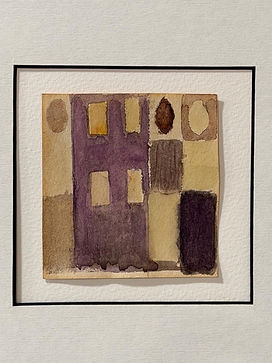
The Frants Family Collection reflects the art of Leningrad-Saint Petersburg from the 20th century up to the present day, and it contains paintings, graphic works and sculpture of both major, universally recognized authors and less known, but highly original artists. The collection started at the dawn of the 2000s based on an interest to the unofficial art of Leningrad of postwar years with an acquisition of works by the artists who worked outside the officially approved line of “Social Realism” — representatives of Arefiev's Circle, Sidlin's School, Circle of Pavel Kondratiev and Vladimir Sterligov as well as their pupils and followers.


With time, the collection's framework has widened. It has included the prewar art of Leningrad with an eye to the modernist movements and avant-garde searches of the 1920s and 1930s, that had been forgotten for decades, the heritage of “Circle of Artists”, pupils of Pavel Filonov, Leningrad school of landscape paintings. 


Inside the collection, there is a selection of easel lithography of the 1930s to 1990s that reflects activities of Leningrad Experimental Lithograph Workshop, in which Boris Ermolaev, Vera Matyukh, Gerta Nemenova, Semyon Bely and many other artists worked.


The collection is supplemented by works of the most interesting contemporary artists of St. Petersburg. Currently, the collection includes a wide specter of styles and techniques — from graphic works, paintings, sculpture, ceramics and glass to new media at the intersection of art and technologies. — Ekaterina Skarednova

Alexander Baturin

Ocherish Landscape oil on canvas, 63 x 94 cm, 2003 Alexander Borisovich Baturin (1914, Helsinki — 2003, Saint Petersburg) Painter and graphic artist. Worked in industrial and book graphics. Lived and studied in Shadrinsk (1924–1930). Moved to Leningrad in 1930 and became a pupil of Vladimir Sterligov the following year. Participated in all exhibitions of Sterligov’s school. Studied at the workers’ faculty at the former Academy of Arts (1932; expelled due to his noble origins). Arrested in 1934 in connection with the Yermolayeva–Sterligov affair and spent eight months in prison. Banished to Ufa in 1935. Re-arrested in 1938 and sentenced to eight years, which he served in the Usol-lag camp. Rehabilitated in 1956, returned to Leningrad, resuming his collaboration with Sterligov. Member of the USSR Artist’s Union (since 1973). First laureate of the Punin Prize (1994).
Alexander Baturin

Victoria Belakovskaya

Nikolai Bridge oil, canvas, 40 х 47 cm, 1925 Victoria Markovna Belakovskaya (1901, Alexandria Settlement, Yekaterinoslav Province — 1965, Leningrad) Painter, graphic artist. Studied at the Odessa Institute of Fine Arts (1918–1923) under Titus Dvornikov and Pavel Volokidin at the science department of Odessa University (1918–1920). Continued her education at VKhUTEIN in Leningrad (1923–1927) under Kuzma Petrov-Vodkin. Participated in exhibitions since 1931. Made a working visit to the tractor factory in Kharkov in 1931. Member of the October Association and Society of Artists, close to the Circle of Artists. Member of the USSR Artists' Union (1949–1953).
Victoria Belakovskaya

Liudmila Belova

Encoding Emotions installation, 2021–2023 The project Encoding Emotions presents a series of ceramic objects depicting neurons. These decorative pieces, designed in the form of invisible nerve cells, do not aim to accurately replicate the structure of the brain or neural networks. Instead, they offer the viewer an opportunity to reflect on the mysteries of human consciousness, inviting them to “look inside” and contemplate how the brain functions, stores memories and emotions, and how the processes of encoding emotions occur from a scientific perspective. Throughout history, humanity has strived to express its experiences and emotions through poetry, literature, and art — a unique form of “encoding emotions”. One of the most concise and powerful forms of conveying emotions is Japanese haiku. In just three lines, a haiku captures a whole world of complex feelings and deep experiences. Each ceramic neuron in the Encoding Emotions series is paired with its own haiku, which is connected to the visual characteristics of the object — its colors, lines, and patterns. In this way, each neuron-object becomes a unique code, containing a specific emotion, reflected in the combination of visual imagery and poetry. Liudmila Belova is an artist and curator based in St. Petersburg and Montenegro. She works with video, sound, painting, and photography, investigating issues of memory, space and time and studying the impact of new technologies on the human being in art practices by making the viewer a participant of the art process. Participant of more than 50 local and international group exhibitions and festivals including the Moscow Biennale of Contemporary Art (2005, 2011, Russia) and the parallel program of the Manifesta 10 Biennale (St. Petersburg, Russia, 2014). Since 2011, she has been a regular participant in exhibitions parallel to the Venice Biennale. Winner of the prize “50 Bestern” ZKM (2000, Karlsruhe, Germany) and of the Sergey Kuryokhin Award (2017, Russia). Her works are held in the collections of the Russian Museum, the Anna Akhmatova Museum, the Kolodzei Art Foundation (New York, USA), and in numerous private collections.
Liudmila Belova

Leon (Elik) Bogdanov

Сomposition paper, mixed media, 28,7 x 20,5 cm, 1967–69 Leon (Elik) Leonidovich Bogdanov (1942, Kuibyshev — 1987, Leningrad) Painter, graphic artist, poet, prose writer. Associated with the unofficial Leningrad culture of the 1970s–1980s. Participated in apartment exhibitions. His works appeared in the anthology Leprozorii–23 (1976), in the periodicals The Hours and Mitin Zhurnal and in Konstantin Kuzminsky's Blue Lagoon Anthology of Modern Russian Poetry (1980–1986). Laureate of the Andrei Bely Prize (1986).
Leon (Elik) Bogdanov

Konstantin Dydyshko (Dydyshkin)

At the Table watercolors, paper on cardboard, 30,8 х 31,2 cm, 1910s Konstantin Vikentievich Dydyshko (Dydyshkin) (1876, near Kovno — 1932, Copenhagen) Painter, graphic artist, stage designer. Born in a peasant family. In 1895, he graduated from the Kiev Railroad College and entered military service, serving in the Caucasus. In 1897–1899, he studied at the Tiflis Infantry Military School while simultaneously attending a local art school. In 1904, he was transferred to Petersburg and retired at the rank of lieutenant to devote himself to painting. In 1906, studied in Munich in private schools, visited Paris and London. At the end of that year, he enrolled as an auditor at the Higher Art School at Imperial Academy of Arts. In 1908–1914, travelled in France, Italy, Spain, Germany and Turkey. Worked in the Crimea and in the Caucasus. Participated in numerous exhibitions, including Triangle-Wreath-Stephanos (St. Petersburg, 1910), Union of Youth (Riga, 1910; St. Petersburg, 1912–1913), Donkey's Tail (Moscow, 1912), World of Art (Petrograd, 1915). During the First World War, served as an artist-correspondent for the magazine Sun of Russia on the Caucasus Front. Collaborated with the magazines Heights, Niva and others. In 1921, he emigrated to Finland, and in 1929 settled in Copenhagen. During the 1920s — 1930s, he held solo exhibitions in Copenhagen, Helsinki, Stockholm and Berlin. In 1929, participated in the exhibition of Russian art in Copenhagen.
Konstantin Dydyshko (Dydyshkin)

Coastline watercolors, gouache, paper on cardboard, 31,4 х 42,6 cm, 1930s

Evening Sunlight oil, canvas on cardboard, 29 × 60,7 cm, 1920s

Tatiana Glebova

Circus Series (Alma-Ata) watercolor, paper, 43,5 х 31 cm, 1942–45 Tatyana Nikolaevna Glebova (1900, Saint Petersburg — 1985, Leningrad) Painter, graphic artist, illustrator. Theatre and cinema designer. Studied at the Petrograd Conservatory (1921–1922). Worked as an artist at the State Porcelain Factory. Studied in Alexander Savinov's studio in Leningrad (1924–1926). From 1926, worked in Pavel Filonov's studio, was a member of the Masters of Analytical Art Association (1926–1932). Participated in the decoration of the Leningrad House of the Press in 1927 and was among Filonov’s pupils who in 1931–1932 designed the book Kalevala (1933). Worked for the children's magazines Hedgehog (Ezh) (from 1928) and Siskin (Chizh) (from 1931), illustrated verses by Daniil Kharms, Alexander Vvedensky, and Nikolai Zabolotsky, collaborated with the publishing houses Detgiz, GIZ and Leningrad Artist (1949–1950). Lived in Alma-Ata as an evacuee from 1942 to 1945, working at the Kazakhfilm studio. In the 1950s, she worked on industrial graphic art for the USSR Chamber of Commerce and Industry. After the death of her husband, Vladimir Sterligov, in 1973, she continued to work with his pupils. Author of Memoirs about Pavel Filonov.
Tatiana Glebova

Portrait of Lady in Red oil, plywood, fabric, 54,5 х 33,5 cm, end of the 1930s

Rooster oil, canvas, 50 х 47 cm, end of the 1930s

Maria Gorokhova

Abstract Composition oil, cardboard, 31 х 13 cm, not dated Maria Alekseevna Gorokhova (1903, Saint Petersburg — 1991, Leningrad) Soviet painter, graphic artist, textile artist, educator. In the 1910s, she received her primary art education at the Arts and Crafts Workshops of the Artist Encouragement Society (AES). From 1920 to 1927, she studied sculpture and painting at the AES workshops. After the workshops were transformed into the Arts and Crafts College, she graduated from the graphics department, earning the title of artist-technologist of book art and graphics. Around the same time, she attended the evening drawing studio at the Central Palace of Art Workers, was in the circle of pupils of Kazimir Malevich — Konstantin Rozhdestvensky, Vera Yermolaeva, Lev Yudin. From the late 1920s until 1967, she worked as a teacher of visual arts at various art schools for children, at the Leningrad Young Pioneer Palace, and at the Institute of Advanced Training for Teachers. In 1967, she declared herself an independent artist.
Maria Gorokhova

Vladimir Grinberg

Millionnaya Street (Khalturina Street) oil, canvas, plywood, 30 х 35 cm, 1932 Vladimir Ariyevich Grinberg (1896, Rostov-on-Don — 1942, Leningrad) Painter, graphic artist. Studied at the Commercial College in Rostov-on-Don (1905–1914) and in Petrograd at the Polytechnical Institute and Princess Maria Gagarina's New Art Teaching Studio under Osip Braz, Mstislav Dobuzhinsky, Dmitry Kardovsky, Yevgeny Lanceray, and Alexander Yakovlev (1915–1917). Began exhibiting in 1915. Lived and taught in Rostov-on-Don from 1917 to 1922. Settled in Petrograd (later Leningrad) in 1922, where he taught at various institutions, including the Institute of Civil Engineers / Communal Construction Engineers (1928–1941) and the former Academy of Arts (1932–1933). Member of and exhibited with World of Art (from 1917), the Rostov-Nakhichevan Union of Artists (1920–1922), the Sixteen (1924–1925), the Association of Artists of Revolutionary Russia (from 1928). In the 1920s, his works were featured in exhibitions of Soviet art in the United States, Japan, France, and Italy. Member of the Leningrad Branch of the Union of Soviet Artists since 1932. Contributed as an illustrator to the children's magazines Hedgehog (Ezh) (until 1935) and Siskin (Chizh) (1930s). Also worked in sculpture. Died during the Siege of Leningrad.
Vladimir Grinberg

Neva. Smokes oil, canvas, 50,5 х 41,3 cm, 1930s

Portrait of Misha Shtrimer oil, canvas, 41,5 х 31 cm, 1938

Portrait of a Woman oil, canvas, 54,5 х 48 см, 1938

Valentin Gromov

Fields in Staritsa tempera, canvas, 41,5 х 65,5 cm, 2008 Valentin Vladimirovich Gromov (1930, Leningrad — 2022, Saint Petersburg) Painter, graphic artist. Studied at the Art Studio of the Leningrad Palace of Pioneers in 1945, later at the art school attached to the Repin Institute (1946–1951; expelled for “formalism”). Became an extra-mural student of the faculty of artistic design of printed matter at the Moscow Polygraphic Institute (1953–1961). Worked as a theatre set-painter, as an ink-handler and proofreader at a printing works (1959–1998). Began paintings in the 1950s. Member of the Leningrad unofficial art scene. First exhibited in 1965 at apartment exhibitions. Member of the Arefyev Circle (also known as the “Order of Non-Selling (Mendicant) Painters”).
Valentin Gromov

Elena Gubanova & Ivan Govorkov

Apostles oil, wood, 50 х 14 cm each, 1998
Elena Gubanova & Ivan Govorkov

Anatoly (Tankhum) Kaplan

Bontshe the Silent Chamotte, glaze, 29х17х11 cm, 1970 Anatoly (Tankhum) Lvovich Kaplan (1903, Rogachev, Moghilev Province — 1980, Leningrad) Graphic artist, painter. Studied at the former Academy of Arts (1921–1927) under Georgy Vereisky and Arkady Rylov. Lived in Leningrad, frequently visiting Belarus. Worked at the Experimental Lithography Workshop under Vereisky's guidance in 1937–1940. Participated in exhibitions from 1939. Evacuated to the Northern Urals in 1941; returned to Leningrad in 1944. Served as chief artist at the Leningrad Artistic Glass Works (1950–1951). Worked in ceramics since late 1960s.
Anatoly (Tankhum) Kaplan

Rogachev pastel, paper, 38,5 x 32 cm, 1978

Maria Kazanskaya

Woman Wearing Turban oil, canvas, 54 х 47 cm, 1930s Maria Borisovna Kazanskaya (1914, Petrograd — 1942, Leningrad) Painter, graphic artist. Studied at the former Academy of Arts in Leningrad under Alexander Osmyorkin and at GINKhUK. A pupil of Vera Yermolayeva, belonged to the Group of Painterly Plastic Realism and to the circle of younger followers of Kazimir Malevich. Designed exhibitions, worked on illustrations and typeface design, collaborated with the Detgiz children's publishing house. Arrested in 1934 as part of the Yermolayeva–Sterligov affair, after which she abandoned art. Preserved a considerable portion of Vera Yermolayeva's legacy after her arrest.
Maria Kazanskaya

Pavel Kondratiev

Abstract Composition paper, color crayons, 31 х 40,3 cm, 1970 Pavel Mikhailovich Kondratiev (1902, Saratov — 1985, Leningrad) Painter, graphic artist. Studied at a teaching studio of the Proletkult organization in Rybinsk (1919–1920) under Mikhail Shcheglov and Pavel Gorbuntsov, at the former Academy of Arts (1921–1926) under Alexei Karyov, Alexander Savinov and Mikhail Matiushin. Participated in exhibitions from 1927 onward. Member of the Masters of Analytical Art association (1925–1929) and Stary Peterhof school (1963–1965). Worked as a keeper of porcelain in the Rybinsk Museum of History and Art (from 1920 onward). Participated in the decoration of the Leningrad House of the Press in 1927. Entered Kazimir Malevich's studio in 1932, studied painting under the guidance of Konstantin Rozhdestvensky and Lev Yudin. From the early 1930s onward, illustrated books and did work for the children's magazines Siskin (Chizh) and Hedgehog (Ezh), as well as the Uchpedgiz Publishing House. Fought in the Second World War. Worked at the experimental lithographic workshop.
Pavel Kondratiev

At a bonfire watercolor, paper, 27,2 х 34 cm, 1956

Alexander Kozhin

Noon 2 ropes, paper, pastel, collage, 30 x 41,5 cm, 1995 Alexander Feodosievich Kozhin (1949, Arkhangelsk — 2021, Arkhangelsk) Artist. Studied at the secondary art school affiliated with the Academy of Arts and then at the painting department of I. Repin Institute of Painting, Sculpture, and Architecture (1968–1974). During his studies at the institute, he met Vladimir Sterligov. Participated in the first exhibitions of Leningrad unofficial artists at Gaza Palace of Culture and Palace of Culture “Nevsky”, as well as in all exhibitions of Sterligov Circle. Since 1991 — member of the International Federation of Artists (IFA); since 1993 — member of the Union of Artists of Russia. Awarded the title of Distinguished Artist of Russia in 2007. He lived and worked in Arkhangelsk.
Alexander Kozhin

Ivan Kudryashov

Abstract Composition oil, cardboard, 24 х 14,5, not dated Ivan Alekseevich Kudryashov (1896, village of Troitskoye, Kaluga Province — 1972, Moscow) Artist of the Russian avant-garde, painter, graphic artist, stage designer, teacher. From 1912 to 1917, he studied at the Moscow School of Arts, Sculpture and Architecture under Nikolai Kasatkin and Pavel Kuznetsov. In 1919, studied at the "Second State Free Workshops" under Kazimir Malevich, with whose participation he became a co-founder of the Orenburg branch of the Artists' Association Champions of New ART (UNOVIS). After returning to Moscow in 1921, he actively participated in the exhibitions. In the mid-1920s, Kudryashov, a founding member of the group Society of Easel Painters (OST), creatively developed spatial achievements of Suprematism and became a leading representative of painterly "cosmism". From 1937 onward, he taught at the Institute of Advanced Training for Painters and Decorators. In 1938, he was deprived of the right to practise to the profession; in 1939 he was expelled from the Moscow Union of Artists (MOSKh) for “formalism”. In the postwar years, he worked as a graphic designer. The only solo exhibition held during his lifetime took place in 1970 at Galerie Jean Chauvelin.
Ivan Kudryashov

Nikolai Kulbin

The Crimea oil, canvas on cardboard, 46 х 37,2 cm, 1910
Nikolai Kulbin

Kuokkala oil, canvas, 33,5 х 56 cm, 1915

Anna Leporskaya

Nalchik oil, canvas, 44 х 50,5 см, 1926 Anna Alexandrovna Leporskaya (1900, Chernigov — 1982, Leningrad) Painter, graphic artist, monumental artist, porcelain artist. Studied at the Pskov School of Art and Industry (1918–1922) and at the former Academy of Arts under Kuzma Petrov-Vodkin and Alexander Savinov (1922–1923). Studied and worked at GINKhUK as a trainee and Kazimir Malevich's secretary (1923–1926). Member of the Group of Painterly Plastic Realism. Participated in exhibitions from 1927. Designed the interior of the arts hall in the Soviet pavilions at the World's Fairs in Paris (1937) and New York (1939). Restored the interiors of the Kirov Theater in 1946. Worked at the Leningrad Lomonosov Porcelain Factory from 1945 onward. Travelled extensively throughout the USSR. Preserved part of Malevich's legacy. Married to the artist Nikolai Suyetin. Member of the USSR Artists' Union. Honoured Artist of the Russian Federation, laureate of the Repin State Prize of the Russian Federation (1970).
Anna Leporskaya

Fields Oil on canvas, first half of the 1930s

Valentin Levitin

Head oil, canvas, 44 х 33 cm, 2000 Still-life oil, fiberboard, 40 х 27,5 cm, 1970s Valentin Isaakovich Levitin (1931, Leningrad) Painter, graphic artist, mosaicist. Studied at the Department of Architecture of the Kharkov Institute of Construction Engineering, graduating in 1956. Returned to Leningrad in 1960. Member of the Leningrad unofficial art scene. Participated in apartment exhibitions from 1960 and in official exhibitions from 1965. Met the artist Gerta Nemenova in 1966, an acquaintance that had a strong influence on his work. Member of the Leningrad City Committee of Graphic Artists (since 1965), the Leningrad branch of the Artists' Union (since 1975), the International Federation of Artists (since 1991). Taught at a studio of graphic art (1974–1976). Began working in painting, and later in mosaic, in 1975.
Valentin Levitin

Ksenia Livchak

Boy and Horses cardboard, gouache, tempera, 25,5 х 24 cm, 1930–40s Rest Stop Tempera on cardboard, 1930s–1940s Ksenia Vladimirovna Livchak (1906, Vilna — 1988, Pabrade, Lithuanian SSR) Graphic artist, painter, textile and porcelain artist. She lived in Leningrad from 1924. Graduated from the Ceramics Department of the Leningrad Art and Industry Technical College (1931). Pupil of Pavel Filonov from 1930. Worked as a textile designer at the Izo and Tribuna co-operatives (1933–1941), as a porcelain artist at the Leningrad Lomonosov Porcelain Factory (1944–1952). Often visited Lithuania from the late 1950s onwards.
Ksenia Livchak

Vera Matyukh

Young Gymnasts paper, color lithograph, 47 х 62 cm (page size), 1970s Vera Fedorovna Matyukh (1910, Berlin — 2003, Saint Petersburg) Graphic artist, illustrator. She studied at art school in Kharkov (1924–1926) and at the Graphic Art Department of Kharkov Art Institute (1926–1931) under Vasily Yermilov. From 1931, worked at the Experimental Lithographic Workshop under the direction of Georgy Vereisky, Nikolai Tyrsa, and Yelizaveta Kruglikova. Participated in exhibitions since 1936. Worked in Leningrad for various publishing houses, illustrating books and working for the magazines Siskin (Chizh) and Hedgehog (Ezh). Lived in Moscow in 1943–1948. Member of the Leningrad Branch of the Artists' Union since 1943. Belonged to Kondratyev's Circle.
Vera Matyukh

Evgeny Mikhnov–Voitenko

Untitled paper, acrylics, watercolor, 63 х 62 cm, 1978 Evgeny Grigoryevich Mikhnov–Voitenko (1932, Kherson  — 1988, Leningrad) Painter, graphic artist. Studied at the Scandinavian department of the Leningrad Foreign Languages Institute (1951–54) and at the production design department of Leningrad State Institute of Theatre, Music and Cinematography (1954–58) under Nikolai Akimov. Participated in exhibitions from 1956 on. Worked as an artist-designer at the Art Foundation (1959–88). His first personal exhibition was at the Dzerzhinsky House of Culture (1978).
Evgeny Mikhnov–Voitenko

Valentina Povarova

From the series "Сrosses" oil on canvas, 65,5 x 62 cm, 2000 Valentina Petrovna Povarova (1933, Leningrad – 2007, Saint Petersburg) painter, graphic artist, and teacher. As a child, she attended the art studio at the Leningrad Palace of Young Pioneers, where her teacher was Maria Gorokhova, the wife of Lev Yudin, a pupil of Malevich. In 1953, she entered the Ilya Repin Academy of Painting, Sculpture and Architecture, graduating in 1960 with a specialization in painting (Workshop of Isaac Serebryany). In the late 1960s, she met Pavel Kondratyev (1902–1983), a pupil of Kazimir Malevich, Pavel Filonov and Mikhail Matyushin, as well as the artist Vladimir Volkov (1923–1987). From that time onwards, she engaged in an active period of creative collaboration and study of the Russian avant-garde heritage—particularly the traditions of Malevich’s school and the GINKhUK (State Institute of Artistic Culture), and the systems of Pavel Filonov and Mikhail Matyushin—alongside explorations of contemporary art. From 1960 to 1989, she participated in numerous apartment exhibitions. In 1992, she became a member of the International Federation of Artists (IFA), and in 1995, she was awarded the Nikolai Pu
Valentina Povarova

Richard Vasmi

Portrait of Tamara Klochikhina oil, wood, 41 х 31,5 cm, 1995–96 Richard Rudolfovich Vasmi (1929, Leningrad — 1998, Saint Petersburg) Painter, graphic artist. Studied at the Leningrad Architectural Technical College (1948–1950) and the Leningrad Engineering and Construction Institute (left before graduating). In the 1950s–1970s, worked variously as an ink handler at a cardboard factory, glue-maker, laboratory assistant at the Botanical Institute, stoker, house painter, and gas-fitter. Member of the Leningrad unofficial art scene. Began exhibiting in 1956 at apartment exhibitions. Belonged to the Arefyev Circle (“Order of Non-Selling [Mendicant] Painters”). Participated in exhibitions of Alef, the Association of Leningrad Jewish Artists (1975–1977), and the Mitki Group.
Richard Vasmi

Suburban Train at the Baltic Station oil, canvas on plywood, 31,5 х 34,2 cm, 1993

Vladimir Volkov

Untitled watercolor paper, 86 х 90 cm, 1995 Vladimir Petrovich Volkov (1923, Verkhneudinsk — 1987, Leningrad) Graphic artist, painter, sculptor, educator. Studied at Penza Art College (1938–1942) and at the Graphic Art Department of the Repin Institute (1952–1958) under Alexei Pakhomov, Vasily Zvontsov and Leonid Ovsiannikov. Fought in the Second World War. Participated in exhibitions since 1958. Member of the Leningrad Branch of the Union of Soviet Artists from 1958. Worked as a printer at the Repin Institute (1948–1952). Married fellow artist Galina Molchanova in 1954. Associated with Vladimir Sterligov's Circle, the Stary Peterhof school, in 1963–1966. Began working in wood sculpture in 1964. In the late 1960s and 1970s, designed interiors for buildings in Kaluga and Leningrad. Ceased participating in official Artists’ Union exhibitions after 1965.
Vladimir Volkov
  • Instagram
  • Facebook
  • YouTube

Sign up for our Newsletter

Thank you!

Sose St., house 46,

Yerevan, Armenia, 0019

Ozo g. 28 - 35​

Vilnius, LT-07197

Lithuania

901Brickell Key Boulevard,

Suit 3705,

Miami, FL 33131 

USA


© CYLAND MediaArtLab 2007–2026. All rights reserved. 

bottom of page